Nelson Asofa-Solomona's Controversial Knockout of Paul Gallen
Paul Gallen has been hit plenty of times in a long, punishing career. He has worn most of them with a grin or a glare.
This one was different.
Nelson Asofa-Solomona’s right hand didn’t just end a fight. It emptied the room of bravado.
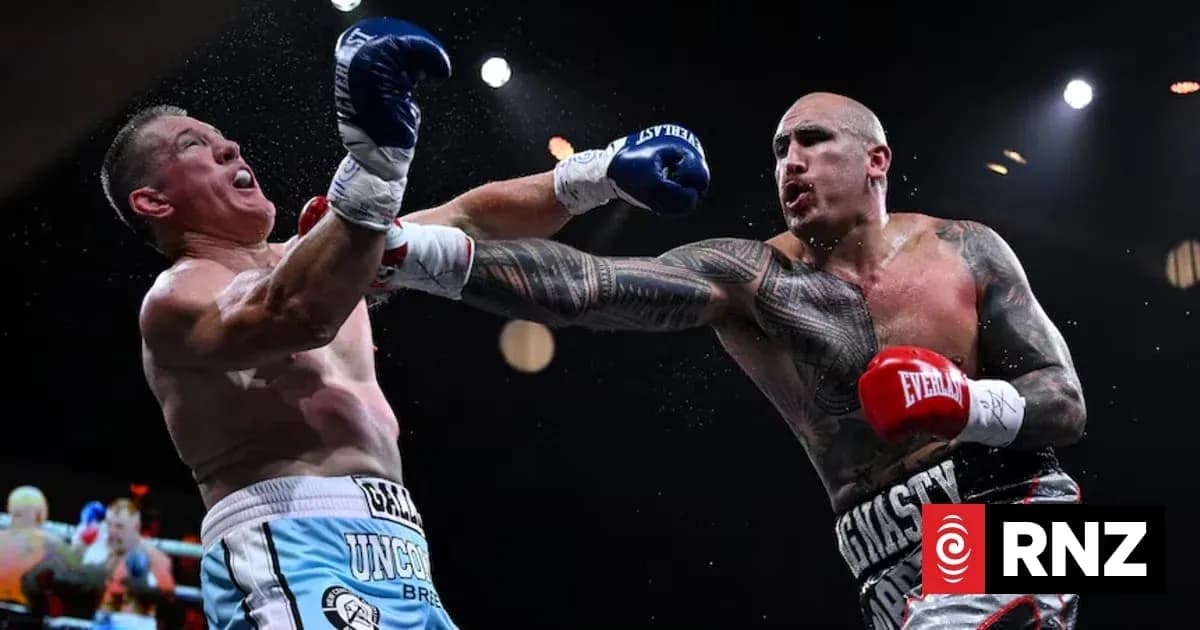
On the replays, you can see it: the giant from rugby league turning his hips, the fist slamming into Gallen’s face, the 45-year-old’s features frozen as if the lights had been flicked off mid-expression. On commentary, Ben Damon’s instinctive cry cut through the noise.
“Oh jeez, oh no!”
Beside him, Danny Green’s voice climbed with each replay. “The last one was the worst one, boys. That was the one he didn’t need.” “That’s no good,” Damon said over him. “The last one was a bad one,” Green insisted. “That’s hard to watch,” Damon finally managed.
He was right. It was.
The bout officially lasted two minutes and 56 seconds. In that short, savage window, Asofa-Solomona showed exactly why he believes he can keep climbing boxing’s version of the Penrose stairs – and why some will now question whether he should.
The opening minute looked routine enough. Gallen edged forward, trying to find a way inside the reach of a man who dwarfs even heavyweights. Then the fight flipped.
Asofa-Solomona detonated a thunderous right hand that rocked Gallen backwards towards the ropes. The veteran’s legs stiffened. His body language screamed trouble. A left-right combination followed, snapping Gallen’s head and pinning him against the strands.
Asofa-Solomona saw everything he needed: Gallen’s head rolling back, arms loose, guard gone. The opening for the uppercut appeared and he didn’t hesitate. He drove it through with hideous force, sending Gallen to the edge of unconsciousness.
The second uppercut shoved him over that edge.
Gallen’s body sagged. His legs folded under him, his frame dropping towards the canvas like a discarded marionette. He was done. Everyone watching knew it.
Asofa-Solomona kept swinging.
A third uppercut grazed Gallen’s famously granite chin as he slumped into a seated position, eyes vacant, body crumpled. Still, the big man surged forward, lost in the moment, in the chaos, in the roar.
Referee Chris Condon hurled himself between them, a black-shirted barrier arriving a fraction too late for comfort. As he moved to save Gallen from more punishment, Asofa-Solomona launched yet another blow toward the head of a man who was no longer really there.
That was the punch that left so many uneasy.
Boxing is built on violence. Earlier in the night, Paulo Aokuso had landed a perfectly timed left hand on Mobin Khahrazeh that drew admiring gasps. Spectators purred over the timing, the technique, the cold precision of a knockout.
This is the sport. The point is to switch off another human’s consciousness for the sake of competition and entertainment. Nobody walks into a boxing venue expecting a game of tag.
But even in this sanctioned brutality, there are lines that cannot be crossed. Not moral grey areas. Clear rules.
The Australian National Boxing Federation spells it out in black and white:
“Some fouls for which a referee may penalise or disqualify a boxer are: (a) Hitting an opponent who is down or is rising from a knockdown.”
There are, of course, practical realities. From the first of Asofa-Solomona’s crushing shots to the moment Condon stopped the fight, only eight seconds elapsed. The four uppercuts that ended it all came in roughly two-and-a-half horrific seconds.
For a charging heavyweight novice, adrenaline surging and future on the line, that is not much time to process anything.
But Gallen was down. More importantly, he was out. His body language, his posture, the emptiness in his eyes – it all screamed “finished”.
Hundreds of fighters across generations have learned the hard lesson: when an opponent is gone, you stop. You pull the last punch, you hold back the extra shot. You respect the unwritten code that sits above the written rules.
Hitting an unconscious opponent shreds that code. It crosses a line that runs deeper than regulations, into the strange brotherhood forged when two fighters touch gloves and agree to test each other in a ring.
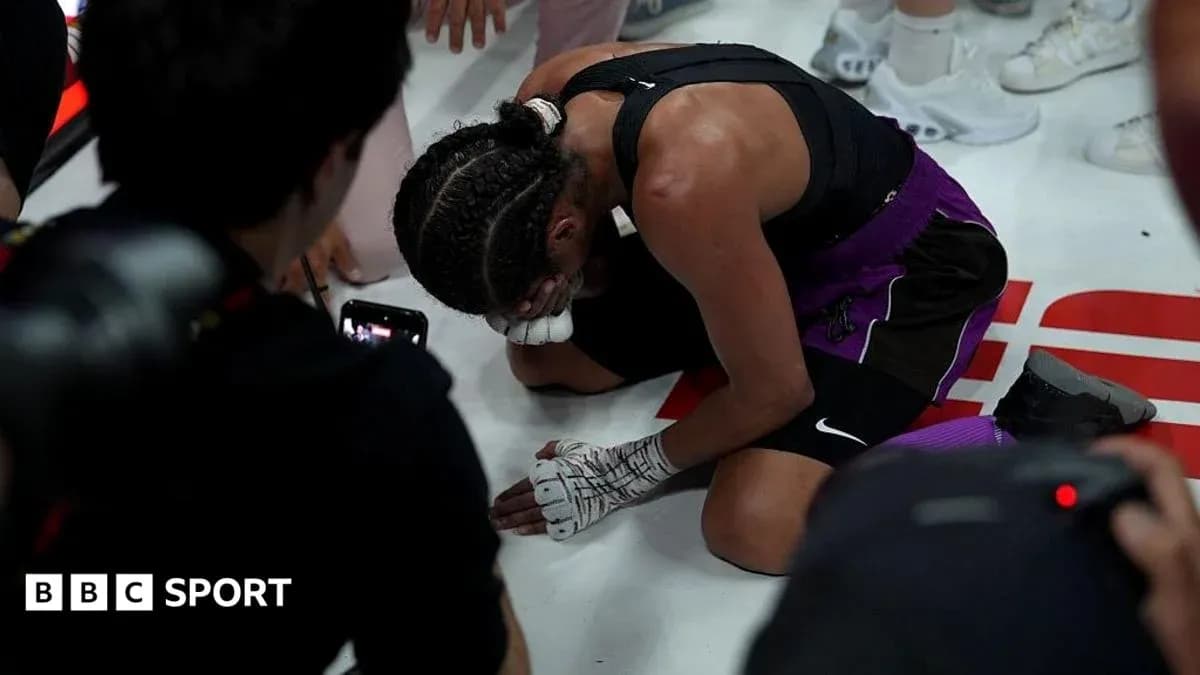
Asofa-Solomona didn’t stop. He was raging, raw, still throwing even as the referee dived in. His mood spilled over again moments later when he vaulted into the crowd, an act that seemed wild until he explained it in the press conference.
At the TikTok Entertainment Centre, he told reporters he had been racially abused.
“Someone was doing an ape gesture. I stood on the ropes and it looked like someone threw something at me,” he was reported as saying. “If I had my time back, I would, because that’s not on. But what that guy did to me, in terms of that gesture, is not on either.”
No one should have to stomach that kind of filth. No one gets to dictate how a person should feel in the face of such venom.
But inside the ropes, responsibility still lives with the fighter. The next time Nelson Asofa-Solomona lands a knockout blow, he will need to prove he understands the difference between finishing a fight and endangering a defenceless man.