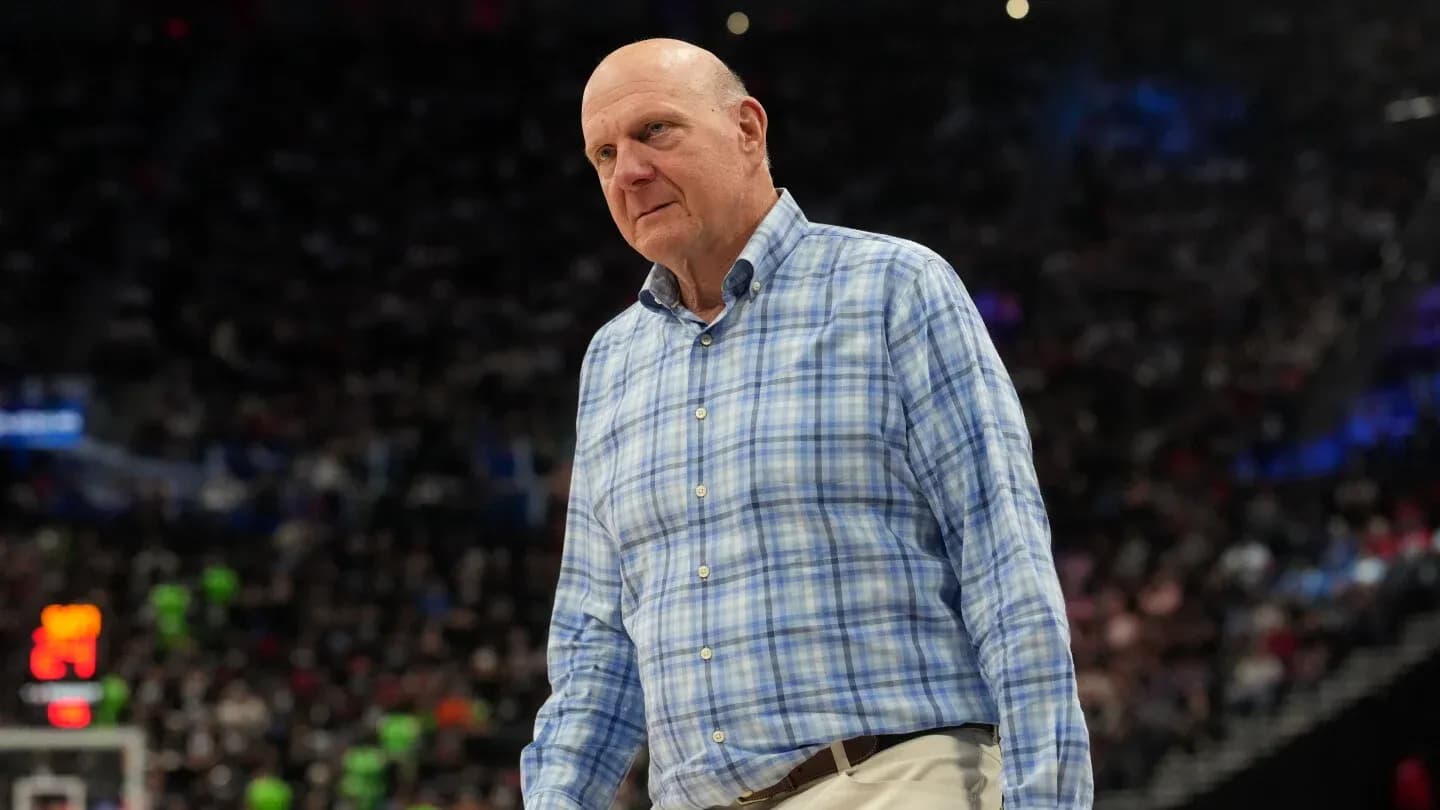
NBA Investigation into Clippers: Settlement Talks and Implications
Nearly a year after the NBA opened its probe into the Los Angeles Clippers and owner Steve Ballmer over alleged salary-cap circumvention tied to team sponsor Aspiration, the case is no longer about what happened.
It’s about what the league can actually prove — and what it’s willing to live with.
A Long Investigation, A Frozen Trade
The investigation has dragged on so long it’s now shaping rosters. A proposed trade sending Kawhi Leonard to the Toronto Raptors has effectively been put on ice while the league sorts through the fallout, leaving both franchises in limbo as training camps creep closer.
League sources indicate the formal investigation remains open, but the heavy lifting is largely done. The NBA commissioned powerhouse law firm Wachtell, Lipton, Rosen & Katz to dig into whether the Clippers used Aspiration to funnel impermissible benefits to Leonard, skirting the salary cap in the process. Their findings have been delivered. Now, the real maneuvering has begun.
The Clippers, Ballmer and the league are in active talks, with discussions centering on a potential settlement, according to those familiar with the process. The case hasn’t vanished. It’s simply moved behind closed doors.
ESPN’s Ramona Shelburne, speaking on ESPN 710 in Los Angeles, outlined where things stand: investigators have presented initial findings, they’re still making calls, and crucially, they’re already in conversations with Ballmer and his legal team about possible outcomes.
The thrust of those talks? Not a smoking gun of a cap-cheating scheme orchestrated by Ballmer himself, but what Shelburne framed as “failure to supervise” and the nature of the introductions between the Clippers, Aspiration and Leonard’s camp. The league’s equivalent of a murder charge — a direct, provable salary-cap circumvention by the owner — remains a far higher bar.
The Charge You Can Prove
The shape of a potential resolution looks familiar to anyone who has followed high-profile investigations in other arenas.
When prosecutors can’t make the marquee case, they often settle on the one they can win. Think of the mob boss convicted not for the violence everyone assumes he ordered, but for the tax returns he actually signed.
The NBA appears to be operating in that territory. The league may not be able to nail down the most explosive accusation — that Ballmer personally engineered an illegal payment structure to land a superstar — but it can pursue negligence, oversight failures, and the blurred lines around how introductions and sponsorship deals were arranged.
That doesn’t mean the league is going soft. It means it’s being realistic about what will stand up under scrutiny.
A Fight the League Doesn’t Want
If the NBA decides to come down hard on Ballmer, it knows what’s coming.
Ballmer has the resources and resolve to fight any severe sanction. Under the Collective Bargaining Agreement, any punishment levied against the Clippers, Ballmer or Leonard would go before a neutral arbitrator, who would rule on whether the league’s penalties are appropriate. That ruling could then be appealed.
Ballmer would almost certainly push it as far as possible, including into the court system if necessary. The process could stretch on for years, overshadowing seasons and dominating headlines.
If Leonard himself faces discipline, the players’ union will step in aggressively. A star player sanctioned over alleged benefits connected to a sponsor deal would become a flashpoint case for the NBPA, which has historically defended its members fiercely in any precedent-setting dispute.
That looming legal war is exactly why the sides are talking now. No one benefits from a prolonged, ugly showdown.
The Tightrope Walk
For the NBA, the settlement talks are a balancing act with the rest of the league watching closely.
On one side, the league needs a punishment that Ballmer will accept without unleashing a legal barrage. On the other, it must be severe enough to deter every other owner from treating the cap rules as a suggestion rather than a boundary.
If the sanction lands too softly, the message is dangerous: pay a fine, maybe lose a pick, and in return you get to hand a superstar extra money through a sponsor? Plenty of owners would quietly sign up for that calculus. It would turn cap circumvention into a cost of doing business, much as tampering fines in free agency have become background noise.
So the NBA has to draw a line that feels meaningful. One that says: this is not just another slap on the wrist.
What the Clippers Could Face
The menu of possible penalties is clear, even if the exact order hasn’t been placed.
A substantial fine for Ballmer and the Clippers organization sits near the top of the list. Suspensions for Ballmer and/or other team executives are very much in play as well, particularly if the league pins the issue on failures of oversight and governance.
Draft picks are almost certain to be part of the cost. The question is how many, and how valuable. First-rounders would sting. Multiple years of pick losses would reshape the franchise’s future.
Then comes the most delicate piece: Leonard. Does the league punish the player at the center of the alleged arrangement? Was he a beneficiary, an active participant, or simply the star around whom others tried to get creative? Any sanction for Leonard would ignite a fierce response from the union and could reverberate through every future negotiation involving star players and team sponsors.
Clock Ticking Toward Camp
There is no official deadline for the NBA to close the investigation or announce charges or a settlement. The calendar is doing that work for them.
Training camps open in roughly a month. The stalled Leonard trade to Toronto creates a hard reality: the Raptors and Clippers need clarity before their seasons begin. They can’t walk into camp with a franchise cornerstone hanging in procedural limbo, unsure which locker room he’ll occupy.
Either the trade goes through under a cloud that has at least been addressed, or it gets pulled before players start running drills and coaches install systems. Both organizations need a direction, not a question mark.
The league has spent nearly a year digging, interviewing, and lawyering up around the Clippers, Ballmer, Aspiration and Leonard. Now the investigation has reached the stage where decisions, not documents, will define its legacy.
The next move won’t just shape one owner’s fate or one team’s draft board. It will tell every front office in the NBA exactly how far they can go in the chase for a superstar — and what it really costs when they cross the line.