NBA Fantasy Sleepers for 2026-27: Key Players to Watch
The NBA’s summer headline acts have already dominated the talk shows and timelines. Giannis Antetokounmpo in Miami. Jaylen Brown and LeBron James in Philadelphia. Superteams, supercontracts, superhype.
But fantasy titles are often won a tier below the glare.
In the shadows of the blockbusters, a handful of players have landed in new homes with something just as valuable as star power: opportunity. Roles are about to swell. Usage is about to spike. And for the 2026-27 fantasy season, that can be the difference between a deep run and an early exit.
Here are the names that could quietly decide your league.
Tyler Herro – Milwaukee’s hometown alpha
Tyler Herro has already worn the All-Star tag. This year, he might wear something even more important for fantasy managers: unquestioned No. 1 option.
On a Bucks team stripped down and rebuilding, the hierarchy is simple. The ball will find Herro. A lot.
He’s cleared 20 points per game in each of the last five seasons. That’s the baseline. With Milwaukee handing him the keys and shot volume likely climbing, pushing toward 25 points per night isn’t a stretch at all. The Bucks need a scorer. Herro needs a platform.
He also needs a contract.
Herro hits free agency at the end of the 2026-27 season, and players in a walk year with this kind of role tend to lean into the stat sheet. The motivation is obvious. The context is ideal. Add in the emotional charge of a homecoming—Milwaukee born, now Milwaukee’s primary scorer—and the stage is set.
More touches should mean more playmaking and more 3-point attempts. A career high in assists is in play, and a spike in made 3s feels almost inevitable. That combination makes him a premium target in category leagues, but his pure scoring volume and usage give him plenty of juice in High Score and standard points formats as well.
This is what a fantasy green light looks like.
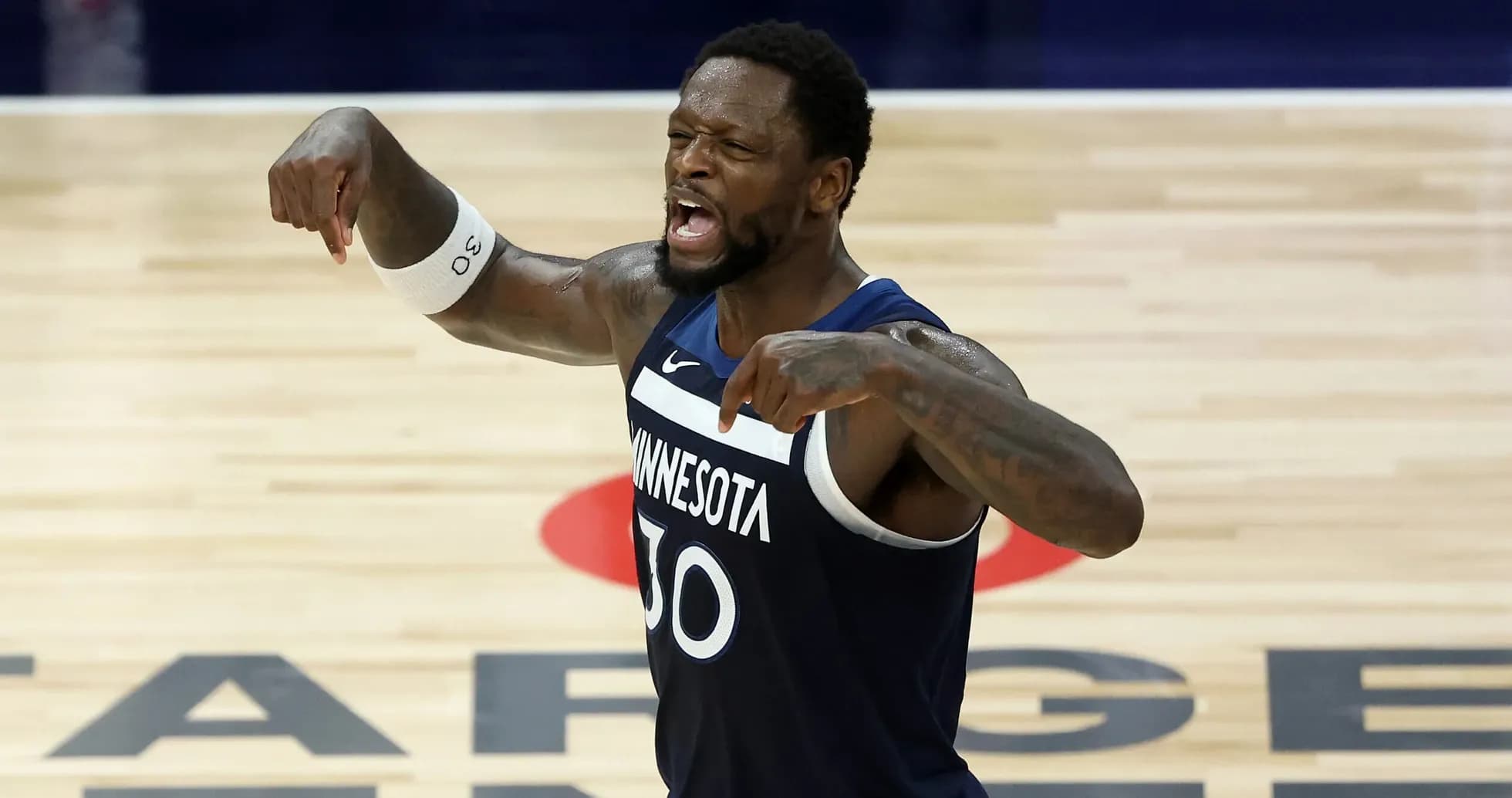
Julius Randle – Brooklyn’s workhorse-in-waiting
Julius Randle spent the last two years sharing the ball with Anthony Edwards in Minnesota, living in that awkward middle ground between star and secondary option. He still found 14.5 shots per game, but the ceiling felt capped.
Brooklyn offers something different: runway.
With the Nets, Randle can slide right back into the role that turned him into a three-time All-Star in New York. Over his final four seasons with the Knicks, he averaged 23.3 points on 18.2 field-goal attempts per game. That’s heavy-usage, centerpiece stuff.
There’s no reason he can’t sniff that again.
Brooklyn’s offense needs a focal point, and Randle, alongside Michael Porter Jr., is perfectly positioned to reclaim that mantle. He’s durable, he’s comfortable carrying an offense, and he fills the box score across points, rebounds and assists.
He will turn the ball over. That’s part of the package. But in High Score formats, where volume often beats polish, that’s a feature as much as a bug. He piles up the counting stats that win weeks, even on off shooting nights.
Randle doesn’t just play minutes. He owns them.
Kel’el Ware – A young big on the rise in Milwaukee
Kel’el Ware quietly did exactly what fantasy managers crave from emerging bigs last season in Miami: produce when given a starting role.
In 34 games as a starter with the Heat, he averaged 12.8 points and 10.7 rebounds per game. Double-double production from a young frontcourt player is no small thing. Now he heads to a Bucks team that wants to evaluate its future, not protect its past.
That’s the opening.
Ware will compete with Kyle Kuzma for the starting power forward spot, and it’s entirely realistic that he wins that job. Even if he doesn’t on opening night, the expectation is clear: more minutes are coming. After averaging just 22.2 minutes per game across his first two seasons in Miami, a career high in playing time this year feels almost inevitable.
He’s also extension-eligible after the 2026-27 season, his third in the league. That’s another layer of incentive for both player and team to see what he can handle.
Give a productive rebounder and efficient finisher more floor time on a team leaning into youth, and fantasy value tends to follow.
Walker Kessler – The Lakers’ lob target with All-Star expectations
Walker Kessler’s breakout in Utah never got the chance to breathe. Five games into what looked like a leap year, a shoulder injury shut the door.
Los Angeles is trying to kick it wide open.
The Lakers’ frontcourt is his now. There’s no real competition for his minutes, and the franchise has backed that belief with a new long-term extension. They aren’t treating him like a project. They’re treating him like an All-Star-in-waiting.
The fit might be even better than the opportunity.
Kessler profiles as exactly the kind of center Luka Dončić turns into a nightly highlight reel—rim-running, vertical spacing, soft hands around the basket. Dončić has built an offensive identity around feeding bigs who can catch everything above the rim. Kessler fits that mold perfectly.
For fantasy managers, that combination—secure role, elite playmaker, and organizational faith—screams upside. Blocks, boards, high-percentage finishes, and a steady diet of lobs in the purple and gold could turn last year’s “what if” into this year’s “must roster.”
Norman Powell – Veteran gunner on a young Chicago team
Norman Powell has quietly been a fantasy asset for two straight years, first with the Clippers, then with the Heat. Now 33, he walks into Chicago with something he hasn’t always enjoyed: a rebuilding roster that needs someone to take shots.
He’s ready to volunteer.
With Josh Giddey running the point, Powell should feast on clean looks from deep. Giddey’s size and vision bend defenses, and Powell’s off-ball movement and quick release punish them. On a young Bulls team still figuring out its offensive identity, Powell is well placed to be the primary scoring option.
Age isn’t the concern here. Role is. And the role looks big.
He’s also been one of the league’s more efficient guards in recent seasons, a trait that pushes his value even higher in category formats. High percentages, strong scoring, plenty of 3s, and the volume to tie it all together.
Chicago gets a stabilizing scorer. Fantasy managers get a veteran who can still swing matchups.
The stars changed the map this summer. The names above might change your standings. The question is simple: who are you willing to bet on before everyone else catches up?