Naomi Osaka's Resilience Shines at US Open 2024
Naomi Osaka had the match in a chokehold. Again.
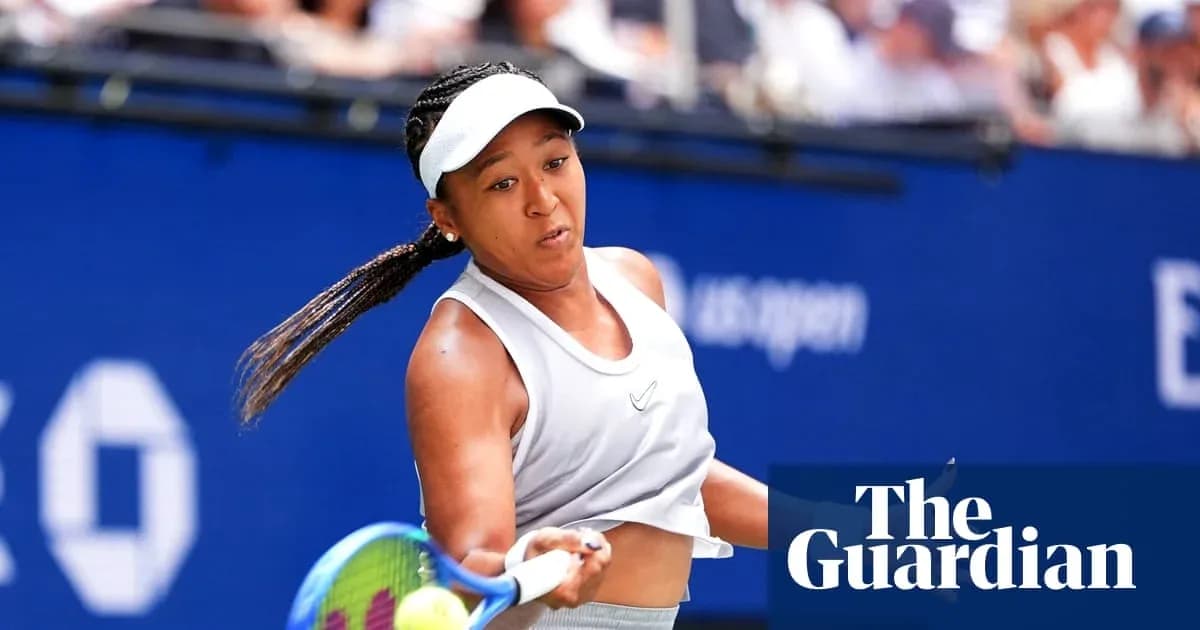
For the second straight outing at this US Open, the two-time champion looked as if she might glide through without a scratch. A set up, a break up on Katerina Siniakova, her place in the third round felt like a formality, the kind of routine step forward that once defined her hard‑court summers.
Then the tension arrived.
Osaka’s arm tightened, her first serve lost its bite, and Siniakova, who had been clinging on more than threatening, suddenly had a foothold. The second set slipped away 7-5, the stadium’s hum turned into a murmur, and a match that had been under lock and key was cracked wide open.
What followed said far more about the Osaka of 2024 than the first hour ever could. She reset. She refused to spiral. She tore through the decider 6-1, closing out a 6-2, 5-7, 6-1 win that was less about dominance than about durability.
This is what a contender looks like when the polish wears off.
A different kind of Osaka
Osaka came into the North American hard-court swing with something she has not carried in years: a full body of work behind her. For once, the story of her season was not “wait until the hard courts.” She had already produced the best clay and grass results of her career – fourth round at Roland Garros, quarter-finals at Wimbledon – and, crucially, looked like herself while doing it.
Her Wimbledon run, on a surface that has often exposed her discomfort, felt like a statement. Beating world No 1 Aryna Sabalenka in the fourth round was not a flash in the pan; it was a reminder of the raw, destructive power that made her a four-time major champion. The eventual defeat in the quarter-finals came after a heavy workload, including a run to the final in Bad Homburg the previous week. Fatigue, not frailty, caught up with her.
That stretch, some of her best tennis since lifting the Australian Open trophy in 2021, sent her back to North America with genuine belief rather than nostalgic hope.
Belief, of course, comes with a price. Expectations rise. So does the noise.
In round one in New York, Osaka flirted with danger against Anastasia Zakharova, twice giving up breaks and twice having to rescue herself in tie-breaks. She edged through 7-6 (6), 7-6 (3), but the nerves were obvious. Against Siniakova, the cost of those jitters went up: this time, they took a set off her.
Yet this is the grind of the early rounds for the game’s elite. It is not about pristine scorelines. It is about survival, about banking minutes, about earning the right to be dangerous in week two. On that front, Osaka is doing exactly what she needs to do.
She knows why. She has lived it.
“I’m quite fortunate to have a lot of high-quality matches that went in my favour,” she said afterwards. When a match stretches to a third set and the pulse quickens, her mind goes back to the 2019 Australian Open final and that three-set win over Petra Kvitova. “You can just pull from your memory bank for every certain situation that you need to get finished.”
Experience, for Osaka, is no longer an abstract word. It is a catalogue of crises survived.
More than just tennis
With Osaka, the conversation never stays strictly between the lines for long.
Her tennis has sharpened this season, but every grand slam appearance has also arrived with a visual jolt: walk-on looks, match kits, and styling that command as much attention as her forehand. In New York, her outfits pay tribute to Allen Iverson, the former NBA star whose influence stretched far beyond a basketball court.
The response has been predictably split. For many, Osaka’s fashion choices are a playful extension of her personality, a creative outlet for someone who has always seemed more comfortable expressing herself through craft than conversation. For others, they are an excuse to relitigate every grievance they hold against her.
Some critics paint her as an attention seeker, accuse her of distraction, or throw her mental health struggles from 2021 back in her face, as if the woman who stepped into the storm back then has not grown or changed in the years since. Much of it is delivered in bad faith, driven by those who have never forgiven her for using her platform to speak out against racism in the early 2020s.
The irony is stark. Osaka is, by nature, introverted. Away from the court, she is reserved, often understated. Fashion gives her a different language. It lets her show rather than tell. And at the end of the day, she is doing what every professional tennis player does: running, swinging, entertaining. This is sport, not a moral tribunal. A dramatic dress on Arthur Ashe Stadium is hardly an outrage.
A brutal road ahead
The draw has not shown her much mercy. Osaka sits in one of the most treacherous sections of the women’s field, with second seed Elena Rybakina looming as a potential fourth-round opponent. Before she can even think about that clash of power hitters, she has to navigate a minefield of early rounds where every opponent swings freely and every loose service game can drag her back into trouble.
Her first objective is simple: get there. Reach the Rybakina test. Earn the right to see how her rebuilt game stands up to one of the most imposing ball-strikers on tour.
Elsewhere in the women’s draw, another former champion is quietly building a case of her own. Iga Swiatek, the eighth seed and winner here in 2022, eased into the second round with a controlled 6-3, 6-2 victory over Nadia Podoroska. It was brisk, businesslike, the kind of match Osaka once made her trademark on these courts.
For Britain’s Harriet Dart, there was no such foothold. Coming through qualifying, she ran into the 25th seed Marie Bouzkova and found herself outgunned, losing 6-2, 6-2 in a match that never truly caught fire.
The men’s side delivered its own jolt as Félix Auger-Aliassime, seeded third and a semi-finalist here last year, saw his campaign unravel. Struggling with dizziness and illness, he faded after taking the opening set, losing 6-7 (5), 6-3, 6-2, 6-2 to Karen Khachanov. A reminder that even the most finely tuned preparation can be undone by a body that refuses to cooperate.
Osaka, by contrast, looks physically ready. The question now is mental: can she keep turning these nervous, uneven starts into hard, honest wins long enough to let her best level surface when it matters most?
If she does, the rest of the field will feel it.