Mohammad Yousuf on Pakistan's Decline Since Historic Win Against India
Mohammad Yousuf traces Pakistan’s slide back to one famous night in Dubai. Not a defeat. A win.
‘That match… damaged us a lot’
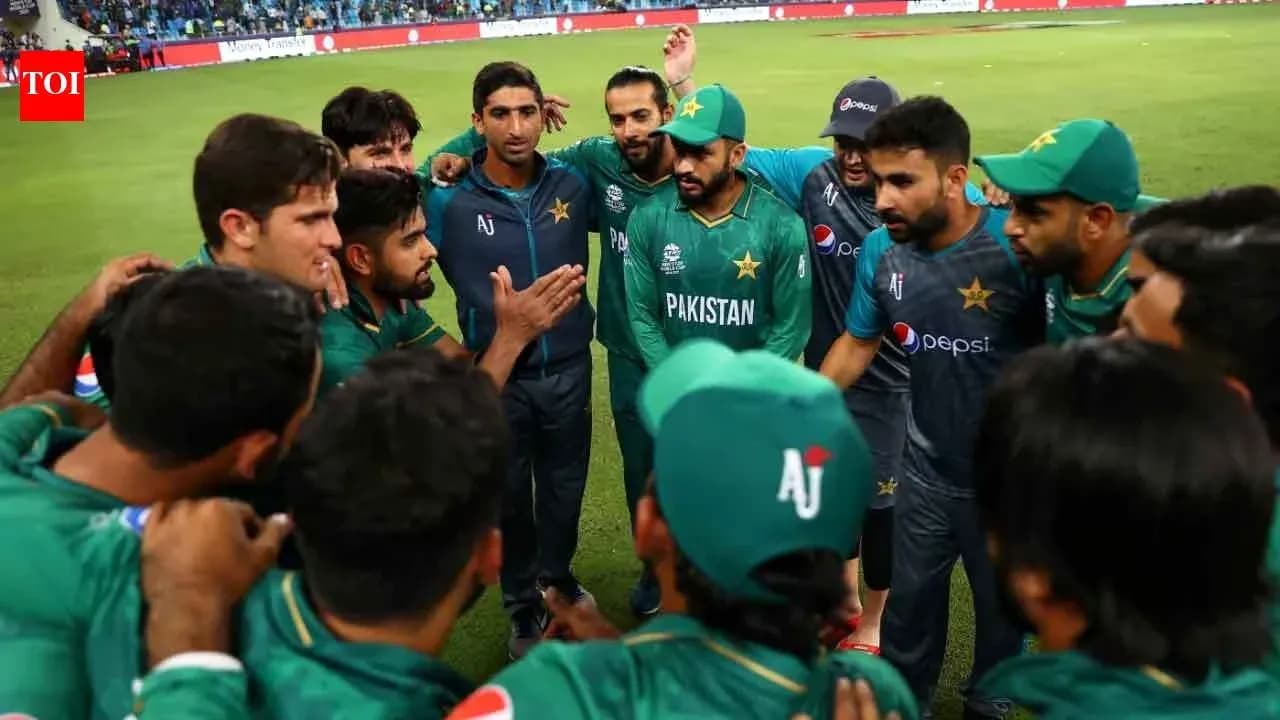
For generations, Pakistan lived with the scar of never having beaten India at a World Cup. Then came October 24, 2021 in Dubai. Babar Azam 68 not out, Mohammad Rizwan 79 not out, a chase of 152 without losing a wicket, and a 10-wicket hammering that shook the rivalry’s history.
Pakistan celebrated as if a curse had been broken. In Yousuf’s eyes, something else broke too.
“That match which we won against India in 2021, that damaged us a lot,” the former batting great said on Samaa TV. The words cut against the grain of the national memory of that night, but he did not soften them.
He believes the win altered the dressing-room psyche. Players, he said, began to feel they had “achieved something big” and stopped asking the harder question: what next?
“When you are performing well, you should stay humble,” Yousuf warned. “If you behave with your collar raised, and get disrespectful, problems will arrive. And a lot of them have arrived in Pakistan cricket.”
For him, the issue runs deeper than results. It is about attitude, about how a team carries itself once the applause dies.
From humility to captaincy battles
Yousuf’s criticism does not stop at complacency. He points to a different kind of scramble inside the camp – a rush for power.
“Everyone in the team was trying to become the captain of the Pakistan team,” he said. In his view, the chase for the armband overshadowed the responsibility to perform. Individual ambition began to crowd out collective accountability.
The fallout, he argues, is plain to see across formats and tournaments.
“Look at all the cricket Pakistan has played in the last four-five years, from ODI World Cups, T20 World Cups to Asia Cups and Champions Trophy. There has been terrible cricket,” Yousuf said.
Coaches have rotated in and out. Structures have been tweaked. The Pakistan Cricket Board, he insists, has tried to back the players, change staff, change systems – anything to spark a revival.
“So many coaches have come and gone, so many things have changed just to try and help the Pakistan team. But no player has stood up and taken responsibility. Eventually, PCB had to take a step that it did. I back what PCB did.”
Turmoil in England
His defence of the board comes at a time when Pakistan cricket finds itself under fierce scrutiny. The ongoing tour of England has turned into a public autopsy.
Pakistan were crushed in the first two Tests. At Headingley, they lost by an innings and 103 runs. At Lord’s, the margin stretched to 194 runs. The gulf was not just on the scoreboard; it was in discipline, resilience, and basic execution.
With one Test still to play, the PCB swung the axe.
- Seven players – Mohammad Rizwan, Imam-ul-Haq, Salman Ali Agha, Ali Usman, Khurram Shahzad, Aamir Jamal and Muhammad Awais Jafar – were sent home mid-series.
- Head coach Sarfaraz Ahmed and assistant coach Umar Gul were removed.
- Seven replacements arrived, five of them uncapped.
It was a dramatic intervention, rare in its timing and scale, and it triggered intense debate. Yousuf, though, had no qualms about the board acting before the series ended.
“Yes, there is no issue with when PCB have taken action,” he said. He pointed to the World Test Championship table for context. Pakistan sit ninth. They are ninth because there are only nine teams.
“Pakistan ka naam kharab ho raha hai (Pakistan’s reputation is getting ruined),” he said bluntly. “So when that’s happening, the board has to take some steps to improve.”
Yousuf hinted that the decision to send seven players home might not be purely about on-field form. “Something may have happened inside the dressing room,” he suggested, without going into detail.
Not just one bad tour
Yousuf is adamant this crisis cannot be pinned on a single series in England. For him, the rot has been visible for some time, masked only occasionally by deep runs in tournaments.
“I don’t see an issue with the PCB reaction. Because the team has been playing terrible cricket. It’s not just this one series against England,” he said.
He acknowledged that Pakistan reached the T20 World Cup final in 2022 and an Asia Cup final as well. But he urged people to look at the pattern since those highs – the inconsistency, the collapses, the failure to build on promising campaigns.
The numbers back the concern. Across formats, Pakistan have stumbled. Earlier this year they were swept 2-0 by Bangladesh, their second 0-2 series defeat to the same opposition after the 2024 home series. For a side that once prided itself on intimidating talent and flair, losing repeatedly to the same team, home and away, raises deeper questions.
Leadership. Selection. Direction. All of it is under the microscope.
For Yousuf, though, the starting point of this decline is not a selection meeting or a misjudged tactical call. It is that night in Dubai, when Pakistan finally beat India by 10 wickets in a World Cup match – and, in his view, lost the humility that had kept them hungry.
The scoreboard in 2021 told a story of dominance. The years since have told a different one.