Max Purcell Returns to Davis Cup Team for Australia
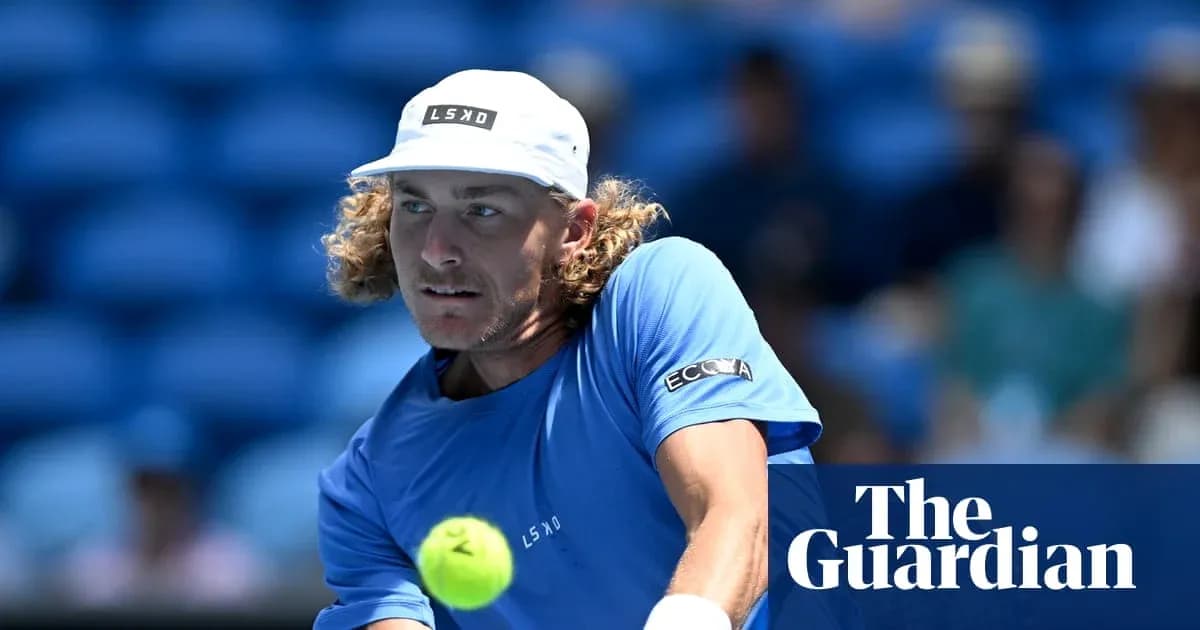
Max Purcell is back where he always felt he belonged – in green and gold, with Australia’s Davis Cup hopes on the line.
The grand slam doubles champion, who spent 18 bruising months on the sidelines after an anti-doping breach that split opinion across the sport, has been recalled by captain Lleyton Hewitt for the World Group 1 tie against Poland in Brisbane on 19-20 September.
For Purcell, now 28, it is more than a selection. It is a restoration.
Hewitt rolls the dice – and backs Purcell
Hewitt has named a squad led by Alex de Minaur, still smarting from an underwhelming US Open campaign and desperate to reassert himself as Australia’s standard-bearer. James Duckworth, Rinky Hijikata and Adam Walton – who could make his Davis Cup debut – round out a group built for flexibility on the hard courts of Pat Rafter Arena.
Yet one name jumps off the team sheet.
Purcell, ranked No 803 in singles, is hardly a headline number in an era obsessed with the rankings ladder. His résumé tells a different story: Wimbledon men’s doubles champion in 2022, US Open men’s doubles champion in 2024, and owner of a formidable 9-2 record in Davis Cup doubles rubbers.
In team tennis, that record matters more than any computer printout.
Hewitt knows it. Australia must beat Poland to keep alive their push towards next year’s trophy, and in a tight weekend, a cold-eyed doubles specialist with a proven Davis Cup temperament is a luxury few captains enjoy.
From Bali to a ban – and the long road back
The last two years have carved deep lines in Purcell’s career.
In December 2024, he accepted a provisional suspension under the International Tennis Integrity Agency’s Tennis Anti-Doping Programme. The case turned on an IV infusion of vitamins he received while ill on holiday in Bali a year earlier – above the permitted 100ml limit, but composed entirely of substances on the World Anti-Doping Agency’s approved list.
No banned substance. No performance-enhancing cocktail. Just too much of an allowed treatment, administered by a doctor overseas.
The rules, though, are unforgiving. Purcell was hit with a two-year sanction, later cut by 25% thanks to his cooperation and what the ITIA described as “substantial assistance”. The reduction softened the sentence on paper; it did nothing to blunt the emotional impact.
Purcell laid bare that toll in a raw social media post, describing “nervous and anxious tics”, an inability to eat properly, and a case that had “seriously affected” his quality of life. This was not a routine suspension. It was a public ordeal.
The locker room noticed. John Millman spoke out. So did Jordan Thompson, Purcell’s partner in that US Open triumph, both stressing that the breach was clearly unintentional and that no prohibited substance had ever been in his system.
Their message was simple: punish the mistake, but don’t brand the man.
Quiet rebuild, loud statement
Since returning in June, Purcell has chosen the hard, unfussy path back. No big declarations, no grandstanding. Just matches, travel, and a slow climb from the sport’s shadows.
A singles title at a low-key event in China marked his first tangible reward, a sign that the timing and touch that made him a doubles force remain intact. The Davis Cup call-up is the louder statement: the national team has not forgotten him.
For Hewitt and his staff, the timing is ideal. In a pressure tie, a doubles rubber can swing a weekend. Purcell’s record – nine wins from 11 Davis Cup doubles matches – gives Australia a weapon few nations can match at this level.
He is not just a sentimental pick. He is a tactical one.
Poland threat blunted by big absentee
Australia will not have it all their own way.
Poland arrive with Kamil Majchrzak at the helm, the world No 73 who already holds a 2024 win over de Minaur, earned on grass in the ATP final in ‘s-Hertogenbosch. That result will not be forgotten in the Australian camp. Nor should it be.
Yet the tie shifted the moment Poland’s squad landed without Hubert Hurkacz. Their injury-prone No 1 was not listed when the team was announced on Wednesday, stripping the visitors of their biggest server, their most established star, and their most obvious point-scoring anchor.
Without Hurkacz, Poland still pose a threat. They no longer carry the same fear factor.
For Australia, that opens the door to control the weekend – if de Minaur can reset after New York, if the supporting cast holds firm, and if Purcell, scarred but seasoned, can turn his comeback into a cornerstone performance.
Two years ago, he looked like the next long-term piece in Australia’s doubles puzzle. An IV drip in Bali, a legal limit, and a strict rulebook almost broke that story in half.
Now the same player walks back into a Davis Cup locker room with a chance to write a very different chapter: not about a ban, not about a tribunal, but about whether a survivor of the system can help drag his country one step closer to a trophy.