Marnus Labuschagne's Last Chance in South Africa Tour
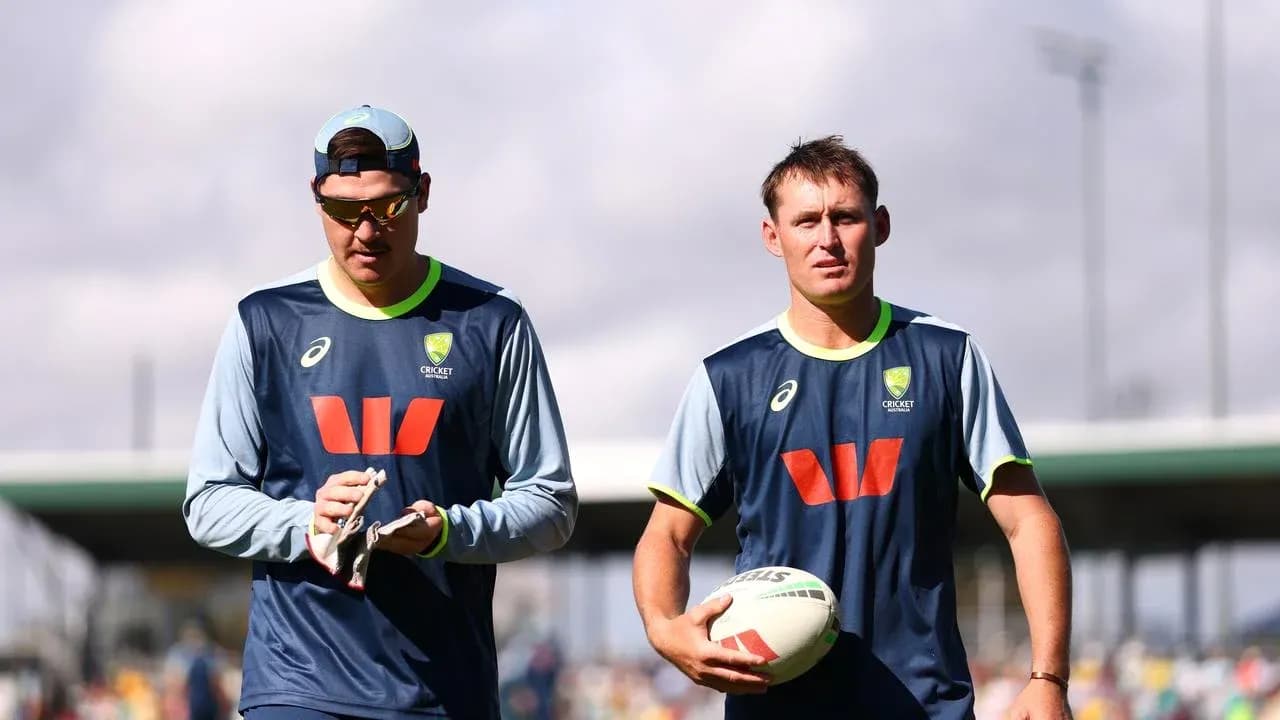
Marnus Labuschagne has survived the axe. Just.
Australia’s selectors have handed the under-pressure No.3 a lifeline for next month’s three-Test tour of South Africa, naming him in a 16-man squad that says as much about faith as it does about future planning.
Labuschagne, who has not reached three figures in Test cricket since the 2023 Ashes in England and has laboured through two lean years, now finds himself in an unfamiliar position: fighting for his place. His rivals are not grizzled veterans but a rising all-rounder in Cooper Connolly and the versatile Josh Inglis, both more accustomed to the middle order than the top three.
Labuschagne on notice
The message from George Bailey was clear and cold.
“We’re not shying away from the fact that we’d like some more runs from Marn. That’s clear,” the chair of selectors said. The numbers back him up. A flat Ashes campaign, followed by struggles against Bangladesh in the Top End, left Labuschagne’s spot in real danger.
Yet he’s still on the plane.
Bailey’s faith lies not in recent output, but in the belief that a stripped-back build-up can sharpen Labuschagne’s game. He has been left out of the ODI series that precedes the Tests, freeing him to focus solely on red-ball preparation for South Africa.
“He’ll prepare incredibly well, and specifically for this tour,” Bailey said, insisting the 30-year-old can “still make a positive contribution” within the 16.
What Bailey did not do was guarantee him the No.3 berth in Durban on October 9.
“We’ll get a much clearer picture of what that XI looks like once we get over there,” he said. Translation: nothing is locked in, not even the position that once looked Labuschagne’s for a decade.
Connolly’s rise gathers pace
If Labuschagne represents the selectors’ loyalty, Connolly is the embodiment of their curiosity.
The 23-year-old West Australian returns to the Test squad after debuting in Sri Lanka last February, one of three changes from the group that drew 1-1 with Bangladesh in Darwin and Mackay. On paper, his first-class record is modestly framed by one standout figure: an average of 42.10, the best of Australia’s next generation of batters, achieved without a single first-class century.
The raw numbers don’t tell the full story. Connolly’s stock has surged in 2026, driven by a breakout IPL campaign with Punjab Kings and a maiden ODI hundred in Bangladesh in June. He is no longer just a project player; he’s a genuine option.
His left-arm spin adds another layer. He debuted for Australia at No.8 in Sri Lanka, operating as an all-rounder, and Bailey made it clear he’s been picked primarily as a batter this time, with the potential to move higher.
“I think he will be able to,” Bailey said of Connolly handling a top-order role. Maybe not immediately, maybe not at No.3 in Durban, but the door is open. “He’s still so young in his career, but I think his ability to bat in a range of positions will continue to grow as he gets more and more experience.”
Smith, Head and the domino effect
If Labuschagne does lose his spot, the reshuffle would be significant. Connolly and Inglis have built their reputations as middle-order players, not as anchors at first drop, which drags two heavyweights into the conversation: Steve Smith and Travis Head.
Bailey did nothing to hose that down.
“Any time you do make a move, it’s what are you taking away from where they are performing,” he said, acknowledging the delicate balance around Head’s role. The left-hander has been devastating at No.5 and impactful at the top, changing the tempo of innings and, at times, entire series.
Smith, meanwhile, has a long history at No.3, even if he hasn’t occupied the position recently. “He has had success there,” Bailey noted, and admitted that shifting him back up will “absolutely” be discussed.
One change at No.3 could ripple through the entire order. That’s why Labuschagne’s reprieve, while welcome for him, is far from a guarantee of status. It might simply delay a decision that feels increasingly inevitable if the runs don’t return.
Pace depth for a bruising tour
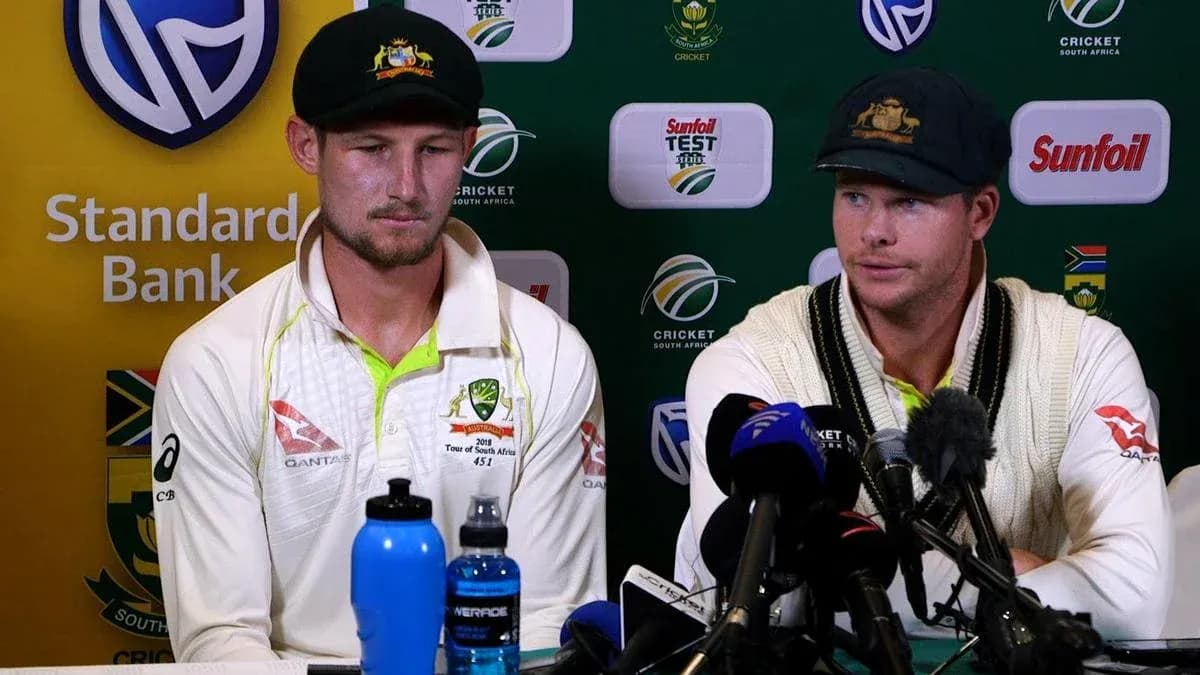
Away from the batting intrigue, Australia’s quicks will again carry the load on a tour that comes with a tight schedule and lingering scars. This is Australia’s first Test trip to South Africa since Sandpapergate, a backdrop that needs no elaboration in the dressing room.
Michael Neser, the Ashes cult hero, returns to bolster a pace unit already led by Pat Cummins, Mitchell Starc, Josh Hazlewood and Scott Boland. Bailey hinted that both Boland and Neser are live chances to play in the “Rainbow Nation,” with rotation likely across a condensed campaign.
“This is a reasonably condensed three-game series, on the back of six one-day internationals, with only short breaks between each game,” he said. There are just four days between each Test, a demanding turnaround even for Australia’s seasoned attack.
The squad, Bailey stressed, has been built for flexibility, to handle “the variety of conditions we may face” across Durban, Gqeberha and Cape Town.
Spin cover and fringe battles
Behind Nathan Lyon, left-arm spinner Matthew Kuhnemann has been recalled and could play his first Test outside the subcontinent. His role will be tightly linked to conditions, but his selection underlines the desire for a different spin angle if pitches tire late in matches.
At the top, Matthew Renshaw retains his place after stepping in for Jake Weatherald in Mackay, while Beau Webster holds his spot as an all-round option despite a lean series with the bat against Bangladesh. Both sit on the fringe, both know that one injury or one form slump can change their tour in an instant.
Australia’s three Tests are locked in: Durban from October 9, Gqeberha in the middle of the month, Cape Town to close it out in late October. Three matches, short breaks, high stakes.
For Labuschagne, it feels like something more. A tour that once would have been another stop in a long, comfortable career now looms as a reckoning. Does he reclaim the role that once seemed made for him, or does South Africa become the series that accelerates Australia’s next batting era?