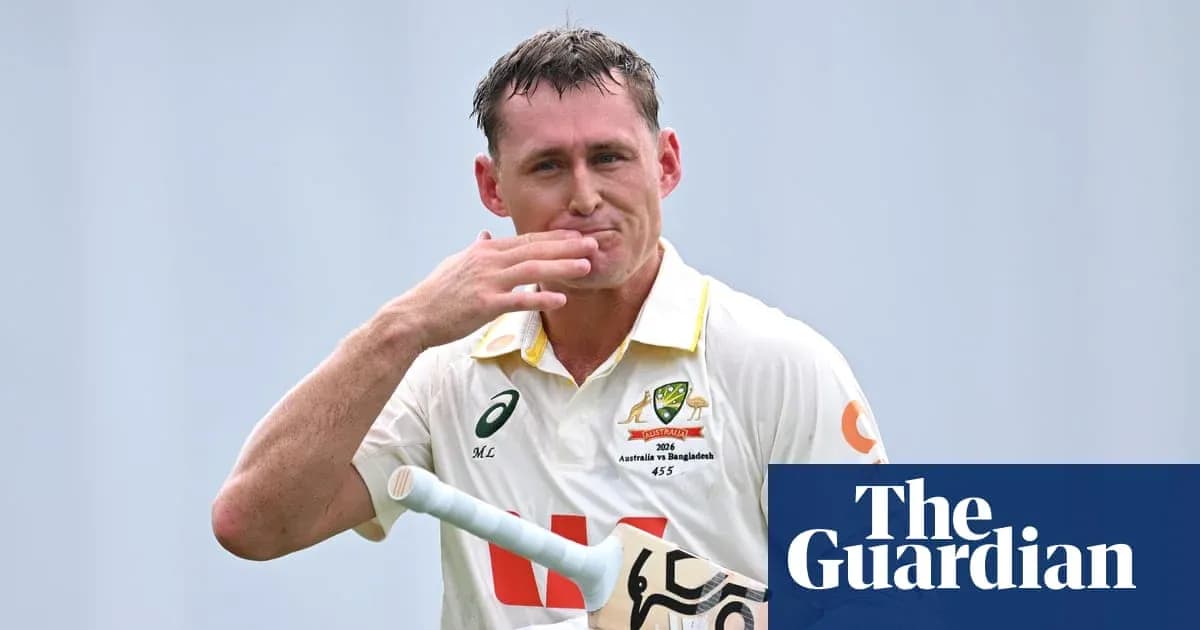
Marnus Labuschagne Axed from Australia’s ODI Squad Amid Test Uncertainty
Marnus Labuschagne’s once-soaring international career has hit a brutal crossroads, with the right-hander axed from Australia’s ODI squad for the tours of Zimbabwe and South Africa – even as the door to the Test side remains ajar.
The 32-year-old, crowned by the ICC as the world’s premier Test batter as recently as 2023, now finds himself on the outside of Australia’s white-ball plans with an ODI World Cup looming next year. His name was missing when selectors unveiled a 17-man squad for six ODIs later this month, a group clearly shaped with that tournament in mind.
White-ball squeeze
Labuschagne was one of five players cut from the team that faced Bangladesh in Australia’s most recent ODI in June. The message was blunt by omission: others have surged past him in the pecking order.
George Bailey, chair of selectors, framed the call as a hard-nosed decision about role clarity and limited opportunities rather than a final verdict on Labuschagne’s value.
“It was a one-day cricket conversation, this is a pretty important tool for us,” Bailey said, pointing directly to the World Cup that will be staged in Zimbabwe and South Africa late next year. Australia’s six ODIs on this tour double as a dress rehearsal in the same conditions, and Bailey made it clear those overs cannot be wasted.
“There’s not a whole lot of games, and the opportunity that’s well-deserved and awarded to some of those other players to continue building out their roles and their performances in those games would be really important,” he said.
The pressure finally told on Labuschagne’s spot. At his best, he has been a key one-day contributor, busy at the crease and reliable in the middle order. But the shape of the current squad left him squeezed out.
“The way that squad and team is structuring up, there just wasn’t space for him,” Bailey admitted.
Test future in the balance
This is not, at least officially, a total demotion. Bailey stressed that Labuschagne’s Test prospects sit in a separate basket. Yet the timing is uncomfortable.
After ruling the Test rankings last year, Labuschagne’s output has dipped sharply. Since that peak he has averaged under 30 in Tests, sliding to equal 38th in the latest ICC rankings. Last summer’s Ashes yielded an average of 25, and his most recent Test returns against Bangladesh were 1, 31 and 4.
He had already flirted with the fringes of the Test side before the last Ashes, only saving his spot with a strong start to the Sheffield Shield season. This time, he won’t even have that safety net. Queensland will not play a Shield match before the Test squad for South Africa is named later this month, denying him the chance to bang the door down with runs.
Bailey and his panel are still piecing together that Test group for the three-match series starting 9 October.
“It’s just about not having to make a decision until you need to make a decision,” he said, outlining a selection process that is now as much about conditions and fitness as it is about reputation.
Selectors are poring over what kind of wickets they might encounter in South Africa, how those conditions will shape the balance of the side, and the physical readiness of several players. Only once those “final pieces of the puzzle” fall into place will the Test squad be locked in.
For Labuschagne, that means a tense wait. No runs to score, no games to influence, only faith that his body of work – and the memory of his peak – still carries weight.
New blood takes centre stage
While one era pauses, another gathers speed. The ODI squad underlines how aggressively Australia are investing in youth.
Oliver Peake, the 19-year-old Victorian left-hander who earlier this year became the youngest specialist batter to debut for Australia’s ODI side, has been backed again. So has Joel Davies, the 22-year-old NSW allrounder who made his international bow in the T20s against Bangladesh in June.
Bailey’s praise for the pair was pointed and enthusiastic.
“For Ollie [Peake] and Joel [Davies], who we rate very highly, it’s another fantastic opportunity and a further chance for them to continue their exposure and growth in the Australian team,” he said.
Those words underline the direction of travel. Australia are not tinkering at the edges; they are building a white-ball core they hope will peak at the World Cup. Every ODI in Zimbabwe and South Africa now doubles as an audition for that stage.
Labuschagne, once the automatic pick, now watches that process from the outside. His Test fate will be decided in a meeting room rather than in the middle. For a player who rose so quickly and shone so brightly, the question now is stark: can he force his way back into the heart of Australia’s plans, or has the game already moved on without him?