Manchester United's Struggles Continue After City Defeat
Manchester United’s latest defeat did not end with the final whistle. It walked with them down the tunnel, followed them into the press room, and will sit heavy over Carrington all week.
For the third time in less than 10 months, United have lost a game in which their opponents were reduced to 10 men before half-time. This time it was Manchester City, down a man yet still 1-0 winners at Old Trafford, their victory sealed by Erling Haaland’s controversial strike and followed by an official apology from Pro Ref for what they called “an error of judgement”.
The apology has dominated the noise. It won’t soften the scrutiny.
A bad start, now undeniable
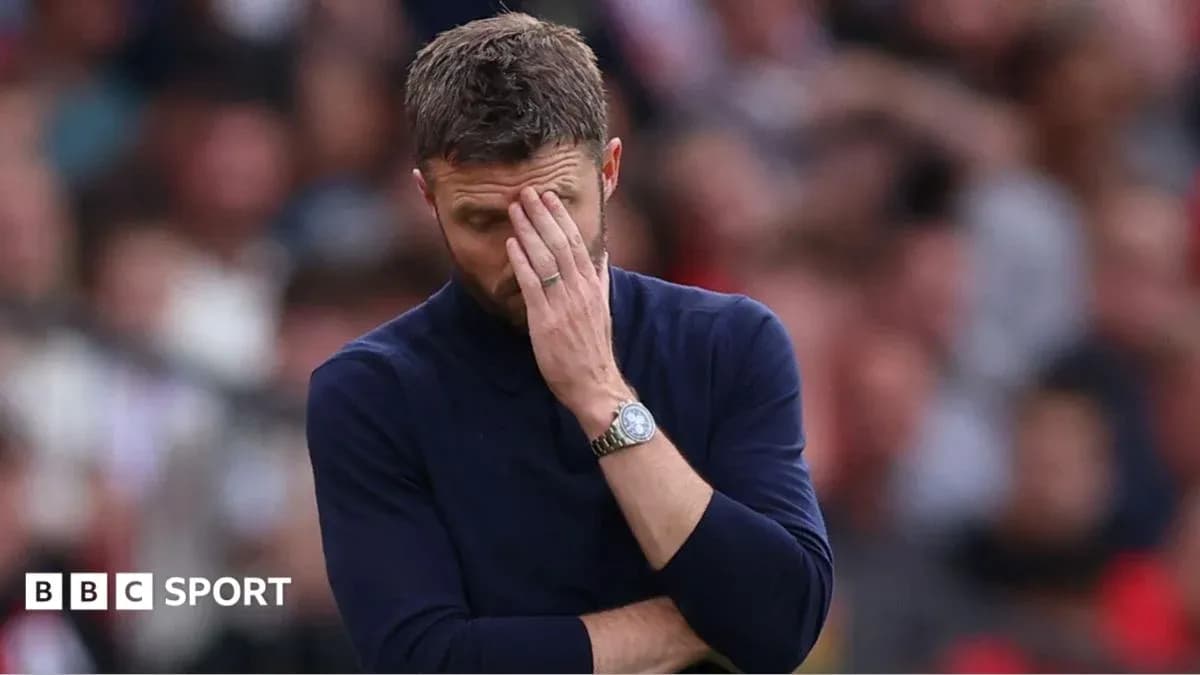
Michael Carrick tried to hold the line at Everton, insisting four points from three games was not a crisis. After this defeat, he stopped fighting that argument.
“There is no getting away” from the fact that four points from four games is below expectations, he admitted. The table says as much. So does the mood.
One win, at home to newly-promoted Ipswich, is a thin shield against the questions now coming from every angle: recruitment, team selection, substitutions, tactics – and Carrick himself. This is no longer about a slow start. It’s about direction.
“We don't need a break or a restart,” Carrick said. “We've just got to move on and get winning again.”
The fixture list offers no time for self-pity. Brighton arrive at Old Trafford in the Carabao Cup on 16 September. Fulham away follows four days later. Two games, both awkward, both loaded with consequence.
Carrick needs performances as much as results. If United stumble into the next international break, the three-week pause will not bring calm. It will bring a full-scale inquest into what, exactly, is going wrong.
Ten men, one problem
On the other side of the corridor, Enzo Maresca cut a satisfied but clear-eyed figure. The new City manager acknowledged Phil Foden’s red card made his team’s task harder. He also knew it changed the game in a way that hurt United.
“They are a team that loves transitions and space in behind,” he said.
With 10 players, City simply retreated. They dropped off, shut the doors, and waited. No space in behind. No broken field to run into. No chaos to exploit.
“So we didn't concede any transitions and didn't concede any space in behind,” Maresca added. “That is why the game became more difficult for us and for them.”
The pattern was familiar. United have been at their most dangerous as a counter-attacking side since Jose Mourinho’s arrival more than a decade ago. Ole Gunnar Solskjaer tried to move them towards a more proactive, possession-based model, but never fully escaped that identity. Erik ten Hag and Ruben Amorim arrived with reputations for dominating the ball in their domestic leagues, yet found the same resistance.
Carrick, as a player, was the embodiment of control: receive, look up, pass, repeat. It is safe to assume he wants his team to keep the ball, to dictate. But wanting it and achieving it are very different things.
Keeping possession is one level of the game. Breaking down a packed defence is another entirely. United still look far more comfortable when the game is stretched, not when they are asked to unpick an organised block that refuses to move.
A £155m midfield, still searching
United’s summer was built around the midfield. The idea was clear: reshape the core of the team, give Carrick the tools to play his way.
On the evidence so far, the return on a £155m spend has been underwhelming.
Youri Tielemans has yet to find top form. Carlos Baleba, signed to bring power and presence, has not even made his debut. Andrey Santos started the opening game at Hull, then slipped to the bench and stayed there against City, unused.
The plan was bold. The impact has been muted.
At the same time, a long-running ironman streak came to an end. Luke Shaw’s 41-game run of consecutive Premier League starts is over. Many expected fresh cover at left-back in the summer window. It never arrived. The gap remains, exposed now that Shaw’s reliability can no longer be taken for granted.
Squad depth, or the lack of it, surfaced again late on against City. With United chasing the game, Carrick turned to Joshua Zirkzee, on for Marcus Rashford seven minutes from time, as one of only two substitutions. Zirkzee had been available for transfer all summer before United moved.
It felt like a telling detail. In a tight, high-stakes derby, Carrick’s bench offered few convincing solutions. For a club of United’s scale, that is a damning image.
Fernandes: burden and barometer
Bruno Fernandes remains the heartbeat of this side, but the rhythm has changed.
Last season he swept the major individual honours, taking both the PFA and Football Writers’ Player of the Year awards after a campaign of relentless output: nine goals and a Premier League record 22 assists. He was creator, conductor, and closer.
This season, the numbers tell a different story. Three goals and one assist so far. The goal return is healthy. The creative edge is not. More than that, his overall influence seems to have dipped.
Some observers felt he looked tired against City, his usual sharpness dulled. That perception throws Carrick’s midweek decision into sharper focus.
United’s Champions League return, away to Azerbaijan champions Sabah FK, was supposed to be a relatively gentle reintroduction to Europe’s elite stage after a two-year absence. On paper, it was a night to manage minutes, protect legs, think ahead.
Carrick thought differently. He named a strong side, understandable given the need to start well in the competition. United led 3-0 at half-time. With a three-day turnaround before the derby, it looked the perfect opportunity to rest his captain.
Instead, Fernandes stayed on for the full 90 minutes. All five substitutes were used. None of them replaced him.
Now, with Fernandes in the final year of his contract – albeit with an option that could extend it to 2028 – the sense of over-reliance is hard to ignore. When he fades, United fade. When he looks heavy-legged, so do their ideas.
Carrick insists United do not need a restart. The evidence suggests they at least need a reset. Brighton in the cup, Fulham in the league, then the looming silence of an international break.
By the time that pause arrives, the question may not be about apologies or refereeing errors at all. It may be whether this United side, under this manager, can ever truly become the team they keep saying they want to be.