Manchester Derby Chaos: VAR Controversy Over Haaland's Goal
The Manchester derby has never been short of chaos. This one, though, will be remembered less for Erling Haaland’s finish and more for the flicker of a linesman’s flag and the cold glow of a VAR screen that followed.
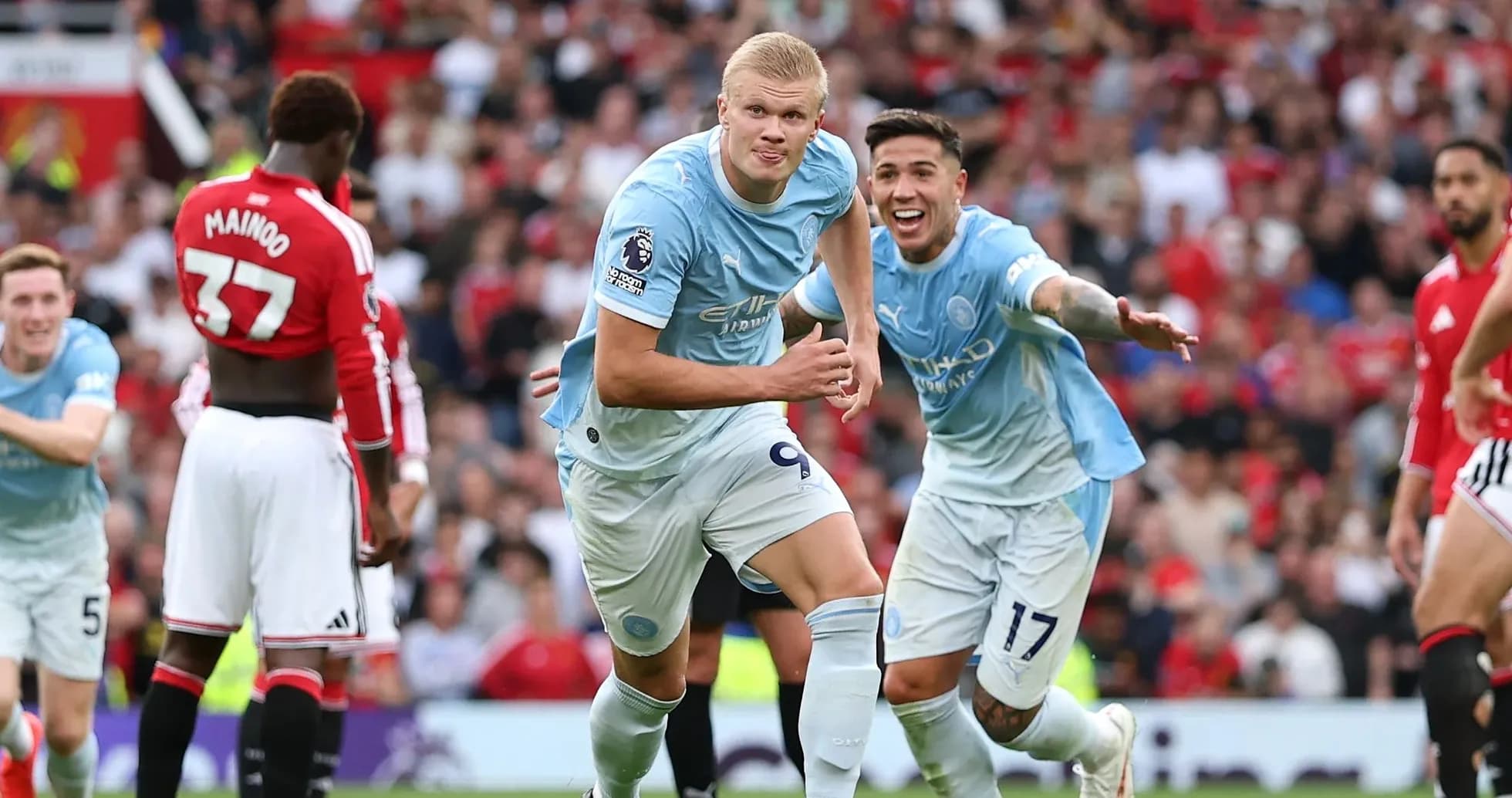
Sixty minutes in at Old Trafford, Josko Gvardiol whipped in a cross, Haaland slid in and turned it home, and the familiar roar rolled around the stadium. Then came the flag. Offside. For a few seconds, the old script returned: United fans celebrating, City players protesting, the usual theatre.
Then the technology took over.
After a lengthy check, VAR overturned the on-field decision and awarded the goal, ruling that Haaland had been onside and that Enzo Fernandez, in an offside position and clearly involved in the phase, had not played the ball. The goal stood. The game swung. The arguments exploded.
By the time the dust had begun to settle, the Professional Game Match Officials body had already picked up the phone to Manchester United. The message was stark: this was an “error of judgment”.
The Premier League Match Centre had initially tried to stand its ground, posting that VAR had “determined that Haaland was in an onside position” and had “deemed that while in an offside position, [Enzo] Fernandez didn't play the ball.” That defence did not survive the weekend.
On Sunday evening, the officials’ body effectively confirmed what so many had seen in real time. VAR, it admitted, “did not recognise the likely impact” of Fernandez’s position and “should have recommended an on-field review.” The goal will remain on the scoreboard and in the record books, but the decision now sits alongside a growing catalogue of high-profile VAR controversies.
Schmeichel’s patience snaps
For Peter Schmeichel, watching on at the stadium where he built his legend, this was the breaking point.
Speaking to Viaplay, the former Manchester United goalkeeper cut through the usual diplomatic language. “I wish that we could scrap VAR,” he said. No dressing it up. No softening the blow.
“We've got into a system now where VAR and the referees are the most important people in football. It sucks all the energy out of it. As soon as there is a goal, you're not allowed to celebrate.”
Schmeichel’s frustration wasn’t just about one decision. It was about the rhythm of the sport being torn apart by pauses, checks and lines on a screen.
“We saw after five minutes, the players and the fans could celebrate -- but it's not the same. The ball goes in the back of the net, it's a goal, but then the linesman puts his flag up for offside.
“I wish, and I'm longing for these days, we could scrap VAR because it's such an annoyance and it's interfering with football. And it hasn't made it better.”
Those are not the words of a pundit chasing headlines. They’re the verdict of a man who has lived the game at its highest emotional pitch and now feels that something vital is slipping away.
Neville left baffled
Schmeichel was not alone. Gary Neville, on co-commentary duty for Sky Sports, watched the same replays as the VAR team and came to a very different conclusion.
"I'm going to need the offside law explaining to me, because that has lost me, I have to say," he admitted on air, voicing what many at home were thinking as Fernandez’s involvement in the move appeared impossible to ignore.
Neville went a step further, predicting that the officials’ body would have to row back on the decision once the noise died down and the incident was pulled apart frame by frame. Within 24 hours, that is exactly what happened.
The reversal did not change the result, but it did something arguably more damaging for the league: it deepened the sense that even with all the cameras, angles and slow-motion analysis, the sport still cannot find a consistent, comprehensible way to apply its own offside law.
A law under the microscope
The Haaland goal has reopened an argument that never really went away. In an age where every touch can be frozen and dissected, the offside law is being stretched to its limits.
What counts as “interfering”? How much does a player’s position affect a defender, even without a touch? When does a phase of play reset? These are not abstract questions any more. They decide derbies, titles, careers.
This incident at Old Trafford has become the latest flashpoint in that wider debate. The officials’ own admission that VAR failed to appreciate the “likely impact” of Fernandez’s position only sharpens the focus on how interpretation, not technology, continues to shape outcomes.
Emotion versus control
As the fallout rumbles on, pressure on the Premier League is rising. Some want refinement: clearer guidance, sharper protocols, a narrower scope for VAR intervention. Others, like Schmeichel, want the whole system ripped out before it does any more damage to the soul of the sport.
For many supporters, the issue cuts to the heart of why they watch. The unfiltered roar when the ball hits the net. The instant, instinctive celebration. The derby-day explosion that doesn’t wait for a green checkmark on a screen.
Right now, that moment lives in limbo, suspended while a team of officials draw lines and debate “impact” and “phases”. At Old Trafford, the ball crossed the line, the flag went up, the goal was given, and only then did everyone discover, a day later, that the people in charge believed they had got it wrong.
The scoreboard will not change. The table will not change. But the question lingers: how many more nights like this can the Premier League afford before the technology designed to protect the game’s integrity finally erodes the very emotion that made it great?