Luka Doncic's Era with the Lakers: Expectations and Challenges
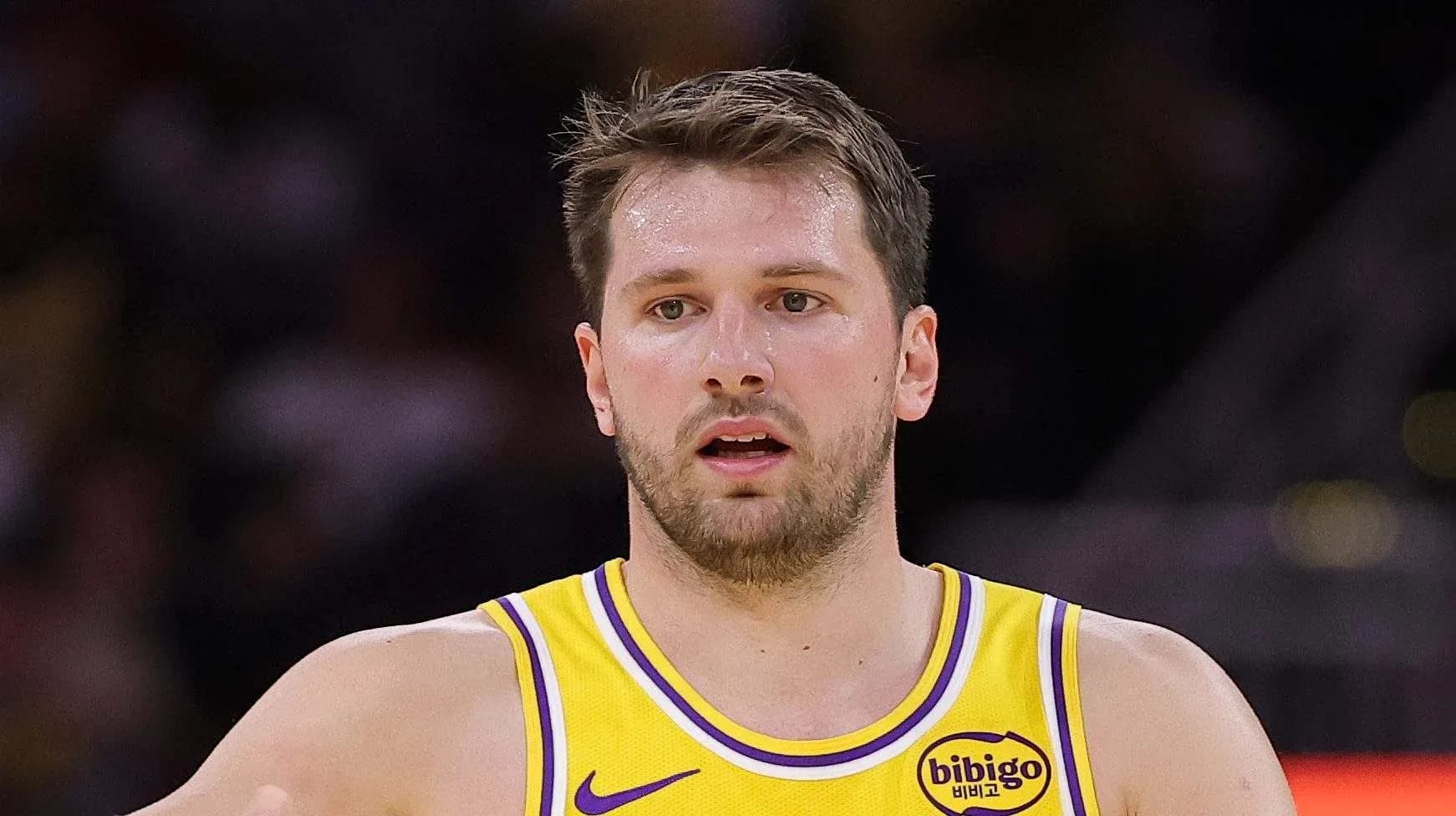
The LeBron James banners are barely settled in the rafters and already the conversation in Los Angeles has shifted. This is Luka Doncic’s team now. His era. His burden.
The expectations, of course, have not gone anywhere.
The Lakers have torn their roster down to the studs and rebuilt around Doncic and Austin Reaves, with Walker Kessler and a fresh set of role players asked to plug the gaps. On one side of the ledger: an offensive savant in his prime and a franchise that measures success only in parades. On the other: the cold reality of a West loaded with continuity and two-way juggernauts, and a Lakers defense that bled points last season.
Into that tension stepped Trevor Ariza, a former Lakers champion who understands exactly what it takes to win in purple and gold. His message? Admiration for Doncic’s brilliance, wrapped in a hard truth.
Ariza’s Warning: Talent Isn’t Enough
“What I’ve seen from Luka, I would say Luka is very, very good. He’s an unbelievable offensive talent,” Ariza told Sports Illustrated’s Ryan Ward. Then he went straight to the point that has haunted many of Doncic’s teams.
“What we have seen is that when teams that are not in the top 10 in offense and defense have a hard time winning it all.”
That line is the crux of the Lakers’ dilemma.
Doncic can bend a game to his will with the ball in his hands. He did it in Dallas for years. Step-backs, cross-court lasers, pick-and-roll orchestration that turns average bigs into lob threats and shooters into weapons. But his teams have rarely lived at the top of the defensive charts, and in May and June that gap becomes a fatal flaw.
Ariza didn’t sugarcoat it.
“If a team that Luka Doncic is the primary player on, I think in order for that team to win, the defense has to be a part of that DNA and a huge part of that diet. Until his teams play defense and the defensive rating is high, that will probably be their Achilles heel.”
The Lakers know that Achilles heel well. Last season, they struggled to get stops consistently, especially against elite perimeter creators and spread offenses. They’ve tried to address that with Kessler’s rim protection and a handful of defensive-minded wings, but the backcourt of Doncic and Reaves will be hunted by every smart coach in the conference.
The numbers will come. They always do with Doncic. The question is whether the stops will.
“On Paper, I Don’t Believe So”
Ariza has been in enough locker rooms to understand that rosters in September rarely resemble the groups that decide titles in June. Still, he didn’t dance around the current reality.
“Do I think this team that assembled right now is a championship team? You can never really tell this early. But on paper, I don’t believe so, but I’ve been wrong about teams before.”
That’s the tension around this Lakers group. The franchise is selling a vision of a long runway: the “Luka era” stretching over multiple years, with cap flexibility and future moves to come. The league, and a chunk of the fan base, is wondering if this specific version of the Lakers can seriously contend in Year 1 of that project.
Yet even as he poked at the structural flaws, Ariza circled back to the one constant: Doncic’s capacity to carry.
“It’ll be just like how it was for him in Dallas, except for now you are on a bigger and brighter stage again… Playing here in L.A. is just a completely different thing, and it’s gonna be a lot of weight on him, but I do believe that he has the ability to carry that weight.”
Dallas was intense. Los Angeles is unforgiving. Every off night becomes a talking point. Every playoff exit becomes a referendum. For a superstar who has already shouldered heavy usage and constant scrutiny, the Lakers spotlight is another level of heat.
A Different View From Slovenia
Not everyone sees a looming struggle.
Within Doncic’s inner basketball circle, the tone is far more optimistic. Edo Muric, a longtime teammate of Doncic on the Slovenian national team, sees a player ready to hit a new gear with the Lakers.
“Luka looks better and better when I see him every year. He is now at that age where he is at the peak of his powers. He’s not a kid anymore,” Muric told journalist Martin Pavcnik, via Basketnews.
“Every time I see him with a ball, he just gets better and better,” Muric added. “I can’t wait for next season to see him in an even bigger role with the Lakers. I just hope he stays healthy the entire season because this truly could be his best one yet, and I’m really looking forward to it.”
That’s the other side of this story. Strip away the roster questions and the defensive metrics, and you’re left with a 27-year-old (and climbing) superstar entering what should be the peak of his career, now operating on the league’s biggest stage with the ball in his hands and the franchise in his grip.
The bookmakers recognize that individual ceiling. Doncic sits among the early favorites in the MVP race. The Lakers’ projected win total hovers around 46.5, a number that hints at a good team but not a juggernaut, a playoff presence but not a guaranteed top seed in the West.
It’s a line that reflects the split screen: an MVP-level talent, and a roster that still has to prove it belongs in the same breath as the conference’s elite.
A Season on a Knife-Edge
Strip it down, and the stakes are clear.
If Doncic delivers the kind of season Muric envisions—his best yet, durable, relentless, and efficient—he can drag this revamped Lakers group into the thick of the postseason race. He’s done more with less before. The difference now is the margin for error. In Los Angeles, 46 wins and a first-round cameo don’t count as progress; they count as noise before the next storm.
Ariza’s challenge lingers over all of it. The Lakers do not just need Luka to be great. They need his team to defend at a level his teams rarely have. They need Kessler to anchor the paint, the wings to fight over screens, and Doncic himself to buy in enough on that end that opponents can’t simply target him and wait for the dam to break.
If that happens, the ceiling rises fast. If it doesn’t, the story of the first year of the Luka era in Los Angeles may sound a lot like his years in Dallas: breathtaking offense, heavy usage, gaudy numbers—and a nagging question about how far that formula can really go when the games matter most.