Liverpool’s Head Coach Prepares for Premier League Opener
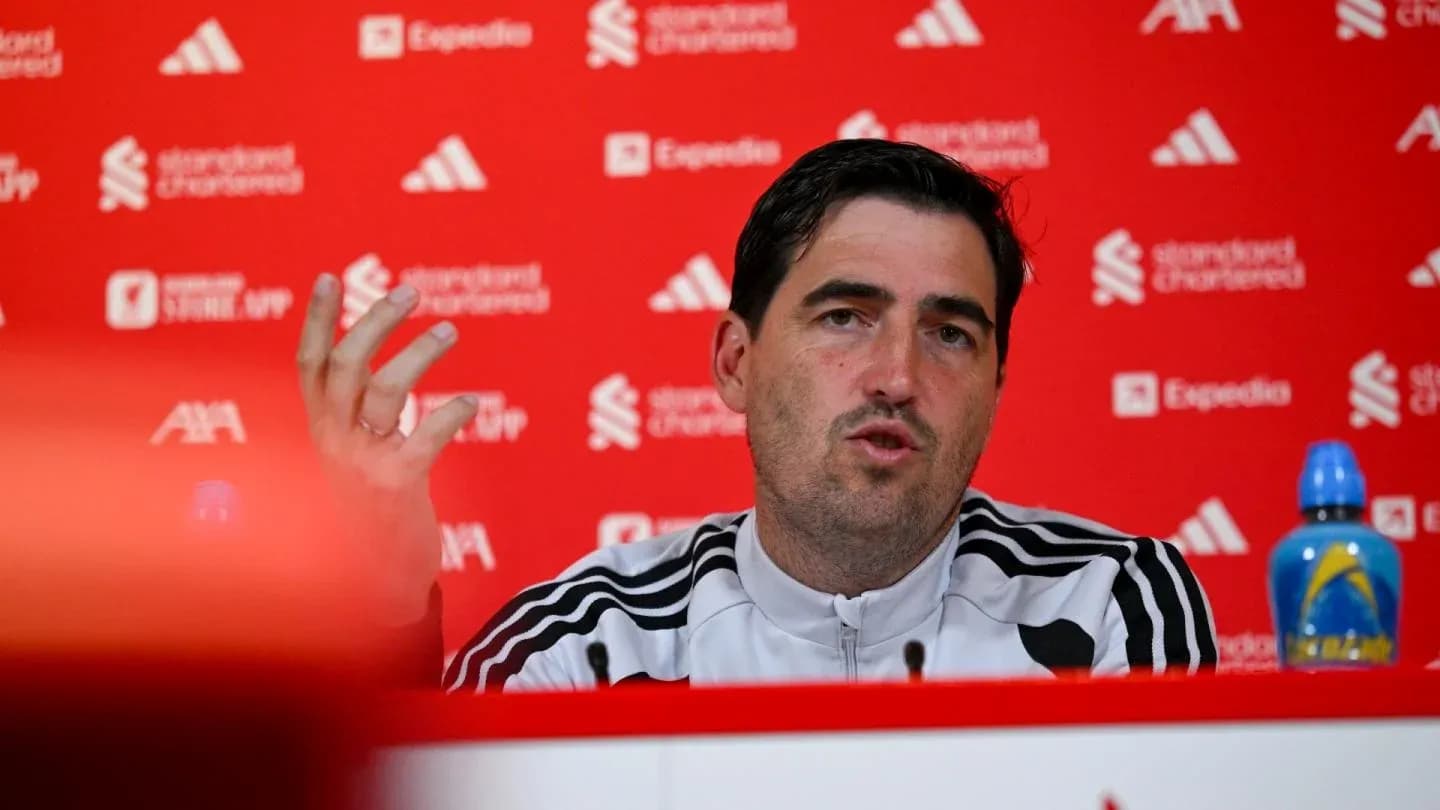
At the AXA Training Centre, on the eve of his first Premier League game at Anfield, Liverpool’s head coach cut a calm but unmistakably driven figure. The noise around transfers, tactical tweaks and the emotional weight of the job is growing. He knows it. He’s leaning into it.
Wingers wanted – and needed
Liverpool’s search for wide reinforcements is no secret, and he did nothing to disguise the urgency.
“As you know, we are trying to sign in that position,” he said, careful not to step over the line on naming targets. The issue is simple: they don’t have the numbers out wide, and the club hierarchy has been fully briefed on what he wants.
The deals, though, are not done.
“I hope we can have good news soon but we are still not there,” he admitted. The clock is ticking towards the end of the window, and he’s prepared to wait it out. “We have to be patient – even myself – for another four or five days and then we will know.”
Only when the window shuts will he feel he truly knows his squad.
“I will be comfortable the first of September, or the second in this case, when they tell me, ‘OK, this is who we are, this is the options we have.’” Until then, the planning is provisional, the wish list clear, the execution still in the hands of the negotiators.
Chasing the balance: attack, control, and risk
His Liverpool have already shown flashes of the attacking fluidity he wants: runners arriving, combinations around the box, numbers flooding forward. The problem, as ever at this club, is what that leaves behind.
“Yeah, that’s the key – the balance,” he said. “You don’t want to lose this, the offensive side, the fluidity, the arrivals with numbers, but obviously we were punished the other day, especially in the first goal.”
The criticism after the opening draw focused on transitions and protection. He didn’t hide from it. But he also refused to swing the pendulum too far back.
“We cannot go from one way where we send a lot of people forward to after we keep everyone so we don’t arrive with numbers, everything looks very stale.”
This is not a manager interested in turning his side into a cautious, risk-averse unit. He wants intelligence, not fear.
“You cannot be with the joystick every time with the player,” he explained. Some players, he argued, have to “smell” the danger themselves: when to bomb on, when to stay, when the risk is worth it.
That applies particularly to his midfield.
He namechecked Ryan Gravenberch and Dominik Szoboszlai, recalling the goal against Monaco in pre-season – a flowing one-two, a pass to Alex Isak, a finish that drew only praise. Nobody then was asking why both midfielders were high on the edge of the box. The lesson for him is clear: you don’t suffocate talent just to guard against every possible counter.
“I don’t want to tell Ryan Gravenberch, ‘Don’t carry the ball and don’t arrive to the box,’” he said. The task now is to recognise the situations, to balance numbers with other positions, not to drill the spontaneity out of his side.
Full-backs, too, will live in that grey area. If one goes, the other doesn’t automatically have to stay. It depends where the opposition sit, how many they leave high, how secure the rest defence looks. “Recognising those situations is the job we have to do now,” he said. The message: control comes from understanding, not from blanket rules.
“Meaningful possession” and a sense of control
He bristled slightly at the suggestion that Liverpool had lacked control in their 2-2 draw with Newcastle.
“I felt we controlled the game, honestly, quite well the other day,” he insisted. Yes, they conceded two transitions. Yes, that matters. But he was adamant the ball was used with purpose.
“I think we had a meaningful possession,” he said, stressing that his side were “quite direct” in their attacks and spent most of the game high up the pitch. On the touchline, his feeling was that Liverpool were closer to scoring than Newcastle for most of the contest.
The scoreline says otherwise. The performance, in his mind, does not.
“You draw 2-2 and you cannot change this, but I felt we did a lot of good things in the first game.” That belief, that they are closer to the finished product than the table might show, will be tested again against Nottingham Forest.
Facing Glasner’s Forest: nothing for free
Oliver Glasner’s Forest arrive at Anfield with a clear identity and a manager Liverpool’s head coach knows well from previous Premier League battles.
“I think he has been very successful,” he said. The respect is genuine. So is the warning.
“You can see straight away the shape, they don’t concede a lot of chances.” He pointed to Forest’s narrow defeat to Leeds: a tight game, few openings, settled by a 90th-minute free-kick despite Forest arguably creating more before that late blow.
The message to his players is blunt: “We will have to earn every chance. They don’t give you [anything] for free.”
Patience on the ball, he argued, will be crucial. Forest are solid, disciplined, and carry their own threats. “They have also very good players up front – like every Premier League team – and we have to control those situations, especially in the transitions because they also have good threats in the counter.”
Liverpool want to dominate the ball. Forest are built to punish any carelessness when they lose it. The margins will be thin.
Anfield, emotion, and the weight of the seat
Beyond systems and signings, there is the human side of this moment: a first Premier League game at Anfield as Liverpool head coach. He didn’t try to play it down.
“It’s definitely a special moment for me,” he said. Pre-season offered a taste, but the real thing, with points and pressure on the line, is different.
“When the competition starts for me, it’s going to be – I will be thinking of the game and the things that I need to think – but I think it’s going to be emotional and I think it has to be like this.”
He spoke of the fight it took to reach this stage, of the journey to one of football’s most demanding dugouts. “It is a special place. I’ve had to fight a lot to arrive to this place and I hope everything goes well and I can enjoy also the game.”
Enjoyment, though, will only come with performance. Anfield can lift, but it also judges.
Jacquet’s baptism and the price of youth
Among the subplots of the opening game was a Premier League debut for Jeremy Jacquet. Thrown in with only “basically 45 minutes of pre-season” in his legs, the young centre-back emerged with credit.
“I think overall he played very well, considering it’s his first game,” the manager said. The change late on was not tactical, but physical. “It’s true that he finished tired; we had to sub him because I was feeling the last five minutes on the pitch he was tired. You can feel [it], especially with centre-backs.”
On the ball, Jacquet showed confidence. Without it, he held his own. The manager is under no illusions: mistakes will come. They are part of the deal with a young defender adapting to the league.
“For sure he will make some mistakes, we have to accept this, but he’s performing and training very well for me.” In a squad still waiting on reinforcements, those steps from within the group matter.
Now comes Forest, the transfer deadline, and the first true roar of Anfield in the league under this new regime. The head coach knows exactly what he wants from his squad and from the market. The only question is whether the next few days will give him enough to chase the season he believes this team can still deliver.