Lhuanre Pretorius scores maiden hundred as South Africa edges Namibia
Lhuanre Pretorius left six runs out in the middle on Tuesday. He went back to fetch them on Friday, found them waiting, and picked up an extra one for the road.
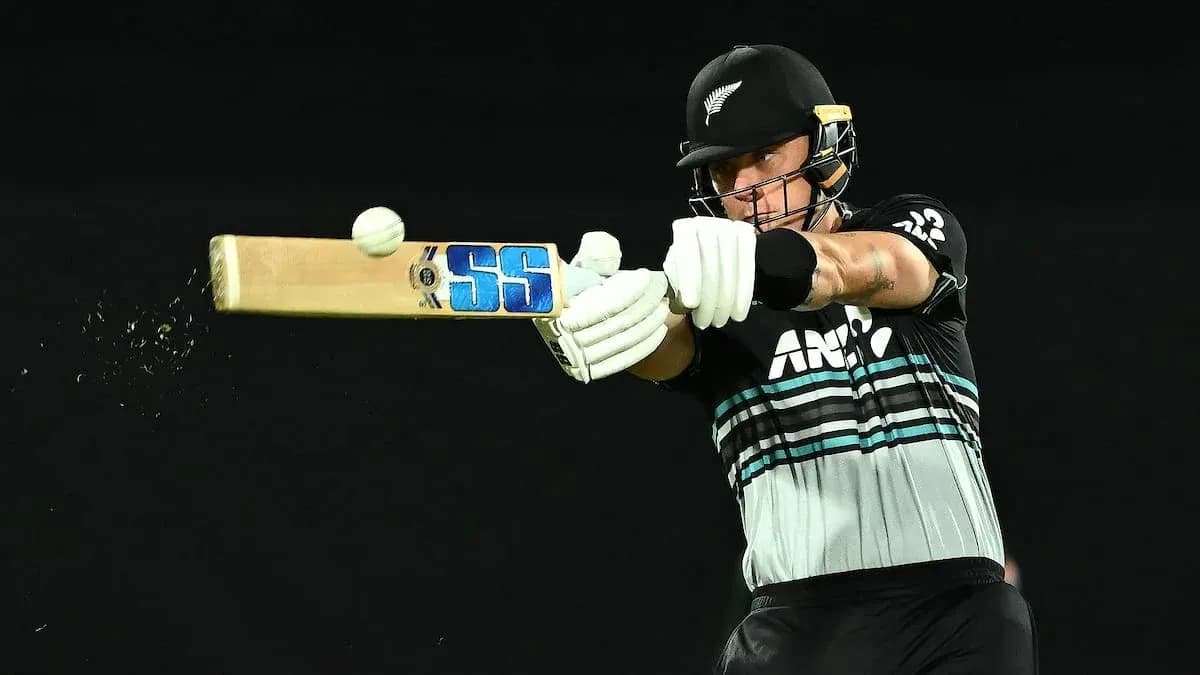
Three days after falling agonisingly short of a maiden senior international hundred against Zimbabwe, bowled around his legs for 94, the left-hander returned to the Namibia Cricket Ground and finished the job. This time he walked off with 101 from 53 balls, the missing milestone finally banked, the manner of it as brutal as it was emphatic.
Those who romanticise left-handers talk about silk and glide, about the ball whispering off the bat. Pretorius belongs to the other tribe. He hits. He heaves. He smites. Seven of his eight sixes sailed straight or just wide of it, in the V, where he plundered 60 from only 19 balls. When he went square, the ball didn’t so much travel as get expelled.
If Tuesday’s dismissal had carried a hint of frustration – stranded by a procession of partners and then overreaching – Friday felt like a personal correction. Same ground. Same format. Same intent. Different ending.
Esterhuizen lights the fuse
The irony was that for long stretches he wasn’t even the most fluent batter at the crease.
On the other side of the wicket, Connor Esterhuizen, a right-hander who calls himself “sometimes a bit of a nervous wreck out there”, played like a man without a care. He tore into Namibia’s attack for 88 off 40 balls, scoring at 220.00, almost 30 strike-rate points quicker than Pretorius.
Together they ripped the game open. Their opening stand of 156 from 70 balls bulldozed South Africa out of the blocks and into a position of complete control. Namibia’s bowlers weren’t just under pressure; they were under siege.
The partnership ended in the 12th over, almost abruptly, when Esterhuizen, having made the extraordinary look routine, finally miscued one. He swung wildly at Jan Balt, missed the line, and watched his leg stump cartwheel – a mirror image of Pretorius’ fate earlier in the week.
From the outside, Pretorius looked like the senior partner, the rock. He didn’t see it that way.
“Connor made it a lot easier for me, and when he lost his wicket I could take charge as the leader in the middle and try to capitalise,” he told the host broadcaster, a nod to the platform his opening partner had laid.
His method, though, has a calm core. “T20 is a game of fine margins and high-risk cricket shots. So when you’re in form you have to ride that wave as long as you can because it can change very quickly. I came with the same approach [as on Tuesday]: try to get to that 15-balls [faced] mark. I knew the rest would take care of itself.”
It did. South Africa surged to 228 for 4, the first 200-plus total of the tri-series and a number that looked, for a moment, like a finishing blow.
It wasn’t.
Namibia refuse to fold
Namibians are used to hard yards and thin margins, on and off the field. A chase of 229 should have been daunting. They treated it as an invitation.
Louren Steenkamp and Jan Frylinck launched the reply with a stand that bristled with intent and nerve. They added 119 off 65 balls for the first wicket and, as the partnership grew, so did the murmur around the ground: this was on.
Frylinck, another left-hander with a heavy bat, smashed 72 from 36 deliveries, matching South Africa’s power with his own. He picked up length early, dragged anything short, and kept the required rate within reach. For a while, South Africa’s 228 felt strangely fragile.
Then came the crack.
In the 11th over, Frylinck pulled Andile Simelane towards the square-leg boundary. It looked, initially, like six more. Tony de Zorzi had other ideas. He danced with the rope, hopping and skipping to keep his balance and his feet inside the field, plucking the catch and landing safely. One of the innings’ central pillars had gone.
Namibia didn’t fold. They just had to rebuild their dream on thinner beams.
Gerhard Erasmus stepped in as the organiser-in-chief. His unbeaten 30 from 26 balls lacked the pyrotechnics of Frylinck’s assault, but he kept the innings alive, nudging, steering, dragging the chase as deep as he could. Ruben Trumpelmann’s 21 off 10 injected another surge, a late jolt that again forced South Africa to glance nervously at the scoreboard.
The target, though, stayed just beyond reach. Namibia closed on 217 for 3, only 11 runs short, having made the highest chase of the tournament look, at times, entirely plausible.
Lessons in a narrow win
By the end, South Africa had their win, and Pretorius had his hundred. The dressing room, though, knew this was no procession.
“It was a bit closer than we wanted, but we’ve learnt to not take anything for granted in this game,” Bjorn Fortuin said afterwards. “A win’s a win and we did some good things, but there’s a lot to work on going into that last game.”
That last line might linger longest. South Africa have discovered a new, fearsome opening axis in Pretorius and Esterhuizen, a left-right pair that can rip games away inside the first 10 overs. They’ve also been reminded, starkly, how quickly T20 can turn when a side with enough belief and ball-strikers decides a chase is worth the risk.
Young Lou went back to reclaim the runs he left behind and found them waiting. The question now is whether South Africa can hold on to the momentum he and Esterhuizen have created, or whether another hungry side will come looking to steal some of those runs for themselves.