Laver Cup: Tennis' Bold Experiment in Team Competition
Tennis has never been short on history. What it has lacked, for decades, is a genuine shake‑up.
In 2017, the sport finally tried something different.
That year saw the launch of the Laver Cup, a made‑for‑TV, made‑for‑crowds concept co-created by Roger Federer and billed as tennis’ answer to golf’s Ryder Cup. Six players from Europe, six from the rest of the world, three days of singles and doubles. Team Europe versus Team World. Continental pride, or at least that’s the idea.
Nine editions in, with the 2026 event set to begin on September 25, the Laver Cup is still fighting for its place in the sport’s ecosystem. It has the star power. It has the staging. It has the prize money. What it doesn’t fully have, at least in some corners of the tennis public, is respect.
A tournament in search of legitimacy
From the outset, the Laver Cup has split opinion. Traditionalists eye it suspiciously, wary of anything that looks too polished, too choreographed, too close to an exhibition. Others see it as a rare injection of team emotion into a largely individual sport.
The scepticism has been loud. Former French pro Julien Benneteau summed up the harshest view on the Grandes Gueules du Sport podcast in 2024, calling the Laver Cup an event with “no sporting value” and insisting players turn up “because the cheque is huge.”
That cheque is not insignificant. The total prize pot for the 2026 edition stands at $1.5 million. Each player on the winning team will receive $250,000. The losers go home without prize money. For critics, it’s proof of a made-for-money spectacle. For organisers, it’s a statement that the event wants to be taken seriously.
The debate has never really gone away: is this competition or theatre?
Federer, Nadal and the first test
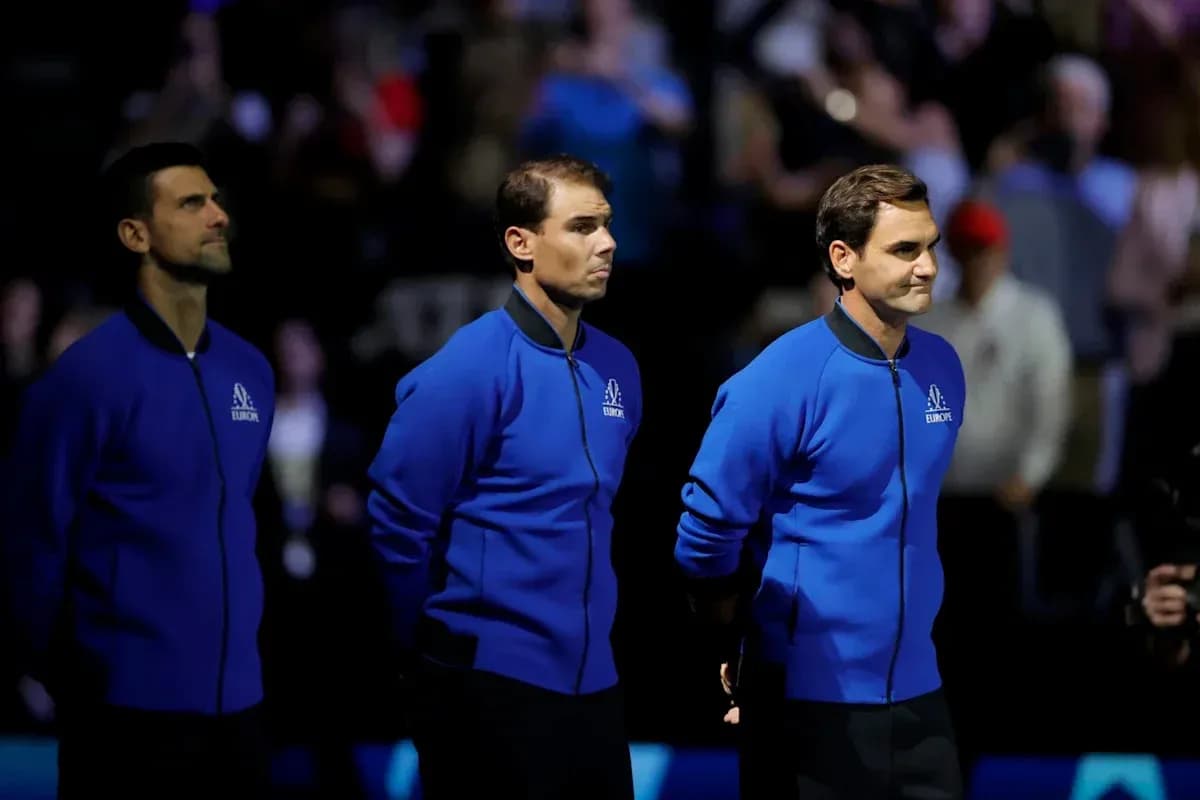
Federer and Rafael Nadal were confronted with that question before a single ball had been struck back in 2017. On the eve of the inaugural Laver Cup, both were pressed in a press conference on whether this was anything more than a glossy exhibition.
Nadal bristled at the idea.
“No, is not an exhibition at all. No, no, I don't think,” he said, pushing back firmly. “No, we are here to try our best, no? I woke up today at 4:00 in the morning to practice. An exhibition match, I don't practice before an exhibition match normally, no.
“We are here to try our best. We are here to try to win. Not at all like a friendly match, no? We are here to really play with passion and to play for our continent.
“We have a great team behind us. We want to do it well for all of them. Let's see if we are able to do it.”
Those words set the tone. The first edition delivered on the scoreboard too: Team Europe beat Team World 15–9, a result that helped sell the idea that this was a real contest, not a scripted show.
What lit the fuse for Federer
For Federer, the concept was always about more than a scoreboard. He wanted to capture something tennis rarely sees outside Davis Cup ties and Olympic weeks: raw, collective passion.
Asked in 2017 how vital it was to recreate the Ryder Cup’s intensity, he didn’t hesitate.
“Well, I think it's going to be vital,” he said. “That's why I'm very excited to see that the guys all arrived a day early.
“You know, they were supposed to arrive on Wednesday. They all came in on Tuesday. Everybody seems really eager to play, to win.
“But of course we have to give it the passion and the energy. Without that, the fans are just going to sit there and maybe enjoy some tennis, but they're not going to get into it.
“I hope that while we are playing on home soil, the fans are going to understand how much we need their support and how lovely it would be if everybody got really excited and make this event something very unique and special for years to come. But it's clearly crucial.”
That early arrival “excited” Federer. It suggested buy‑in, not obligation. Players weren’t drifting in at the last minute, ticking a contractual box; they were turning up ahead of schedule, ready to lean into the team dynamic.
Exhibition or evolution?
Since that first serve in 2017, the Laver Cup has done what its creators hoped: it has consistently attracted some of the world’s best players. The line‑ups, year after year, have given the event a sheen of credibility that no marketing campaign could manufacture.
Yet the perception battle rumbles on. For some, Benneteau’s assessment will always ring true. For others, Nadal’s 4 a.m. practice session says more about what this competition means to the players than any sceptical soundbite.
The ninth edition begins on September 25, 2026. The format is unchanged. The prize money is clear. The stakes, at least in terms of ranking points, remain non-existent.
What hangs in the balance is something less tangible: can an event born in 2017, in a sport obsessed with its past, ever be seen as more than a lucrative sideshow?