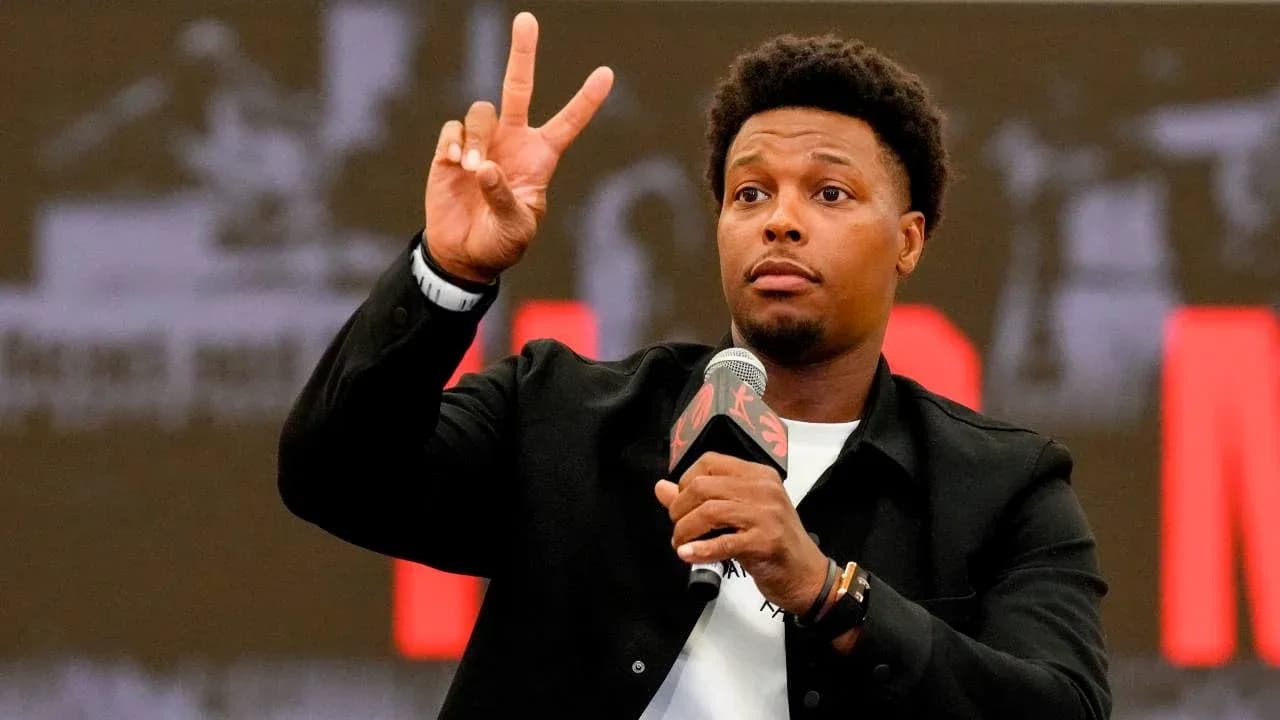
Kyle Lowry's No. 7 Jersey Retirement: A Celebration of Legacy
CALEDON, Ont. — Some jersey retirements are debates. This one was a layup.
Kyle Lowry’s No. 7 going to the rafters was never in doubt, just as Vince Carter’s dunks once felt inevitable the moment he gathered the ball and took off. Different eras, different styles, but the same destination: the top of Scotiabank Arena, where Carter’s No. 15 and Lowry’s No. 7 will soon hang side by side as the first two numbers the Toronto Raptors have ever retired.
One took the long way to get there. The other, the long view.
Lowry’s farewell, done on his terms
Lowry’s jersey will be retired on Jan. 10, when the Raptors host LeBron James and Lowry’s hometown Philadelphia 76ers. By then, the celebration will already feel like a season-long tribute.
The process began on July 7, when Lowry signed a one-day contract in Toronto so he could officially retire as a Raptor. It was symbolic, but it was also a statement: this is where his story truly lives.
This weekend is Stage 2 — a 36-hour whirlwind that feels very much like Lowry himself: busy, purposeful, and grounded in community.
It opened Friday at TPC Toronto at Osprey Valley with the KLOW Invitational, a charity golf tournament in support of the MLSE Foundation. On Saturday, the focus shifts downtown for Kyle’s Block Party, a free fan event in Jurassic Park outside Scotiabank Arena. That night, the dress code changes for A Night For Seven, a gala again backing the MLSE Foundation.
The guest list underlines his place in franchise history. Fred VanVleet, DeMar DeRozan, Serge Ibaka, CJ Miles, Danny Green, and former head coach Nick Nurse were among those out on the course with him Friday.
“It’s something I didn’t expect and I appreciate it,” Lowry said. “Words can’t describe how I feel about what they’ve done.”
For years, the only real question was timing. Lowry made it clear as far back as the 2020-21 season — when the Raptors were exiled to Tampa during the pandemic and a mid-season trade seemed imminent — that his final NBA paperwork would be signed in Toronto. He kept that promise.
He leaves as the franchise leader in assists, steals, three-pointers made, wins and playoff wins, and as the point guard who orchestrated the 2019 championship run. The jersey retirement is not a surprise. It’s a coronation delayed only by the calendar.
Lessons learned from Vince
The ease of Lowry’s farewell stands in sharp contrast to Carter’s long road back.
Carter’s exit, via trade early in the 2004-05 season, left scars. He was accused of quitting on the franchise just as he rocketed toward global superstardom. Over time, it became clear the organization had also failed him, struggling to build a serious contender around its first true megastar.
He never turned on the city. The fans, or at least a loud portion of them, turned on him.
It took almost a decade for the resentment to cool and for both sides to slowly rebuild trust. Only then could the work begin to bring Carter back into the fold in a meaningful way.
“The organization was in a far different place when Vince was here,” one insider said. “Kyle benefitted from the lessons learned from that.”
By the time Carter’s No. 15 went up in November 2024, the night felt like a full-circle moment — raw, emotional, and overdue. The Raptors, once unsure of how to handle their own history, finally looked like a club that understood what its legends meant, not just to the city but to its own identity.
They appear to have taken that experience and built a blueprint.
“I think the organization’s just maturing as the years go by,” said Nurse, now coaching a revamped 76ers team that will be on the floor when Lowry’s number rises in January. “So you have these occasions and this success to celebrate, right? It’s still a relatively new organization in the grand scheme of things. I was in our practice facility (in Philadelphia) and we have Moses (Malone) and Dr. J up there, and now the Raptors get to start telling some of their stories too.”
Building a Raptors tradition
The parallels between the Carter and Lowry celebrations are no accident.
Carter’s retirement festivities stretched beyond a single halftime ceremony. There was the resurfacing of a community court originally built by his foundation during his Toronto heyday, and even a signature jet from Air Canada saluting “Air Canada” himself. It was a multi-day, multi-layered tribute.
Lowry’s weekend follows that same philosophy: public events, charity ties, and a clear message that the franchise intends to celebrate its icons in full view of the city that embraced them.
The intent runs deeper than nostalgia. The Raptors want their stars to feel valued, long after they’ve moved on.
“Players talk, agents talk,” said one source. “They notice things like that.”
The organization wants that conversation to be positive. It wants its best players to believe Toronto can be a forever home, not just a stopover.
Lowry’s carefully managed departure and his seamless return underline that the club has grown up. It now knows how to honour its past without reopening old wounds.
Who’s next in line?
Once Carter and Lowry are in the rafters, the obvious question follows: who’s next?
DeMar DeRozan has the strongest claim on paper. He remains the Raptors’ all-time leader in points and games played and is heading into his 18th NBA season, now with the Denver Nuggets.
“I hope so,” DeRozan said when asked about the possibility of his No. 10 being retired. “This will always be home for me.”
Lowry didn’t leave any room for doubt.
“Oh, No. 10 should definitely go up there,” he said. “Without a doubt.”
Pascal Siakam offers a different kind of case. Now with the Indiana Pacers, he owns two All-NBA selections as a Raptor, started on the 2019 title team, and may be the franchise’s most remarkable development story — a late first-round pick who grew into an All-NBA forward.
Neither DeRozan nor Siakam chose to leave Toronto. Both departures carried a sting, and in some corners, they still do. Carter’s story, though, shows that time has a way of softening the sharpest edges. Lowry’s story shows what happens when the organization leans into reconciliation instead of running from it.
And then there is the wild card.
Could Kawhi Leonard’s No. 2 ever be retired?
On merit, that single season is as powerful as any in franchise history. Leonard led the Raptors to their lone championship and authored a run that changed the perception of the team across the league. Yet one year, no matter how brilliant, has traditionally fallen short of the standard for a jersey retirement.
Change the timeline, and the debate changes. If Leonard finishes his career in Toronto, if the next three seasons bring multiple playoff trips and at least one deep run, the conversation becomes real.
For now, it remains hypothetical. But Leonard is said to be open to the idea. Sources suggest that one of the reasons he chose to return to Toronto is the possibility of making it his permanent basketball home — an option that may not have been available after his time in San Antonio and, especially, with the Los Angeles Clippers ended on sour notes.
The future face in the rafters?
The most intriguing long-term case might be the one still in its early chapters.
Scottie Barnes, entering his sixth season, is already a two-time all-star with a second-team All-NBA nod on his résumé. He’s only 25, yet he has quietly climbed the franchise leaderboards: eighth in points, eighth in rebounds, sixth in assists, seventh in blocks, and on pace to crack the top 10 in steals before Christmas.
The Raptors have reached the playoffs twice in his young career and, with Leonard now on the roster, clearly intend to aim higher in the coming years.
Barnes watched Carter’s number go up. He’ll be in the building again when Lowry’s No. 7 joins it. He’s seen the standard set in real time.
If his own day comes — and the trajectory suggests it might — he can at least be sure of one thing: by then, the Raptors will know exactly how to raise another banner, and exactly what it should mean.