Khachanov Advances as Blockx Battles Injury at US Open
Karen Khachanov is into the US Open semi-finals, but this was no routine march past a wounded opponent. It ended abruptly, mid-sentence almost, when Alexander Blockx walked to the net halfway through the third set and called it. Body done. Spirit anything but.
“Blockx has nothing left,” Nick Lester said on commentary as the two men shook hands, the Belgian’s shoulders heavy but his eyes still defiant. It felt harsh, but it was true. The 21-year-old had pushed his debut US Open run as far as his battered frame would allow.
A young star’s body gives way
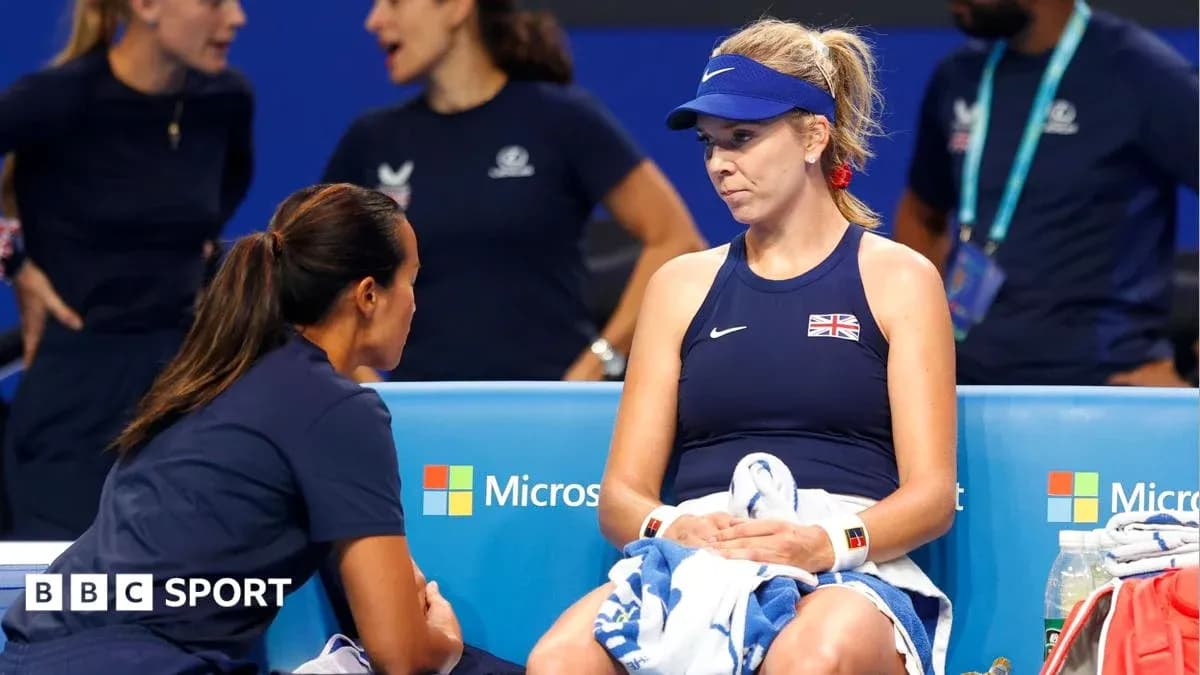
The signs had been there for a while. Blisters. A back that needed repeated treatment at the changeovers. Reports of a rib issue coming into the match. Each timeout added another layer of concern, his player box shifting from encouragement to anxiety as the match wore on.
Khachanov, relentless and experienced, had already pocketed the second set and was tightening the noose. At 1-1 in the third, the gap between the two wasn’t just on the scoreboard; it was physical. Blockx still chased, still swung, still refused to limp around and hand over cheap points, but the cost of every movement was starting to show.
“It’s looking ominous for the Belgian on his US Open debut. It’s been a memorable one, but the clock is ticking,” Lester noted earlier, reading the match – and the man – perfectly.
Respect earned in defeat
If the scoreboard belonged to Khachanov, the respect of the tennis world flowed heavily in Blockx’s direction.
Robbie Koenig, watching this run unfold, saw a player who has only just stepped onto the main-draw stage but already looks like he belongs. “He’s had some great wins, played some mesmerising tennis, especially against Flavio Cobolli,” Koenig said. For a 21-year-old, a first US Open main draw, and a quarterfinal berth, that word “mesmerising” is not thrown around lightly.
“We are going to see a lot more of this young man in the years to come – fingers crossed that he can stay healthy for long periods of time. He's got such an exciting game, he's got such a great attitude out on the court and he's got a big time mentality.”
Jelena Dokic went even further in her praise. As Blockx tried to decide whether to keep going or protect a fragile body, she zeroed in on the competitive fire that kept him out there.
“We can see what a great competitor he is … I give him so much credit for continuing competing because he doesn't want to retire and he wants to stay out here on the court and finish the match,” she said on Nine. But even she acknowledged the brutal calculation in front of him.
“With this many injuries and depending on also what they are, especially the rib as well … you've got to think, ‘can I do more damage here as well?’”
Still, the message he sent, Dokic argued, will echo beyond this fortnight.
“He’s showing incredible competitive spirit. This also actually sends a big message to the locker room as well – everyone is always watching. He's going to stay out there, that he's a great competitor. He's just 21! To stay out here and keep playing is an incredible effort.”
In the end, his body made the decision his mind didn’t want to. Khachanov moves on. Blockx leaves with a bruised torso, a taped-up back, and a reputation enhanced.
A tournament that refuses to sleep
While Blockx was grinding through pain, another storyline was building around this US Open: the clock. Not the shot clock. The actual time of night.
New USTA chief executive Craig Tiley has already promised a hard look at scheduling after the tournament produced its latest-ever finish. On Wednesday, the men’s quarterfinal between Carlos Alcaraz and Ben Shelton didn’t hit the Arthur Ashe Stadium court until after 11pm local time. Shelton finally ended it with an ace at 3.33am.
Tiley, who stepped into the role after his long tenure with Tennis Australia and the US Open, pointed out that the perfect storm of marathon matches created a schedule that simply buckled.
All four matches in the day session went the distance. Three of them needed a 10-point deciding tiebreak.
“If you look back at schedules, you don't get that ever. So that was particularly special,” he told Stan Sports. The crowd stayed. The atmosphere held. The global audience loved the drama. The players and staff? That’s another story.
“The stadium was full. Everyone was loving it. We had people watching from all around the world. It was a great time for many people – not necessarily for everyone having to stay up here late and watch it – but it’s just one of those things.
“One thing we always do at the end of every event, we have a look and see what's worked best. Scheduling is also on that list. We'll always look at our options.”
The numbers underline the chaos. Aryna Sabalenka needed 2 hours 22 minutes to edge Linda Noskova 7-6 (1), 3-6, 7-6 (10-7). Frances Tiafoe then clawed back from two sets down to beat Alex Michelsen 5-7, 3-6, 7-5, 6-3, 7-6 (10-6) in 4 hours 39 minutes.
By then, the night session was running almost two hours late. Jess Pegula and Emma Navarro went 2 hours 21 minutes, Pegula winning 3-6, 6-4, 6-3. Only then did Shelton and Alcaraz step into the early-morning madness, the American winning 6-7 (5), 6-1, 6-3, 1-6, 7-6 (10-7) in 4 hours 28 minutes.
It made for unforgettable television. It also pushed the sport closer to a breaking point in the debate over player welfare and late-night finishes.
Gauff channels Tiafoe’s fight
Coco Gauff knows exactly what those long nights can do to a player, and she used one of them as fuel.
Against Mirra Andreeva, Gauff dropped the first set and stared down match points in a second-set tiebreak. She refused to fold, dragged the contest into a decider, and found a way to win in three.
Afterwards, she admitted her mind had gone straight to Tiafoe’s epic escape against Michelsen, when he trailed by two sets and faced his own brink before turning the match on its head.
“I came out not feeling the ball, giving her too many free points, and Mirra is playing at a great level,” Gauff said in her on-court interview. “To be honest I was thinking about Frances Tiafoe and how he came back yesterday. We all want to do well in front of this crowd.
“I was just trying to leave this court with no regrets, I didn’t know how the outcome would go, but really, really thank you to you guys. You really pulled me through.”
Her reward is a semifinal against the sport’s newest official standard-bearer.
A new No.1 steps up
The WTA rankings will have a fresh name at the top on Monday. Elena Rybakina is the new world No.1.
Aryna Sabalenka’s reign ends at a remarkable 99 weeks, a stretch that began in the wake of Ash Barty’s sudden retirement in 2022. Since then, only Sabalenka and Iga Swiatek have occupied the summit. That duopoly is over.
Rybakina’s three-set win over Qinwen Zheng this morning locked in her rise, even with Sabalenka still alive in the draw. It’s a shift that reflects months of relentless consistency from the Kazakh star, but she was in no mood to celebrate a number while a major title remains on the line.
“It’s just a number right now and of course I’m in the semis so my goal is to win the tournament,” she said. “It’s an amazing achievement but you know how quick everything can change in tennis, ranking-wise, during the match, so I feel like I just need to focus on my game, try to recover and enjoy tomorrow.”
Rybakina will face Gauff on Friday, a new No.1 against America’s brightest young force in front of an Arthur Ashe crowd that has already carried multiple comebacks over the line this week.
Khachanov marches on. Blockx limps away with his reputation burnished. The schedule creaks, the clock keeps pushing into the small hours, and a new world No.1 steps into the spotlight.
The question now is simple: who will still be standing when this brutal, exhilarating fortnight finally stops stealing sleep?