Kevin Pietersen Returns to England Cricket as a Mentor
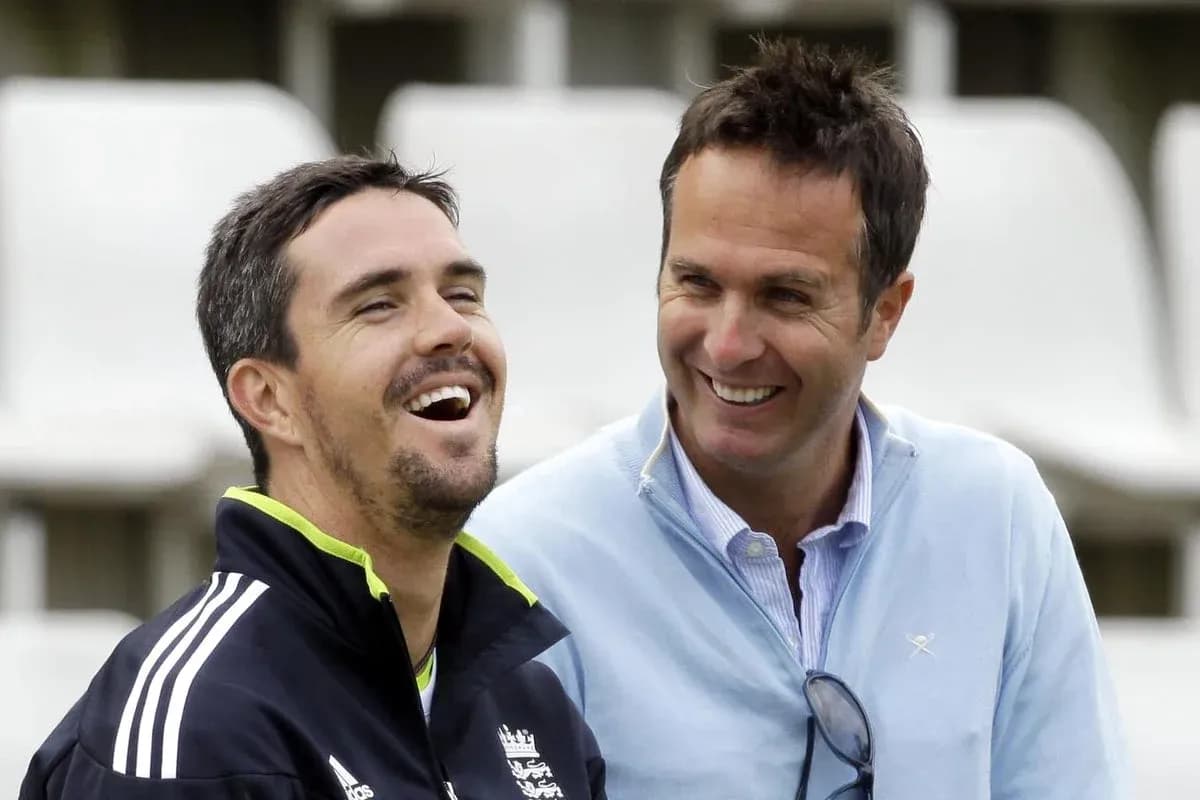
Kevin Pietersen is back in England colours – but this time with a notebook, not a bat, and Michael Vaughan thinks it is exactly the sort of risk English cricket should be taking.
A dozen years after being effectively discarded by the England hierarchy following an explosive fallout, Pietersen has been brought into the white-ball set-up as a specialist mentor for the ODI and T20 sides. For a player whose England story seemed finished in 2014, it is a remarkable return.
Vaughan, who captained Pietersen in the 2005 Ashes and knows both his genius and his volatility, did not try to dress it up as a safe appointment.
“I like it, it’s quirky. It’s a risk, it has to be a risk because you’re not too sure what you’re going to get because Kev’s not done a great deal of coaching,” he said.
That uncertainty is the point. Pietersen has never been a system man. He is a straight shooter who has spent the past decade calling it as he sees it from commentary boxes and studios around the world. Only last year he publicly criticised England’s limited-overs side for what he saw as flimsy preparation on a tour of India. Now he walks into the very dressing room he took aim at.
What he does bring is a batting brain and a competitive edge that Vaughan ranks as unmatched in his era.
“His knowledge of batting, his knowledge of winning, his knowledge of playing at the right intensity at the right moments, there’s no-one been better in my time playing for England,” Vaughan said. “I’m happy he’s back in English cricket because (in) 2014, I always felt that Kev was dealt an iffy hand.
“Kev brings a lot of things on himself but there are many others who have done equally silly things and have been allowed back into English cricket.”
This is not Pietersen’s first taste of mentoring. He has worked with Delhi Capitals in the IPL, though that stint became a headline for the wrong reasons when he disappeared to the Maldives for a holiday midway through the 2025 tournament. Since retiring in 2018, his main presence has been on television, not in dressing rooms.
Now he is in place at the Utilita Bowl, joining up with England ahead of the T20 series against Sri Lanka that starts on Tuesday. His involvement is set to run through to next year’s ODI World Cup, a tournament staged largely in his native South Africa. The narrative writes itself: the prodigal son, back in England kit, trying to help deliver a global title on home soil – just not his adopted one.
Vaughan, though, admitted he expected a different phone call for his former team-mate.
“I’ve seen him at Delhi doing a few coaching gigs – I believe he hasn’t got two weeks in the Maldives in his contract, which is good, I believe he has to stay and coach,” he joked.
“I was actually surprised they’ve brought him into the white-ball set-up. I thought the Test team would have approached him. The white-ball team over the last year have been doing quite well.
“But I would think that the batters in the white-ball team who play Test cricket, he’ll be having an influence on them.”
That crossover could be crucial. England’s white-ball side has rediscovered some of its spark, but the bar is higher now. It is not about being competitive; it is about stacking trophies in the cabinet. Pietersen has never been interested in anything less than that.
“Winning will be the key,” Vaughan said bluntly. “They’ve got to start winning trophies, to justify all these decisions and, let’s be honest, a huge amount of money being spent. England have to start winning trophies.”
Vaughan was speaking in a week that showed another side of English cricket’s future. The inaugural winners of the Barclays Knight-Stokes Cup were crowned at Lord’s, with boys’ and girls’ state-school teams walking out at the game’s most famous ground. It is a national hardball competition for state schools, and the scale is already striking: an estimated 15,744 students and 1,100 teams are set to be involved in the 2025 edition, with applications now open.
“This will go from strength to strength,” Vaughan said. “I’m hoping next year that we’ll have more than 2,000 teams enter, that’s the goal.”
On one front, England are gambling on a maverick to sharpen the elite. On another, they are trying to widen the base, dragging more state-school cricketers into the system and giving them a taste of Lord’s.
If Pietersen can help turn that investment at the top into silverware, his second act in English cricket will feel less like a risk and more like a reckoning long overdue.