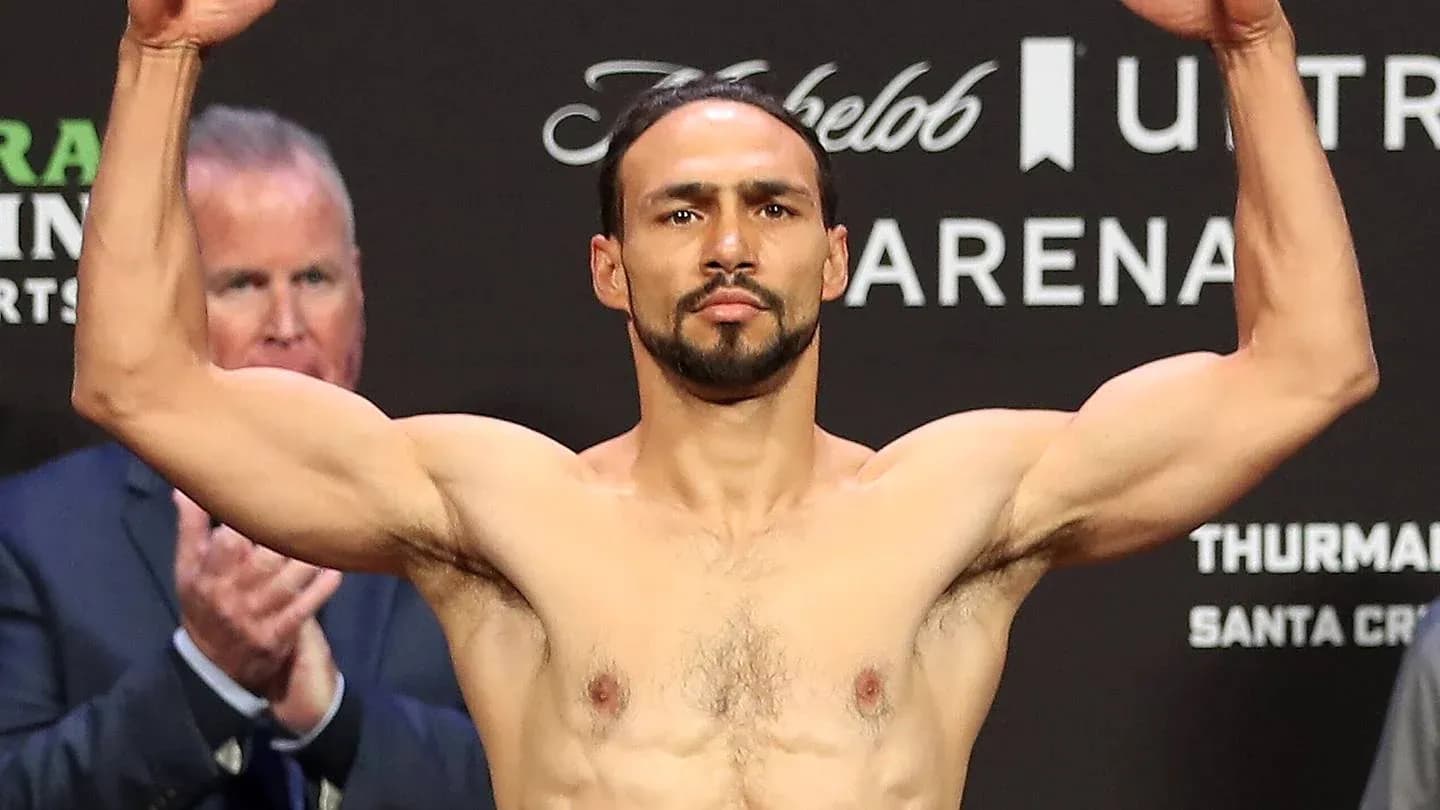
Keith Thurman Faces Crucial Test Against Vergil Ortiz Jr.
Keith Thurman has spent most of his career walking into arenas as the man to beat. The last time he walked out, he looked like something else entirely.
Sebastian Fundora didn’t just take Thurman’s super welterweight title; he took control of the ring and never gave it back, closing the show with a brutal sixth-round knockout. For all the talk beforehand about Thurman’s experience and ring IQ, the fight turned into a showcase for Fundora’s freakish dimensions and relentless output. At 6'6", with arms that seemed to stretch from corner to corner, Fundora kept Thurman on the end of that long southpaw jab and punished him whenever he tried to step inside.
The gap was wider than many expected. As the rounds rolled by, Fundora’s dominance grew, and Thurman looked like a man trapped in a puzzle he couldn’t solve.
“Nobody's really seen a Sebastian Fundora until you're in the ring with a man. That height, that reach, the volume. Uh, he's a beast and a problem for everybody, man,” Thurman admitted later, a veteran acknowledging the harsh reality of a younger, awkward champion in his prime.
Now comes the hard part: the climb back.
A veteran on the clock
Thurman is 37. He knows what that number means in a division stacked with younger, fresher punchers. He also knows what his résumé still represents. Former unified welterweight champion. Big nights. Big names. Big moments. On paper, his place in the sport is safe.
But paper doesn’t fight. And Thurman has never been content to live off old posters and highlight reels.
So instead of easing his way back, he’s heading straight into danger again. In December, he’s set to challenge WBC super welterweight champion Vergil Ortiz Jr., a man whose record reads like a demolition report: 91.7% knockout rate, almost everyone he touches stays hurt.
That’s not a stay-busy fight. That’s a dare.
Asked on The Last Stand with Brian Custer why he signed up for Ortiz at this stage, Thurman’s answer was blunt, the way fighters talk when they’ve made peace with risk.
“I mean, hey, you got to eat what's on the plate. You know what I'm saying? . . . Don't play with Keith Thurman. You're not going to get a no, you know. I'm not scared of anybody."
That’s pride, but it’s also a statement of intent. Thurman isn’t looking for soft touches or farewell tours. He’s looking for relevance, one more defining night, maybe more than one.
Ortiz brings the fire
Ortiz doesn’t do cautious. He doesn’t probe and prod and wait for the scorecards. He loads up, steps in, and tries to end your night early. With that kind of knockout ratio, he has every reason to trust his power.
The question is whether Thurman, edging toward 40, can still take that kind of heat and turn it into an advantage. Can the veteran legs still glide him out of trouble? Can the reflexes still pick off shots, create angles, and make a younger puncher pay for his aggression?
If he can, the fight becomes a chess match with heavy hands. If he can’t, it becomes a countdown.
Thurman has built a career on timing, composure, and the ability to rise when the lights burn hottest. Those qualities will have to carry him now, because the physical gap is narrowing with every camp, every round, every punch absorbed.
A crowded road back to the top
The stakes go far beyond one belt.
Super welterweight is packed at the top, and Thurman’s name still carries weight — but only as long as he keeps winning. A decisive victory over Ortiz does more than hand him a title. It reopens doors that slammed shut after the Fundora knockout.
Beat Ortiz convincingly, and the conversation changes. A rematch with Fundora suddenly feels like unfinished business instead of a mismatch. A clash with Jaron “Boots” Ennis at 154 turns from fantasy talk into a real, high-profile possibility.
Lose, or scrape by without convincing people he still belongs, and the landscape looks very different.
Thurman understands all of this. At this stage, every fight is a filter. You either come out the other side as a threat or you get pushed toward the margins, where the big names stop calling and the big nights fade away.
So December isn’t just about a belt, or a comeback, or pride. It’s about whether Keith Thurman can still force a brutal, unforgiving division to say his name with respect — or whether the Fundora knockout was the first clear sign that time has finally caught up with him.