Kawhi Leonard Returns to Toronto: Raptors Bet Big on Championship Window
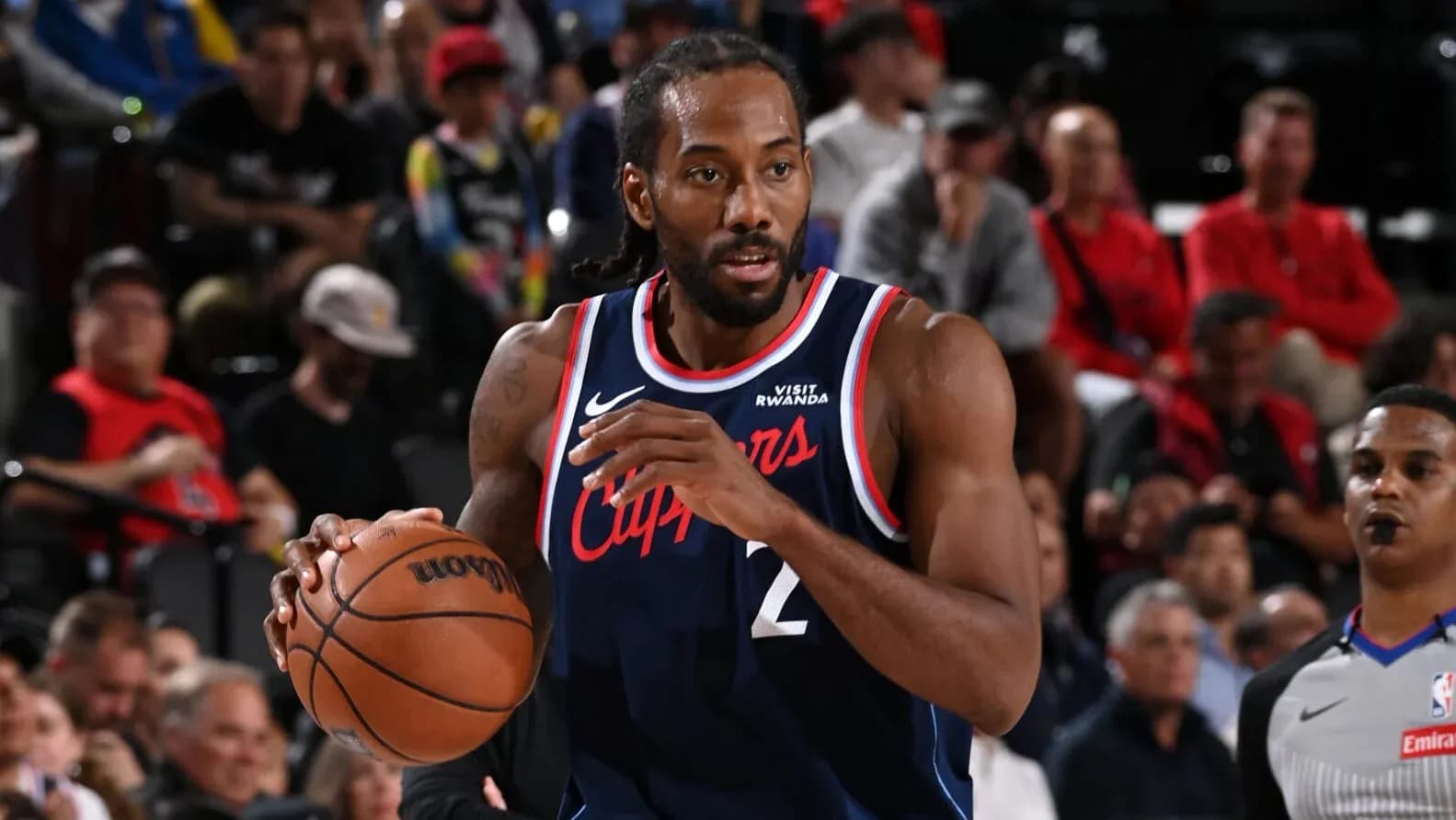
Kawhi Leonard is coming back to Toronto. Seven years after delivering the Raptors’ first championship and walking out the door in free agency, the franchise has pushed its chips back in for the player who changed everything once before.
This time, the price is enormous.
Toronto is sending Gradey Dick and Brandon Ingram to the LA Clippers, along with two unprotected first-round picks, a first-round pick swap and two second-rounders. It’s the kind of package you move only if you believe the window is cracking open again — and that Leonard can still be the one to kick it wide.
The Raptors just authored their best season in six years, 16 wins better than 2024-25 and plus-2.9 points per 100 possessions. That’s not a title résumé yet. It is, however, the platform for a leap. This trade is Toronto betting that Leonard can turn a promising rise into a real threat in the Eastern Conference.
Defense gets teeth — again
Toronto already guarded at a level that travels. Fifth in defensive efficiency last season, the Raptors allowed just 112.1 points per 100 possessions with an aggressive, disruptive scheme that chased shooters off the line and lived in passing lanes.
But the numbers against the league’s elite told a harsher story. Against the top 10 offenses, that defense slid to 12th, giving up 117.3 points per 100. In the first round of the playoffs, they again ranked only 12th on that end. Good. Not suffocating.
They also fouled. A lot. Opponents posted the league’s 23rd-lowest free throw rate against them in the regular season, and that problem only grew in the postseason, where rivals attempted 31.8 free throws per 100 shots from the field.
Leonard doesn’t erase every flaw, but he sharpens the edges. He’s no longer the turbo-charged wing terror of five or six years ago, yet he remains a plus defender who reads plays early and, crucially, stays out of foul trouble. Last season he piled up 122 steals and 27 blocks against only 78 personal fouls. Among 378 players who logged at least 500 minutes, no one matched his ratio of combined steals and blocks per foul.
That matters for a team that wants to crank up pressure without sending opponents to the line all night.
There’s also the frontcourt context. Jakob Poeltl, once a reliable anchor, struggled badly in space and at the rim. Opponents shot 63.9% at the basket with Poeltl as the primary protector — the worst mark of his career. When the playoffs came, rookie Collin Murray-Boyles played 191 minutes to Poeltl’s 134, a quiet but telling shift.
A front line of Leonard, Scottie Barnes and Murray-Boyles would be undersized on paper, but on the floor it would be long, switchable and relentless. Swaps from Ingram to Leonard on the wing turn good defensive possessions into the kind that break an opponent’s rhythm over a series. With Leonard back in the fold, Toronto has a real shot to not just stay in the top five defensively, but to hold up better against the league’s best attacks when it matters most.
The closer they never really replaced
For all the defensive bite and transition fireworks — the Raptors ranked third in the league with 28.6 transition points per game — their offense stalled when the game slowed down.
The halfcourt clock became their enemy. Only the Indiana Pacers posted a worse effective field goal percentage in the final six seconds of the shot clock than Toronto’s 43.3%. Possessions bogged down, advantages fizzled, and late-clock heaves became a regular feature.
Leonard walks straight into that gap.
Over the last three seasons, he’s posted a 53.0% effective field goal percentage in those same late-clock situations, ninth among 131 players with at least 250 attempts. When the play dies, he doesn’t. He manufactures something.
Both Leonard and Ingram sit among the 28 players who’ve logged at least 1,000 isolation possessions in the last three years, but the efficiency split is stark. The Clippers scored 1.07 points per chance when Leonard went one-on-one — sixth-best in that high-usage group. Ingram’s teams, in New Orleans and Toronto, managed just 0.99 points per isolation, 24th of the 28.
That gap is the difference between a decent scorer and a genuine end-game weapon.
Toronto has owned the league’s sixth-worst offense over the past three seasons. If the Raptors keep running in transition the way they have, then tilt the late-clock and isolation math in their favor with Leonard, they have a realistic path to their best offensive season since his first, unforgettable year in Canada.
A playoff résumé that still scares people
Leonard’s legend in Toronto will always start with 2019, but his playoff body of work stretches far beyond that run.
There are 89 players in NBA history who’ve averaged at least 20 points per game across 10 or more playoff games. Among them, Leonard’s true shooting percentage of 62.1% ranks second, just behind Anthony Davis at 62.2%. Davis has played 60 playoff games. Leonard has played 146.
Since 2017, his postseason numbers border on absurd: 28.6 points per game on 63.2% true shooting over 71 playoff contests. He’s one of only five players ever to record at least three postseasons — 2017, 2019 and 2021 — with 25-plus points per game and at least 60% true shooting across 10 or more games.
Toronto’s offense in last season’s first-round loss to Cleveland wasn’t a disaster; they scored 111.9 points per 100 possessions, a shade better than the series average. But there’s a difference between “respectable” and “we have Kawhi Leonard.”
He doesn’t just raise your floor. He bends an entire series around his ability to score efficiently at volume, to dictate terms possession after possession. The Raptors know that better than anyone.
Clippers hit reset after the last big swing
For the Clippers, this trade feels like the final act of a rapid, ruthless teardown.
A year ago, they loaded up around Leonard, James Harden and Ivica Zubac with Bradley Beal, John Collins, Brook Lopez and Chris Paul. On paper, it looked like one last, lavish push with a veteran core.
Now? Lopez is the only one of those seven still on the roster.
Paul’s homecoming barely got started before he was gone. Harden and Zubac left at the deadline. Leonard is headed back to Toronto. Beal and Collins, both unrestricted free agents, are unlikely to return.
The numbers underline just how dramatic the shift has been. As of Tuesday night, with Kobe Sanders expected back, the players under contract or agreed for 2026-27 account for only 42% of the Clippers’ total minutes from 2025-26 — the lowest continuity rate in the league by a wide margin. Even if restricted free agents Bennedict Mathurin and Jordan Miller re-sign, that figure only climbs to 52%, still second-lowest, just ahead of the Lakers.
Five months ago, the Clippers were a veteran contender in theory, if not in practice. They ranked 24th in the percentage of minutes given to rookies and second-year players — just 12% of their total.
Then came February 1, and the organization pivoted hard. The roster has been overhauled, the timelines reset. The future now points toward Darius Garland and rookie guard Keaton Wagler as the central pillars of a younger core.
They had the league’s fourth-best regular-season record over Leonard’s seven years in LA. That stat sounds flattering until you add the caveat: best record among teams that didn’t win a championship in that span.
The Clippers are walking away from that era now, finally and decisively.
Toronto, meanwhile, is walking straight back into it — eyes open, stakes high, and fully aware of what Kawhi Leonard can still do when the lights are brightest.