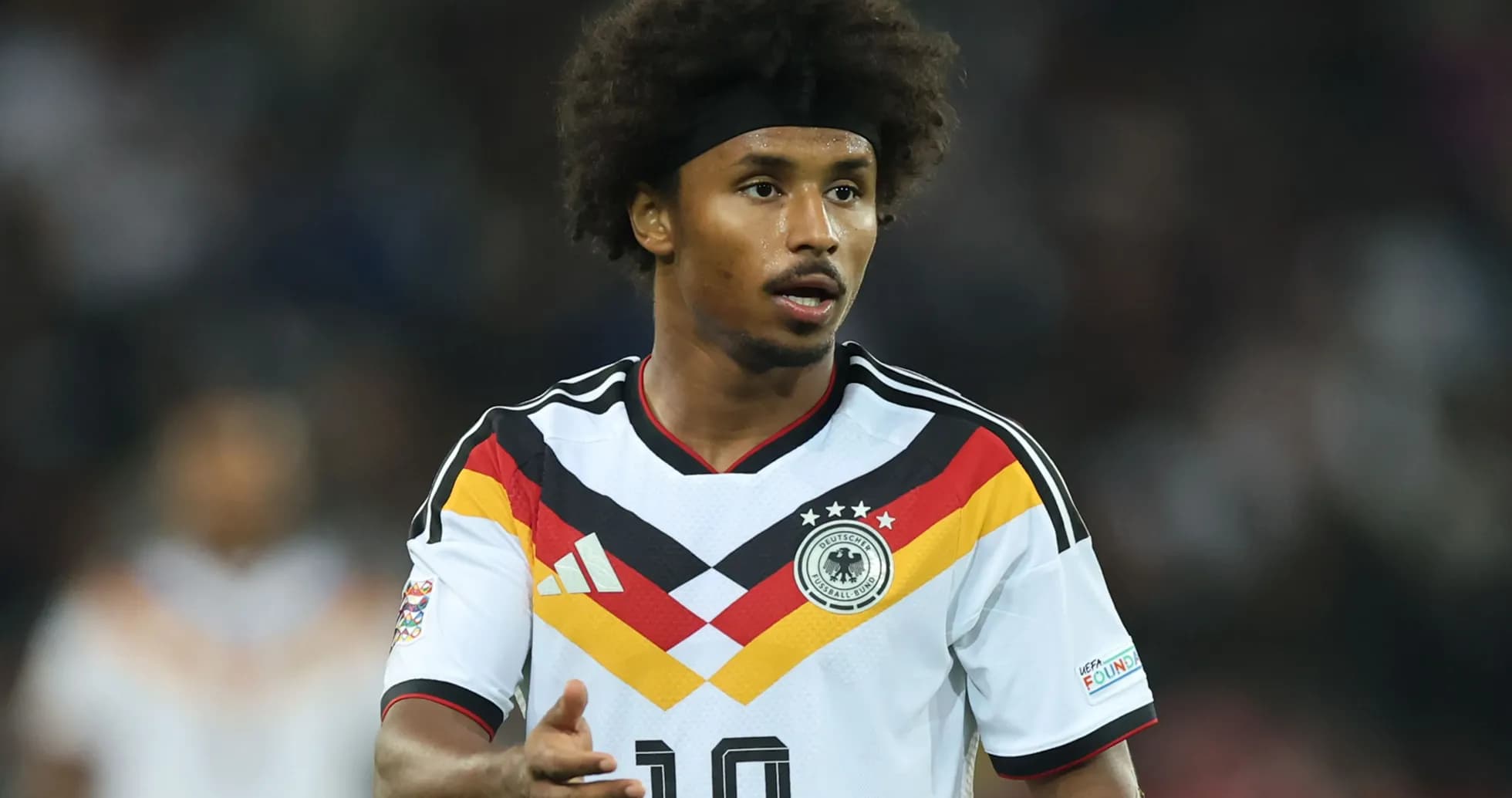
Karim Adeyemi's Omission from Germany Squad Ignites Debate
Karim Adeyemi has discovered the hard way that form at club level does not guarantee a ticket to Jürgen Klopp’s Germany.
The 24-year-old forward, thriving in his first months at FC Barcelona, has been left out of Klopp’s 24-man DFB squad for the upcoming games against Serbia and the Netherlands. For a player with Adeyemi’s pace, pedigree and current numbers, it is a brutal cut – and one that has ignited a fierce debate in Germany.
A Barcelona starter, a Germany absentee
Adeyemi’s start in Spain has been exactly what Barcelona paid €22 million for in the summer. Four goals, three assists, seven goal contributions in 14 competitive matches: those are not the figures of a fringe player easing his way into a new league. Under Hansi Flick – the same coach who handed him his Germany debut in autumn 2021 – he has carved out a role, scored important goals and, crucially, bought into the collective.
Dietmar Hamann, speaking on Sky, underlined that shift in mentality.
“They paid a lot of money for him, but so far he has done superbly,” the former Germany midfielder said. Adeyemi, he noted, has “put the team first to some extent” at Barça, a contrast to his erratic spells at Borussia Dortmund where he “repeatedly had high points, but he also disappeared for long spells.”
“Recently, he has been relatively consistent,” Hamann added. Consistent enough, he thought, to make Klopp’s squad for Serbia on 13 November and the Netherlands on 16 November. “I was surprised that Jürgen Klopp didn't take him. We know that pace is an incredible weapon in modern football. When you look at the squad, there aren't many players in it who have that pace.”
Hamann is not alone in his surprise. On current club form, Adeyemi looked a logical pick. Klopp saw it differently.
Klopp’s standard: run forward, run back
The decision, in the eyes of another former Germany international, has less to do with goals and more to do with graft.
Roman Weidenfeller, who shared a dressing room with Klopp at Borussia Dortmund, pointed to Adeyemi’s work without the ball as the decisive factor. On Sky’s “Triple – Der Hagedorn-Fußballtalk”, he went back to Klopp’s first matches in charge of Germany, where Adeyemi played 80 minutes in one outing against the Netherlands and 15 in the other.
“He started very well against the Netherlands,” Weidenfeller said. But then came the moment that still hangs over Adeyemi’s international résumé: a gilt‑edged chance, blasted over the bar. “That would have been the winning goal for Germany in Holland.”
Missed chances happen. What troubles Klopp, Weidenfeller suggested, lies deeper.
“Karim was too slow to react and track back, time and again. And Jürgen Klopp does not like that at all. Of course, Jürgen gives you every freedom going forward, but you always have to track back.”
Weidenfeller knows that demand better than most. Under Klopp at Dortmund, forwards and midfielders lived on an unforgiving diet of pressing triggers and recovery runs. Any lapse out of possession stuck out like a flare.
“I think those are the little things that end up bothering Jürgen, and perhaps that could be why he wasn't called up,” Weidenfeller said. “Maybe as a little warning.”
A warning, not a verdict. But one that cuts deep for a player still trying to secure a permanent place in the national setup.
A career still in between
Since his debut in 2021, Adeyemi has made 13 appearances for Germany without ever nailing down a regular spot. His Dortmund years explain part of that. The explosive bursts were there, the game‑breaking speed too, yet the output and consistency never quite matched the raw tools. Long stretches passed with him on the periphery, flashes of brilliance overshadowed by quiet weeks.
The move to Barcelona this summer looked like a reset. New league, new coach, and a familiar face in Flick, the man who once trusted him on the international stage. At Barça, Adeyemi has done much of what his critics demanded: sharpened his end product, embraced the collective, shown he can contribute regularly at a world‑class club.
That is why his omission hits harder. He has, at least statistically, answered the questions. Klopp has thrown a new one back.
Klopp’s attacking call
The Germany coach has not left himself short of attacking midfielders. In Adeyemi’s place, Klopp has turned to a mix of established and emerging options: Said El Mala (1. FC Köln), Derry Scherhandt (SC Freiburg), Florian Wirtz (Liverpool), Lennart Karl (Bayern Munich), Brajan Gruda (RB Leipzig) and debutant Wael Mohya (Borussia Mönchengladbach).
It is a group that offers craft, intelligence and pressing energy. What it largely lacks is Adeyemi’s raw, terrifying pace in behind. Hamann’s point lands here. In an era where one sprint can break a defensive block, leaving out one of the few German forwards who can truly stretch a back line is a bold move.
Klopp, though, has never selected on speed alone. His teams run as units, not as sprinters. If Weidenfeller has read him correctly, Adeyemi’s omission is less about who he is with the ball and more about who he is in those 10 seconds after possession is lost.
Nations League pressure rising
All of this plays out against an uncomfortable backdrop. After four Nations League games, Germany sit third in their group on five points, three adrift of the Netherlands and Greece. Only the top two advance. The margin for error is shrinking.
Serbia and the Netherlands are not fixtures for experimentation for the sake of it. Every call Klopp makes now carries weight. Every omission sends a message.
Adeyemi will watch this international break from Barcelona, working under Flick, refining the off‑ball habits that may yet win Klopp over. The numbers say he is ready. The squad list says he still has convincing to do.
For a player who can decide games in a heartbeat, the question now is simple and brutal: can he run hard enough, often enough, to convince the one coach in German football who demands it more than anyone else?