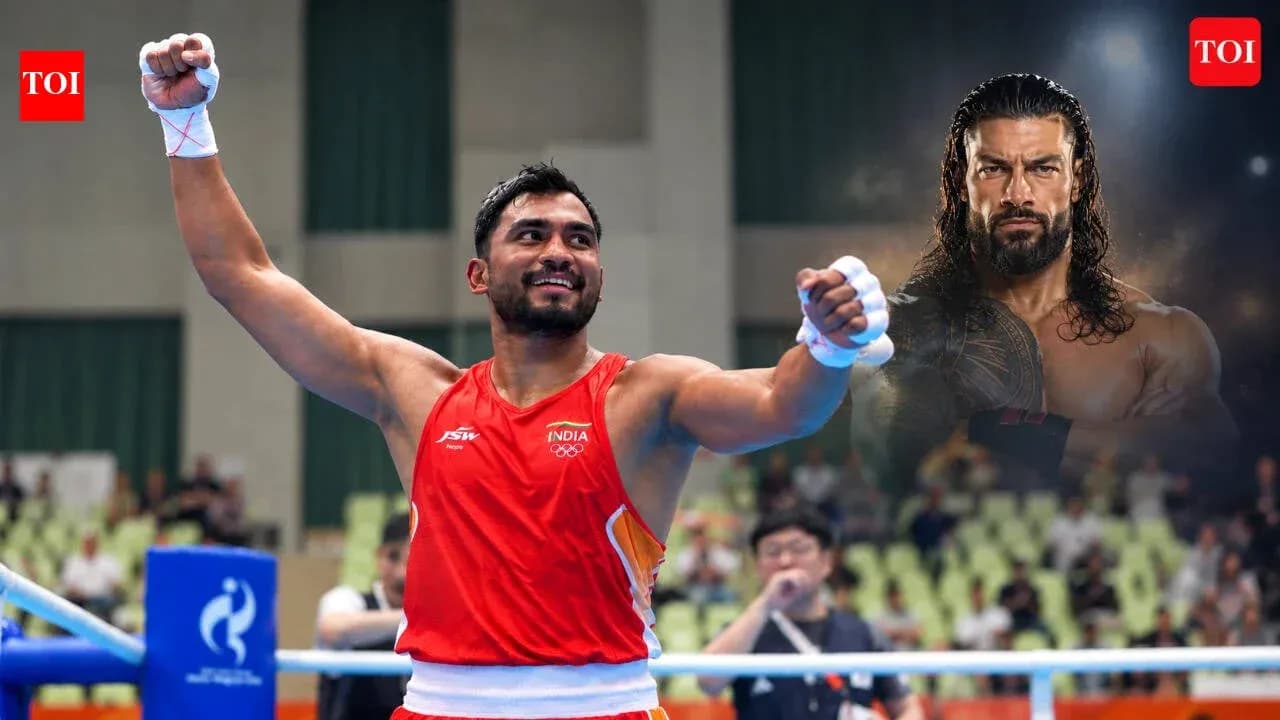
Kapil Pokhariya: From WWE Dreams to Asian Games Bronze
The first ring Kapil Pokhariya ever stepped into wasn’t made of ropes and corner posts. It was a cotton-filled mattress on the floor of his house in Chakarpur village, Khatima. The turnbuckles were pillows. The opponent was imaginary. The inspiration was very real.
Roman Reigns.
He would skip meals and outings just to catch WWE on television, glued to the screen as Reigns walked down the ramp. Once the show ended, the living room turned into his arena. Pillows flew, walls took the impact of wild throws, and a homemade punching bag stuffed with mountain soil absorbed the rest. It looked like a phase. It became a foundation.
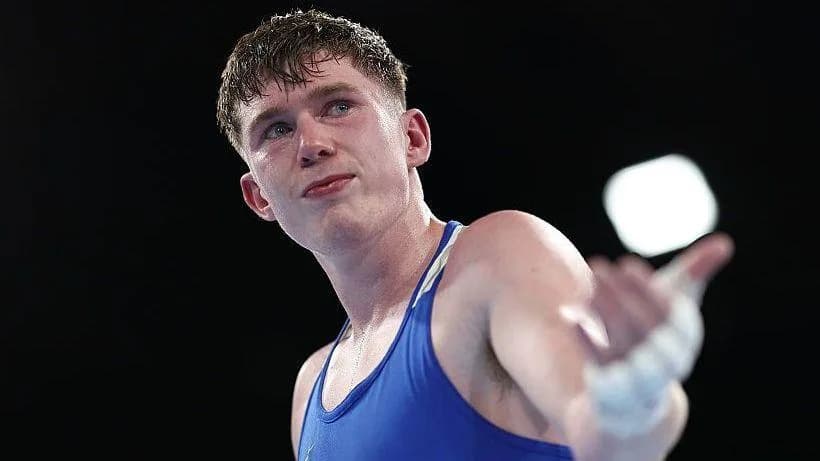
Years later, that boy from a village far removed from India’s boxing hubs stood on the Asian Games podium in Aichi-Nagoya with a bronze medal in the men’s 90kg category, an Indian Army havaldar with a continental honour to his name.
“I never knew that copying Roman Reigns and practising those punches would bring me this far,” Kapil told TimesofIndia.com. He still has the recordings of those old WWE shows. The favourites haven’t changed: WrestleMania and Money in the Bank.
From Chakarpur’s Dust to Asia’s Big Stage
Chakarpur is not Bhiwani, not Mary Kom’s Manipur, not one of the established nurseries that regularly feed Indian boxing. It is a small village in Uttarakhand, where boxing wasn’t even on the radar.
His father, Narendra Singh Pokhariya, had served in the Indian Army. The dream for his son was clear and traditional: study hard, clear the exams, join the Army as a commissioned officer. Boxing had no place in that plan.
What did have a place, at least at first, was frustration. Narendra watched his son mimic WWE stars, breaking things around the house in the process. The scoldings came. So did the beatings. But the boy didn’t stop. One day, returning from school, Kapil filled a thick sack with sand and started punching it with everything he had.
That changed everything.
A teacher at a nearby school taught boxing. Kapil had seen students punching a bag and decided he needed one too. The homemade sack was his answer. His father, who once dragged him away from these antics, now took him to a training centre and got him admitted.
That was the real beginning.
A Makeshift Ground, a Quiet Coach, and a Brutal Lesson
Kapil’s first steps into proper boxing did not come under bright lights or in a state-of-the-art academy. The training ground was small, the facilities basic. He shared the space with boys his age and older, all trying to learn the craft in snatched hours.
The sessions were conducted by coach Pooran Bohra, who trained a small group only on selected days of the week. Limited time. Limited equipment. Unlimited hunger.
“I listened to him carefully and repeated everything he taught me when I returned home,” Kapil recalled. The obsession that once fuelled his WWE re-enactments now powered his drills.
In 2015, he entered his first state-level competition, full of excitement, ready to test himself. The reality hit harder than any punch he had faced.
He lost in the first round of his first-ever competitive bout.
The crowd was larger than anything he had seen. The nerves tightened. The debut ended in disappointment. But instead of breaking him, that defeat sharpened his resolve. The hurt lingered, and with it, a decision: this was not where his story would end.
By the time he arrived at a national-level competition, he was a different fighter. This time, he didn’t just win bouts. He won the gold medal.
The reward went beyond the podium. The performance opened the door to the Indian Army. In April 2017, Kapil joined the force and was appointed as a havaldar. The boy who once punched a sand-filled sack now had institutional backing, structure, and a clear path.
The Army ring became his proving ground. Services competitions, regular training, better sparring, more exposure. The medals followed, and so did growth.
His father, who had joined the Army as a sepoy and retired as a havaldar, had always hoped his son would outrank him one day. The first hint that Kapil was on that path didn’t come from a promotion letter. It came from an embrace.
“The day I won a national medal, he hugged me. That was when I realised that I had achieved something big in my life,” Kapil said.
The Asian Games bronze has pushed him even further. He is set to be promoted to naib subedar. The family hierarchy has flipped in uniform.
“Papa said, ‘Ab tu mera senior ho gaya hai’,” Kapil recalled, smiling.
‘Khatima ka Russell’
Boxing wasn’t his only sporting love. Like so many Indian kids, Kapil grew up with a bat and ball in hand, playing gully cricket and inter-village matches in Uttarakhand. Out there, on dusty grounds and uneven pitches, a different nickname stuck.
His height, muscular frame and raw hitting power turned him into a local attraction. Bowlers dreaded him; captains wanted him. The sixes flew, and comparisons started.
“I loved Andre Russell. I also liked Hardik Pandya. People used to call me ‘Khatima ka Russell’ because of my power. The boys wanted me in their team because I could hit big sixes,” he said, laughing.
The same explosive power that thrilled the villages now drives his right hand in the ring. The arenas have changed, not the instinct to hit hard.
Bronze in Aichi-Nagoya, Eyes on Los Angeles
For all the colour in his journey, Kapil treats the Asian Games bronze as a starting point, not a destination. The medal has altered his status, but not his mindset.
Under the Boxing Federation of India’s selection criteria, Asian Games medallists become the primary entries for the 2027 World Boxing Championships in Astana, Kazakhstan. That tournament, scheduled for April, will be the first qualifying event for the Los Angeles 2028 Olympic Games.
The stakes are clear. So is his focus.
“Rukna nahi hai ab, bas aage dekhna hai,” he said. No stopping now, only forward.
The dream is simple and enormous at the same time: to reach the Olympics in Los Angeles, represent India, and bring home a medal. “The Olympics is the ultimate dream. I want to go there, represent my country and win a medal. That is the only thing on my mind right now. I am preparing for the World Championships in April,” he added.
From a boy copying Roman Reigns on a mattress to an Asian Games medallist chasing LA 2028, Kapil Pokhariya has already rewritten the script once. The next chapters will be fought in rings far from Chakarpur, but the punches will still carry the weight of that small village, that sand-filled sack, and a father’s quiet, fulfilled ambition.