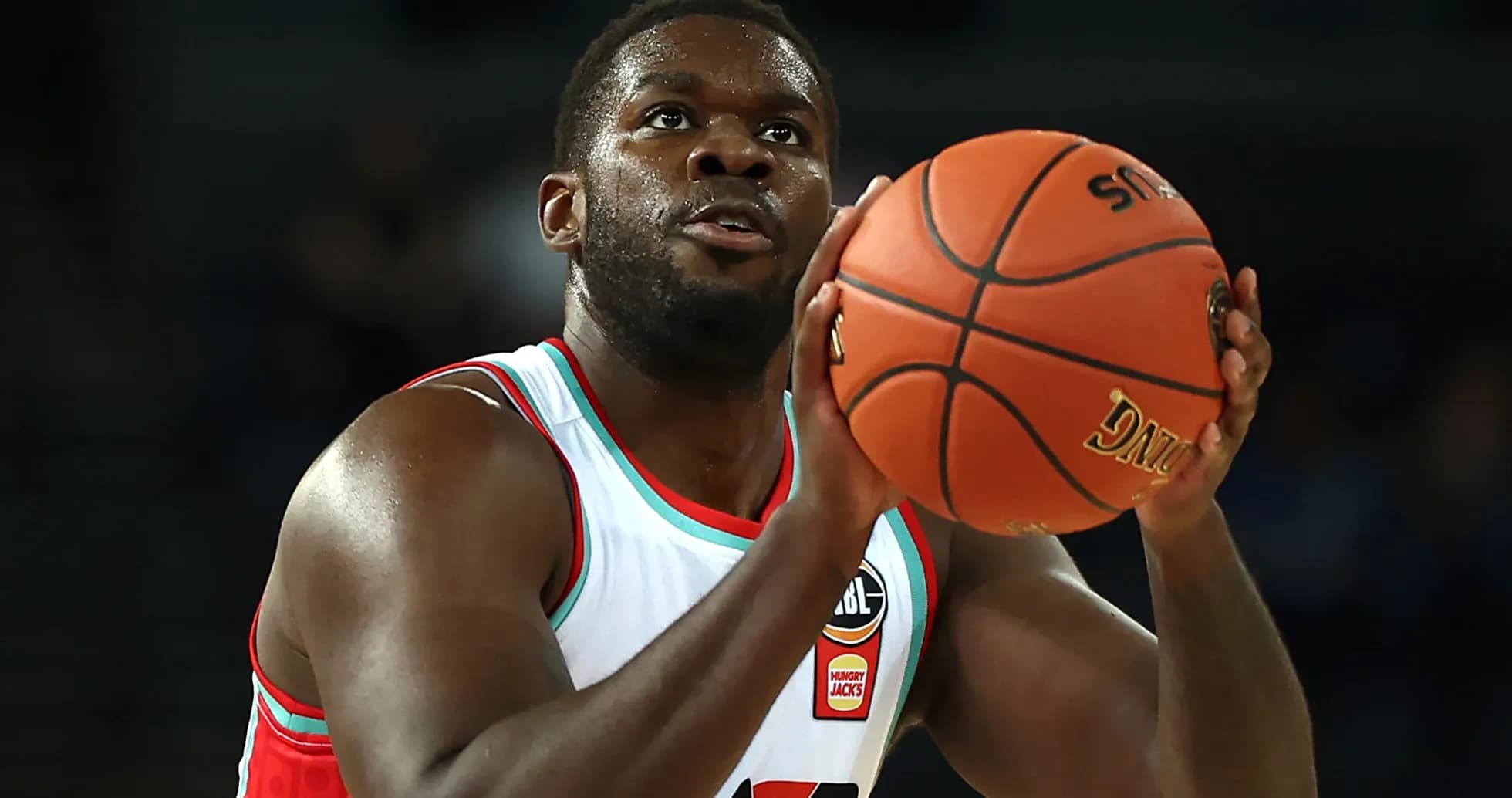
Jonathan Kuminga Chooses Timberwolves Over Lakers
Jonathan Kuminga had two doors in front of him. One led to Minneapolis, the other to Los Angeles. On paper, the brighter lights, the bigger brand, the richer offer sat in L.A.
He walked the other way.
The 23-year-old forward chose the Minnesota Timberwolves on a two-year deal, turning down a more lucrative contract from the Los Angeles Lakers. His explanation cut straight to the heart of it: he wanted “a winning culture,” and he believed Minnesota offered the best version of that right now.
For a franchise built on banners and mythology, that line landed in Los Angeles like a quiet jab. Winning culture? In Minnesota over the Lakers?
But peel back the emotion, and the decision – and the Lakers’ response – starts to make a lot more sense.
The Allure of Purple and Gold, Rejected
The Lakers’ pitch to Kuminga wasn’t small-time. According to reporting, they offered him a starting role next to Luka Doncic and Austin Reaves, a chance to plug directly into a contending core and fill a glaring need on the wing. On paper, it fit cleanly: length, athleticism, two-way potential, and an open runway in the starting lineup.
Sports Illustrated’s Ryan Ward put it bluntly: Kuminga “seemed like the right choice for the Lakers, as he’d easily slip into the starting lineup right away with Luka Doncic and address a need.”
Yet those same quotes from Kuminga about “winning culture” raised a different kind of question – not about the Lakers, but about the player himself and where his head is going into the 2026-27 season.
Minnesota’s pitch wasn’t empty either. The Wolves didn’t just sell him on vibes; they added LaMelo Ball to a core already built around Anthony Edwards. That’s a young, explosive backcourt on a team that’s been pushing deeper into contention.
Historically, of course, the word “winning” belongs to Los Angeles long before it belongs to Minnesota. But history doesn’t grab rebounds or close out shooters in 2026. Rosters do. And Kuminga clearly judged the Wolves’ present and near future as the better bet.
Red Flags in the Resume
Strip away the intrigue of turning down the Lakers, and you’re left with a simple truth: Kuminga is still a gamble. A fascinating one, but a gamble all the same.
He has age on his side. He has size. He has the kind of offensive and defensive tools that make front offices lean forward in their chairs. On talent alone, he’s exactly the type of player a team like the Lakers would usually chase hard.
But his NBA journey so far has been anything but smooth.
Golden State, the franchise that drafted him and once looked poised to keep him as part of a post-dynasty bridge, moved on. Atlanta took a look and declined his team option, letting him walk into free agency and on to Minnesota.
Ward didn’t dance around that part: “One major red flag for Kuminga is that the Golden State Warriors and Atlanta Hawks didn’t want him on their teams long-term. It’s not to say a change of scenery can’t alter how a player is perceived, but two teams giving up on a 23-year-old might be a sign that a player can be a problem.”
When two organizations, both with different timelines and expectations, decide they don’t see you as part of their long-term picture, it forces the rest of the league to pause. Not necessarily to pass, but to think harder about price, role, and risk.
That’s where the Lakers’ restraint starts to look less like a miss and more like a calculated decision.
A Need, But Not a Desperate One
The Lakers wanted an athletic wing. They’ve needed one. Kuminga would have checked that box and probably walked straight into the starting lineup.
But there’s a difference between “need” and “must-have.”
The franchise’s true pressure point this offseason sat at center, with Walker Kessler viewed as the kind of foundational piece who could anchor the starting spot. That was the area where urgency lived. Kuminga, by comparison, was more luxury than lifeline.
The fact that Los Angeles didn’t rush to close the deal, even with a player who fit their profile and was within reach financially, says plenty. They saw the upside. They also saw the volatility. For a roster already recalibrating around Doncic, they chose not to stack another big question mark on top.
Turning to Quentin Grimes and the Market
So where does that leave the Lakers on the wing? Not empty-handed. Just less flashy.
Quentin Grimes arrived this summer and currently holds the starting wing spot Kuminga might have taken. He’s shorter, less explosive on paper, and nowhere near as tantalizing as a long-term upside play. But he’s also more seasoned, a couple of years further along in understanding NBA roles and responsibilities.
There’s another small detail that matters: Grimes has already shared a locker room with Luka Doncic, spending half a season with the Dallas Mavericks. That familiarity isn’t a headline, but it can smooth the edges in a new build.
Grimes doesn’t carry the same star projection as Kuminga. What he might offer, though, is reliability – a clearer sense of who he is and what he brings on a nightly basis. For a team trying to thread the needle between contention and retooling, that kind of predictability has real value.
The Lakers still have options. The wing market never truly sleeps, and stars shake loose every year as timelines clash and franchises pivot. Los Angeles can wait, watch, and move when the right player, at the right price, becomes available.
If Kuminga blossoms in Minnesota into the two-way force his talent suggests, the questions will come. Did the Lakers overthink it? Did they walk away from a future cornerstone?
For now, though, they live with a quieter outcome: a solid starter in Grimes, flexibility preserved, and a bet placed against the volatility that follows Kuminga from Golden State to Atlanta to Minnesota.
The real verdict won’t come from a quote about “winning culture.” It will come when these two paths cross in games that matter and the league finds out who chose the right gamble.