Joe Salisbury's Retirement: Britain's Doubles Champion Bows Out
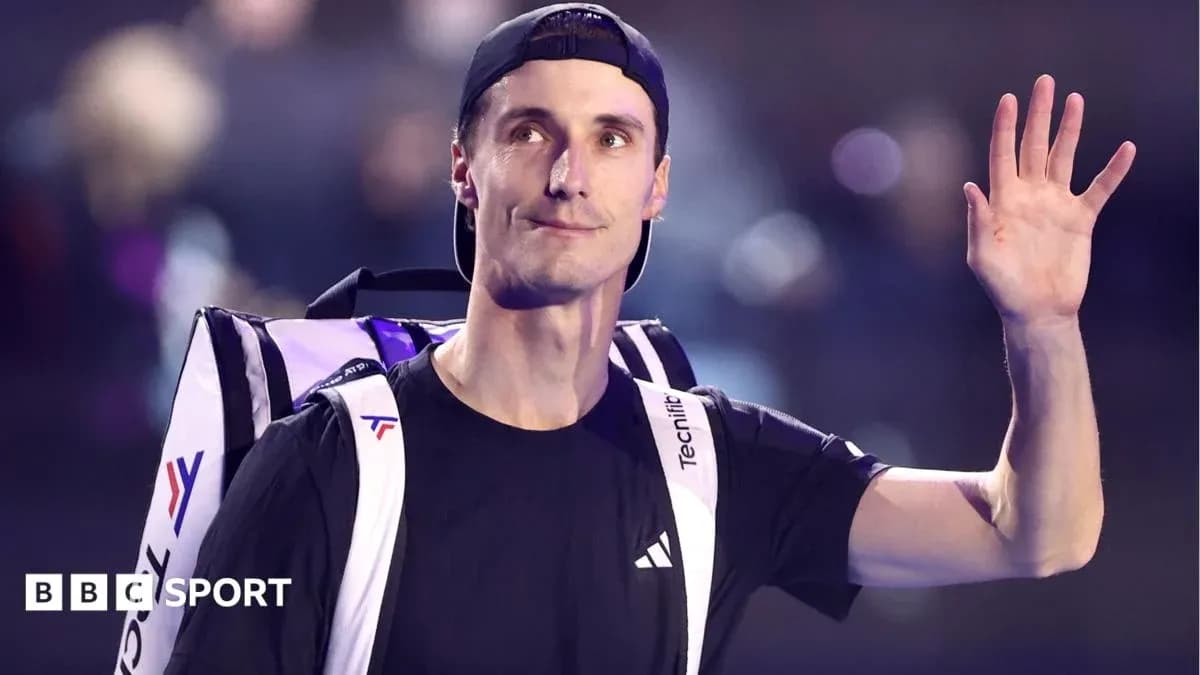
Joe Salisbury chose his farewell carefully. Not Centre Court at Wimbledon. Not Melbourne, not Paris. New York.
The US Open, where he and Rajeev Ram wrote a piece of tennis history, became the stage for one last run, one last push, one last handshake at the net. The pair reached the semi-finals in what both had already decided would be their final tournament together, closing a chapter that has quietly redefined British doubles success in the Open Era.
For Salisbury, 34, this was not a decision taken in haste. It had been coming.
A career built on partnership and persistence
Salisbury walks away as Britain’s most successful men’s doubles player of the Open Era, a six-time Grand Slam champion whose résumé stands shoulder to shoulder with some of the sport’s modern specialists.
Four men’s doubles majors with Ram – three of them in a row at the US Open from 2021 to 2023, a feat no other men’s pair had managed in New York – and the 2020 Australian Open crown. Add to that two mixed doubles titles alongside Desirae Krawczyk, and the picture is complete: this was a player who mastered the nuances of partnership at the very highest level.
The numbers back it up. Seventeen tour-level titles. Season-ending ATP Finals trophies in both 2022 and 2023. Year after year, Salisbury and Ram became a fixture at the business end of the biggest events, their calm court presence belying the pressure of those moments.
Yet for all the trophies, this was not the story of a bombastic superstar. Salisbury’s rise felt more like a steady accumulation of belief, a player chiselling out a career with craft, composure and a deep understanding of doubles geometry.
The cost of the road
Behind the success, the grind took its toll.
At the start of this year, Salisbury stepped away from the tour for three months. He spoke openly to BBC Sport about the anxiety that had begun to shadow his life on the road. He did not blame it for his results; the racquet still obeyed, the serve still found its spots. But the feeling lingered – a “feeling of dread,” as he put it – that turned travel and tournament weeks into something heavier than they had once been.
For a sport that sells itself on glamour and global movement, his honesty cut through. This was the other side of the schedule: airports, hotel rooms, the constant churn of cities and surfaces. For Salisbury, that weight became a central part of the decision to stop.
So when he finally announced his retirement, there was no sense of a door slamming shut in frustration. Just a line drawn with clarity.
“I have been incredibly fortunate to have had all the opportunities, experiences and success that I have,” he wrote on Instagram, reflecting on a life spent chasing a ball around the world. Tennis, he said, had been his life for as long as he could remember. To be able to call it a job? A dream come true.
He leaves with something every athlete craves but few secure: peace. “I gave it my all and know I can be proud and look back with no regrets.”
A fitting final stage
That it all ended in New York feels right.
Flushing Meadows is where Salisbury and Ram built their legend, turning a noisy late-summer fortnight into their private fortress. Three consecutive US Open men’s doubles titles is not just a neat statistic; it is a statement of dominance in an era where doubles pairings often chop and change.
This year, they could not quite script the perfect ending. No fourth title, no fairy-tale finish under the lights. But a semi-final in their final event together still felt like a proper goodbye – competitive to the last, relevant to the last.
Salisbury steps away with his legacy secure: a standard-bearer for British doubles, a player whose peak level could stand up anywhere, and a champion who chose to leave while still capable of winning the biggest prizes.
He has his health, his record, and, by his own account, his happiness. The trophies will stay in the cabinet. The question now is what he does with all that hard-earned calm and experience once the tour moves on without him.