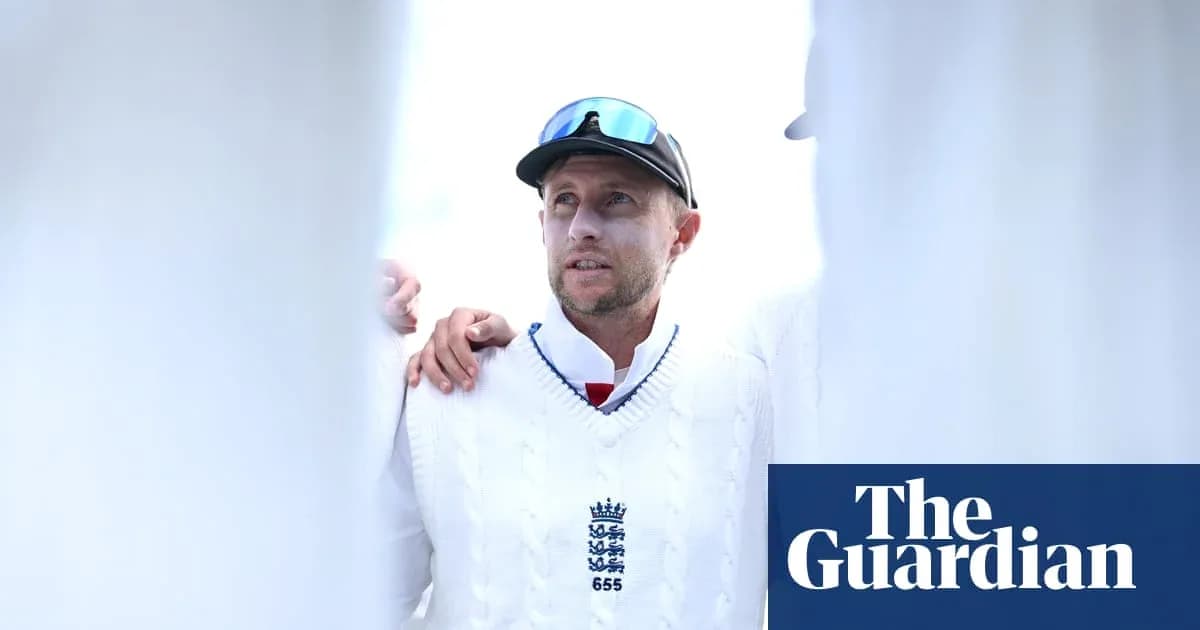
Joe Root Reflects on England's Chaotic Summer and Ben Stokes' Departure
Joe Root stood there, weighing up a summer that never quite stopped spinning, and the first thing that came out was Ben Stokes. Not a cover drive, not a young quick, not even the Pakistan circus. Stokes walking away from international cricket mid-Test, mid-series, mid-chaos.
“Unusual.” “Unsettling.” “Chaos.” Root’s own words. And you could see why.
Cricketers retiring mid-match is hardly new – Heather Knight did the same at Lord’s a fortnight later – but Stokes doing it as New Zealand closed in at Trent Bridge felt like the emotional low point of England’s season. The series still alive, the game still in the balance, and their totemic all-rounder choosing that moment to step off the stage.
Root will never publicly question him. Their bond runs too deep for that, and four years on from his call for “selfless cricketers”, he is not about to accuse Stokes of stealing the scene. Yet that week, with two drink-related incidents framing the Test and New Zealand players literally laughing in English faces as they sealed a first home series win here in a three-match campaign for 14 years, felt like rock bottom.
Since then, the temperature has dropped a notch. England have had time to detach themselves from the emotional pull of Stokes and to accept a blunt reality: the Bazball tag was never going to die while Brendon McCullum remained in charge. His exit as Test head coach, and the looming arrival of Stephen Fleming, has brought a different kind of calm. Not without its shadows – Brydon Carse in handcuffs in Derby, Stokes hovering in the background – but calmer all the same.
They also got a taste of what they had inflicted on others. New Zealand in June, Australia during last winter’s Ashes: sides that won the series yet watched the narrative swirl around the losers. At Edgbaston, the spotlight swung onto a 21‑year‑old in green. Razaullah’s astonishing 81 lit up south Birmingham in a way that felt entirely in tune with a ground that delights in unexpected fireworks. Pakistan lost, but they owned the noise.
And they reminded everyone that dysfunction comes in degrees.
Where England’s summer featured late nights, loose tongues and a coach sacked for style as much as substance, Pakistan’s tour lurched into full-blown crisis. Scraps with Saracens players? A disputed curfew? England could only look on as Pakistan escalated: seven players sent home, head coach and bowling coach dispatched as well, phones confiscated, and the harsh glare turned on a government-run board seemingly desperate to avoid any wider scrutiny of how it treats the country’s greatest captain.
Saj Sadiq, long-time observer and editor of PakPassion.net, did not dress it up: “As an entire series, this has been the most embarrassing and difficult to watch. On and off the field Pakistan have been an absolute shambles.”
No one at the ECB could claim their own house was in perfect order, but Pakistan’s implosion made England’s turbulence look almost orderly by comparison.
So no, this was not a wasted summer.
Fleming, still in New Zealand until this week and getting his first impressions via highlights packages and scorecards over breakfast in Canterbury, will have seen enough to know there is something to work with. The most obvious positive sits in the fast-bowling stable.
Ollie Robinson has returned with the old bite, picking up where he left off as a relentless, awkward presence. Jofra Archer, whose Test future many assumed had gone with Stokes, has shown his appetite for the long game still burns. Josh Tongue has hardened physically and mentally, starting to look like a serious weapon rather than a project. Gus Atkinson’s numbers tailed off after the Rex Rooms episode and a shift in role, but this was also the fastest he has bowled across a season. England’s quiet man suddenly looks like a genuine 90mph option.
There are warnings written into the numbers. The ball ruled the bat: a wicket every 41 deliveries, the lowest strike-rate in England since the 1880s. Pakistan’s batting was flimsy to the point of farce at times, a wet paper bag in terms of resistance. When conditions finally eased – a proper Edgbaston surface and a ball that went soft after picking up moisture the previous evening – England’s attack lost its edge and ran short of ideas.
Root’s old demons resurfaced too. Razaullah’s onslaught at Edgbaston, and the issues closing out the tail when Root deputised for Stokes at the Oval in June, will not have gone unnoticed by Fleming. Marcus Trescothick, who stepped in as interim head coach against Pakistan and is still unsure of his long-term role, believes Fleming’s tactical sharpness and his record as the most decorated coach in the pressure cooker of the IPL make him an ideal partner for Root in that area.
Beyond the frontline quartet of quicks, the depth chart looks thin. With South Africa looming in December, that is no small concern. One strong opinion is forming: Olly Stone’s late-season form for Nottinghamshire should push him ahead of the younger hopefuls. He has the pace and, crucially, the hardened county overs that England so often overlook until too late.
The absence of a frontline spinner remains the glaring hole. England keep searching for a Daniel Vettori type – a bowler who can control an end, contribute with the bat, and balance the side. Liam Patterson-White fits that multifunctional brief on paper. Fleming, who played much of his career with Vettori as his fulcrum, may be the man to finally force that issue.
His own batting journey could be just as valuable. This England lineup piled up 23 half-centuries across the summer, yet only Ben Duckett converted one into a hundred. Fleming himself made 10 fifties before his first Test ton. He knows what it is to live in that purgatory, to feel the weight of expectation every time you pass 30. Dan Lawrence, in particular, looks like he needs someone who understands the psychological strain as much as the technical details.
Every coach talks about a settled XI. Fleming might quietly relish the opposite. Competition is everywhere, and the impending return of Jacob Bethell will force at least one difficult call. Emilio Gay, likely to tour but already facing questions over his ceiling, looks the most vulnerable in the current top order. If he makes way, England will have to manufacture an opener to stand alongside Duckett.
Duckett himself is a puzzle. His 113 at Trent Bridge was a reminder of how destructive he can be, yet since the height of Bazball he has often seemed caught between two instincts: the all-out aggression of that era and a more measured, traditional role. Whoever partners him will need clarity. England cannot afford two openers second-guessing their own game.
Jordan Cox may be the one nudged up. Given that the No 3 rarely arrived later than the ninth over against Pakistan, the shift is more cosmetic than radical. Cox did not land the defining innings he threatened – three fifties, no hundred – but he left a mark. There is something almost cocksure about the way he occupies the crease, a presence that Root himself admitted took him by surprise. “I didn’t really know what to make of him when I first met him,” the captain said.
Cox has said openly that he is trying to outdo Root. On paper, that sounds fanciful: 14,000-plus Test runs is a mountain, not a benchmark. On the field, it might be exactly the mentality this side needs. With Stokes gone, England can no longer lean on a single talismanic presence or expect one man to bend games to his will.
The template now is different. Look to Root not as a superhero, but as a quiet standard. Preparation, tempo, decision-making, the grind of run-making. Fleming will arrive to a team stripped of its old aura, scarred by a chaotic summer, but with just enough raw material and just enough edge to be interesting.
The question is no longer whether England can recreate Bazball. It is whether this leaner, more grounded version can grow into something that actually wins the next big series, rather than simply dominating the conversation around it.