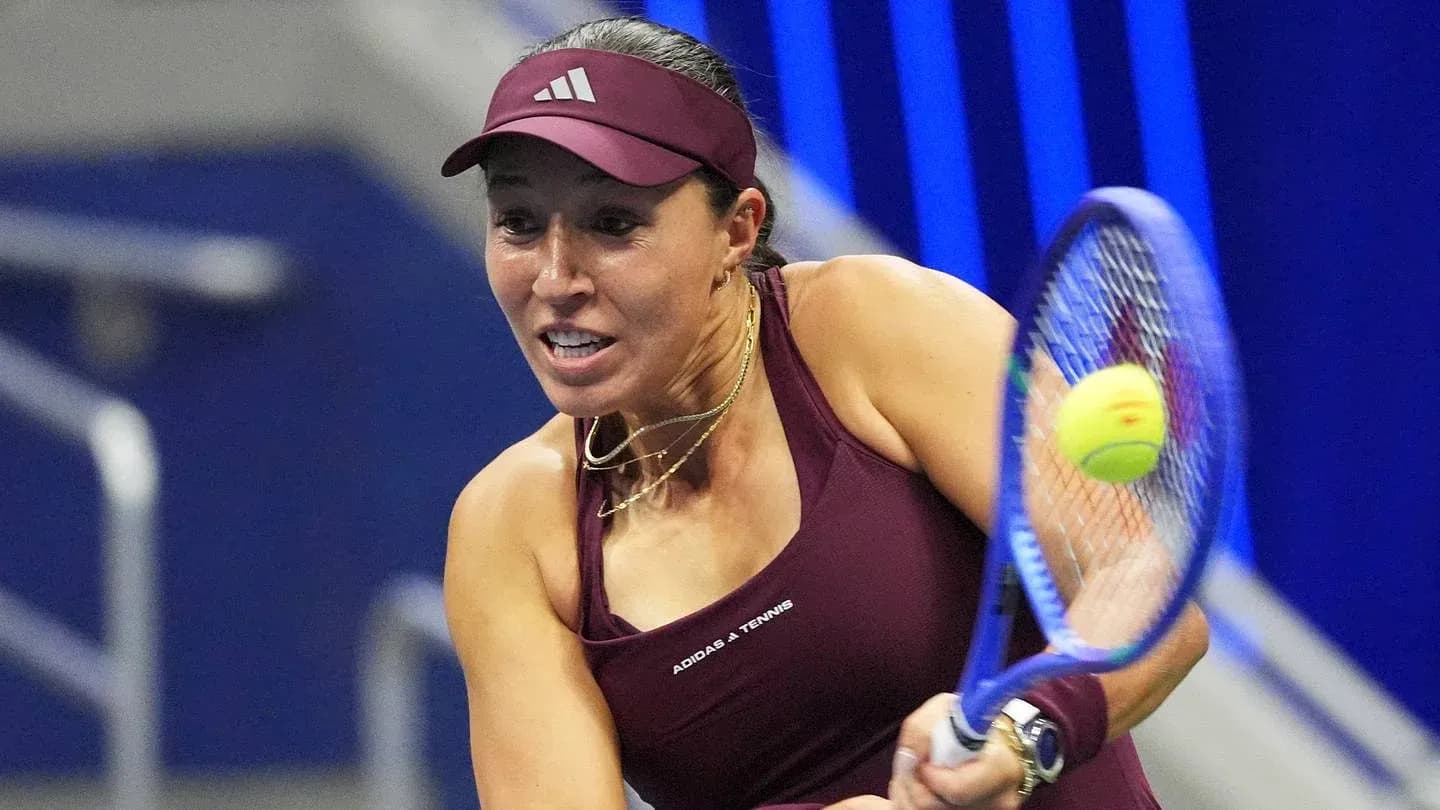
Jessica Pegula's Remarkable Journey to Four Grand Slam Semifinals
Jessica Pegula is running out of firsts. That, in its own way, is the story.
By reaching the US Open semifinals again this week, the American became the first player in the Open Era to make her first four Grand Slam semifinals after turning 30. It is a record built not on teenage dominance or early coronations, but on scar tissue, surgeries, and the stubborn refusal to let the window slam shut.
A Late Bloom, Told in Semifinals
Pegula’s breakthrough came late by tennis standards. Her first major semifinal arrived at the 2024 US Open, just months after she turned 30. That run, so long in the making, carried her all the way to a maiden Grand Slam final, where Aryna Sabalenka stopped her 7-5, 7-5. A straight-sets defeat on paper, but tight enough to sting and to suggest she belonged on that stage.
She came back to New York the following year and did it again, threading her way through the draw to a second straight US Open semifinal. Again, Sabalenka. Again, the door slammed in her face: 4-6, 6-3, 6-4. This time, Pegula led, then watched the world No. 1 wrestle the match away from her.
Her third major semifinal came in Melbourne at this year’s Australian Open, another marker in a career that has moved in deliberate steps rather than leaps. Elena Rybakina beat her 6-3, 7-6(7) in a tight, hour-and-40-minute contest, Pegula pushing hard in a tense second-set tiebreak before falling just short.
Now comes the fourth. This week’s US Open run, her third consecutive semifinal in New York, arrived the hard way: a comeback against fellow American Emma Navarro, rallying from a set down and a break down in the third to win 3-6, 6-4, 6-3. On a night when the match looked to be slipping from her, Pegula dug in and flipped it.
It is the kind of victory you expect from a player in her prime. Pegula is 32.
“So Many Friggin’ Times”
If the numbers say “late bloomer,” Pegula’s own words say something closer to survivor.
“I’ve been [into major quarterfinals] so many friggin’ times,” she said earlier this year after finally breaking through to her first Australian Open semifinal. “I just kept losing, but to great players, I mean, to girls that went on and won the tournament... So I know everyone keeps asking me about it, but I don't know what else to do. I just need to get there again and win the match.”
That quote sounds different now, with four semifinals behind her and the same question still hanging in the air. She has done the hard part, again and again. She has put herself on the doorstep. The last step remains the most elusive.
Built on Setbacks
Pegula’s record looks even more remarkable when you trace the path back through her injuries.
A serious knee problem kept her off the tour from late 2013 to early 2015 and required surgery. Just as she began to climb again, a hip surgery in January 2017 wiped out most of that season. Those stops and starts pushed her peak years deeper into her late 20s and early 30s, years when many of her contemporaries were already fading or gone.
Instead of fading, she’s still climbing. In 2024 she became the oldest U.S. woman in the Open Era to reach her first major singles final, another marker of how her career has refused to follow the usual curve.
This season has only reinforced that theme. Pegula came into this week’s semifinal with a 50-12 record on the year and two titles, in Dubai and Charleston. On the North American hard courts she reached finals in Washington and Cincinnati, building momentum that carried straight into the US Open. She has not yet lifted a Grand Slam trophy, but by any measure, she is playing like one of the most consistent forces on tour.
Sabalenka Again, and the Clock
Her fourth semifinal set up a familiar and brutal test: a third straight US Open showdown with Sabalenka at the same stage, with Pegula trailing 4-9 in their head-to-head before they walked on court. It is the kind of rivalry that defines an era for a player, and so far it has been Sabalenka who has drawn the line.
The matchup feeds the question that has followed Pegula for the past year: how much time does she have left to turn all these deep runs into a major title?
She has never hidden from that reality. Speaking on the Tennis Insider Club podcast, Pegula said she does not plan to play past 35 and floated the 2028 Los Angeles Olympics as a possible final tournament. It is a rare, clear horizon in a sport where many players insist they will “take it year by year.”
At 32, with four semifinals behind her and one major final already in the books, there is no disguising the stakes. Every run now carries the weight of opportunity and the shadow of a countdown. Each second week at a Slam is no longer just progress; it is a chance that may not come back.
Jessica Pegula has made a career out of refusing to listen to the clock. The question that will define the rest of it is simple and unforgiving: can she beat it one more time, on the biggest stage of all?