Jersey Cricket Aims for ODI Status and World Cup Qualification
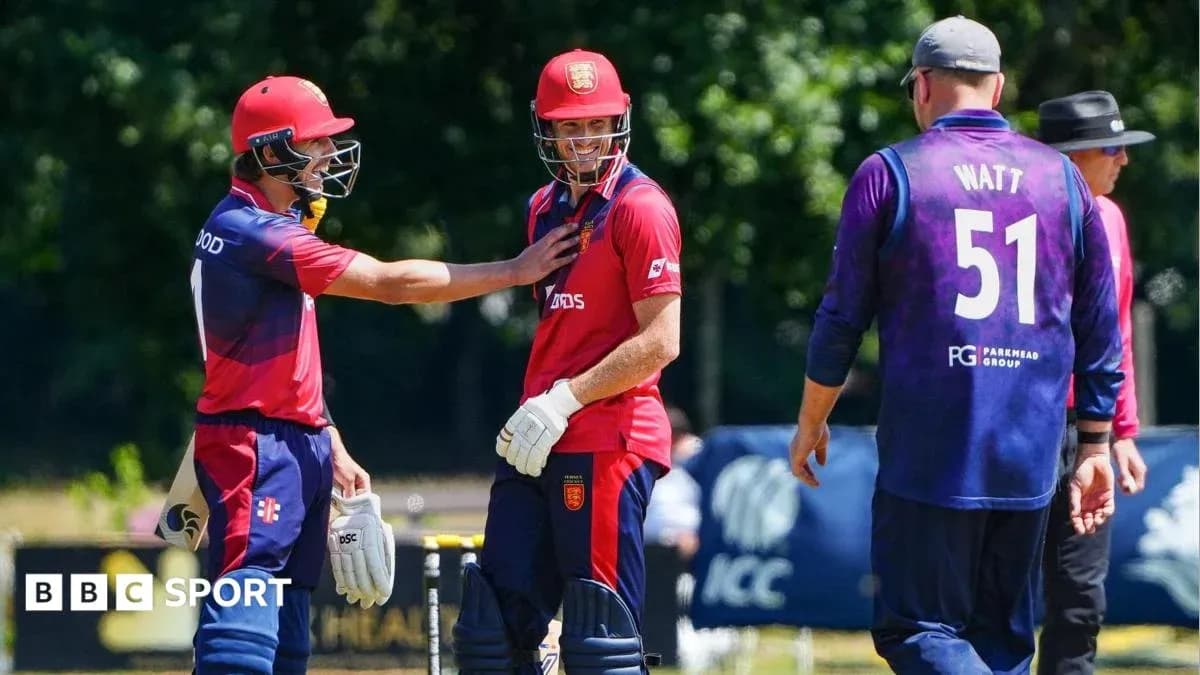
On an island better known for finance than flippers, Jersey cricket has drawn a bold line in the sand: One-Day International status and a World Cup place within three years.
This is not a marketing slogan. It is written into the island’s new strategic plan for the sport, which runs through to 2029, and it lands at a moment when Jersey are closer than ever to the game’s top table.
From near-miss to clear mission
Earlier this year, Jersey came agonisingly close to reaching the T20 World Cup. They fell just short, but the campaign did something more important than simply sting. It confirmed they belong in serious company.
They now sit at the top of their group in qualifying for next year’s 50-over Cricket World Cup, with five games left in ICC Challenge League A. The maths is simple enough. Finish in the top two in Kenya next month and they move into the 2027 Cricket World Cup qualifier play-off. Perform well there and ODI status comes into view. Go one step further with a top-four finish and they earn a place in the final round of qualifying for the World Cup in South Africa, Zimbabwe and Namibia next autumn.
For an Associate nation, that is the golden staircase. Jersey are already on the steps.
“We have to dream big and we have to think we have a place at a World Cup in the T20 format,” Jersey Cricket chief executive Sarah Gomersall told BBC Jersey, her words matching the ambition now being laid out on paper.
Holding their own with Europe’s elite
This is not blind optimism. Jersey’s men are ranked 29th in the ICC T20 standings, the women 32nd, and both sides have been trading blows with established European powers.
“We can sustain ourselves up there with the very, very best in Europe,” Gomersall said. “We’re competing regularly against Scotland, Ireland, Netherlands, we’re holding our own and each time we play them we’re learning, we’re improving.”
Those fixtures have become the measuring stick. Jersey are not just turning up; they are growing into the contest, series by series. That is why the island’s hierarchy talk so openly about European structures and new competitions.
There is talk of a European nations launch that could feature Italy, Scotland, Ireland and potentially the ECB. Jersey want in. More than that, they believe they belong there.
“Jersey players collectively can compete at that level and I think that’s where we need to be aiming and showing and proving that we deserve to be there,” Gomersall said.
Kenya, Challenge League and the ODI carrot
The next examination comes in East Africa. Jersey’s men head to Kenya next month for the final round of matches in ICC Challenge League A, leading the table with five to play.
The stakes could hardly be clearer. A top-two finish opens the door to the 2027 Cricket World Cup qualifier play-off. Survive and thrive there and ODI status follows, a badge that changes everything: fixtures, funding, visibility, opportunity.
“Achieving ODI status is one of our goals through the next iteration of our strategic plan,” Gomersall confirmed. For an island of Jersey’s size, that is a seismic target, but the pathway is now mapped, not imagined.
“I think we can get to a World Cup in the next three years with the men and, longer term, with the women as well,” she added.
Built at home, not bought in
What makes this ambition even more striking is the source of the talent. Jersey do not rely on a steady stream of imported professionals. Their teams are built almost entirely from players who have grown up on the island.
“We talk about it a lot that all Jersey’s talent comes from the island,” Gomersall said. That reality shapes everything. If the island does not produce, the national teams cannot progress.
So the plan goes deep beneath the senior squads. Infrastructure, training systems, academies, facilities – the unglamorous foundations that decide whether a golden generation appears by chance or by design.
“I think we have one of the best junior pathways in Europe,” Gomersall said. The emphasis is on keeping young cricketers in the game, “playing, improving, enjoying their cricket and wanting to play more.”
The logic is simple. The more they play, the better they get. The better they get, the stronger the island’s national sides become. Somewhere in that stream of age-group teams, Jersey believe, lies their first World Cup squad.
Women on the brink
The men’s story is the headline, but the women’s side is quietly tracking a similar trajectory.
Jersey’s women have finished one place short of the top tier of European qualifying for a T20 World Cup in each of the last two tournaments. They are close enough to feel the frustration, and close enough to sense the opportunity.
Gomersall’s targets are clear: break into the top 25 of the ICC rankings and stay there; secure and sustain a place in Division Two, or its equivalent, within the ICC pathway.
“I think the potential we’ve got in our existing team of women cricketers and in the pipeline of junior cricketers that we’ve got in the girls playing cricket is genuinely exciting,” she said.
There is a shift under way. A new wave of girls is choosing cricket as their first sport, not a side option.
“We’ve got a new group of players if you like, where they’re choosing cricket as their first choice sport,” Gomersall explained. On an island where people can play almost anything, that choice matters. It shows up in numbers, in standards, and in the confidence with which Jersey talk about the women’s game.
An island aiming up
For now, the rankings still place Jersey in the chasing pack. The men at 29 in T20s, the women at 32. No trophies for that. No guarantees, either, that the climb will continue in a straight line.
But the direction is unmistakable. A small island with a homegrown core is setting its sights on ODI status, World Cup qualification and a permanent place at Europe’s top table.
The next steps will be taken in Kenya, on unfamiliar pitches, under real pressure.
If Jersey handle that, the dream stops sounding bold and starts looking inevitable.