Jannik Sinner’s Knee Injury: What Lies Ahead?
Jannik Sinner has not stepped onto the court for any competitive match since his Wimbledon victory in July. The situation seems more complex than first thought, as he recently announced that inflammation in his right knee would sideline him for the rest of the 2026 season.
This means no participation in the Paris Masters, ATP Finals, or defending his title in Turin. Those events matter less compared to what this could mean for his 2027 season.
Insight from a Trusted Source
Marco Panichi, who coached fitness for Sinner and also worked extensively with Novak Djokovic, shared his concerns with Ubitennis. Panichi suspects Sinner might be dealing with iliotibial band syndrome (ITBS), a condition that could keep him off court for a long time.
Understanding ITBS is key to grasping the challenges Sinner faces.
What Is Iliotibial Band Syndrome?
The iliotibial band is a thick tissue running along the outer thigh, linking the hip to the upper tibia. It stabilizes the knee and hip when moving.
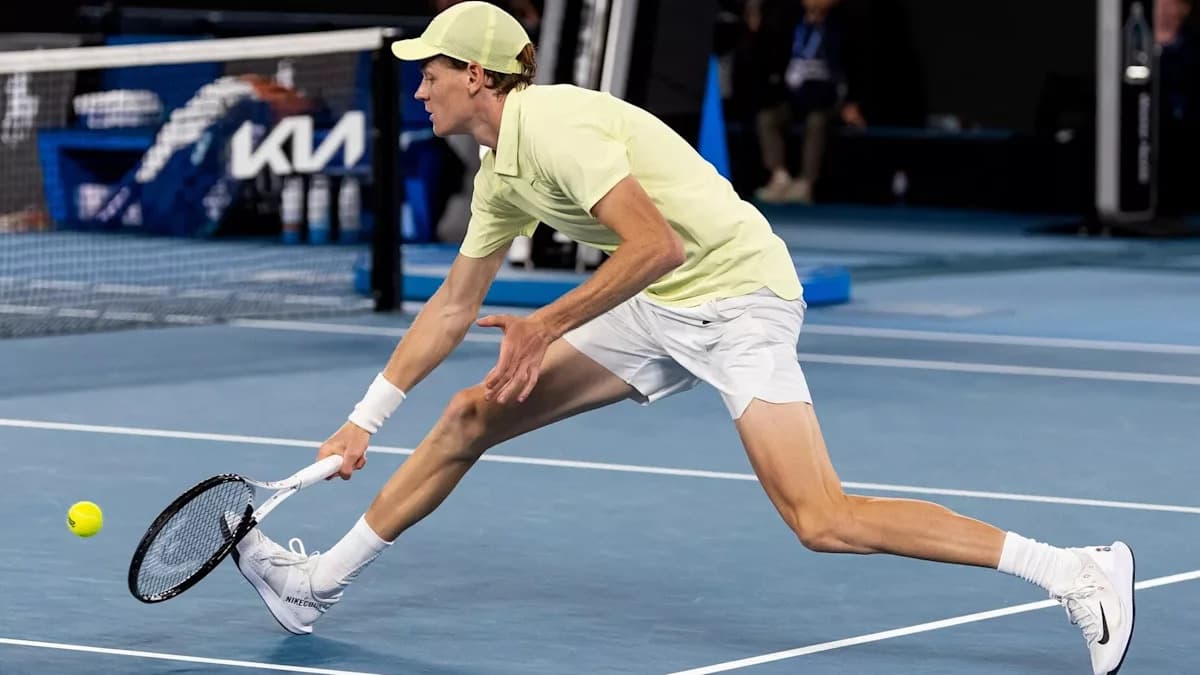
ITBS happens when repeated stress causes irritation and pain on the outer knee where the band crosses the femur. While often linked to distance runners, tennis players are vulnerable too because their sport requires quick starts, stops, and sharp direction changes.
Sinner’s style depends on fast lateral moves, rapid recovery between shots, and balanced aggressive strokes. Long rallies put relentless strain on his knees. Unlike muscle injuries, which tend to heal predictably with rest, overuse injuries like ITBS may flare up again if the knee faces previous stress levels.
Recovery Outlook
Usually, surgery isn’t needed for ITBS, but healing can be tricky. The American Academy of Orthopaedic Surgeons suggests many return to running after about six weeks of careful treatment, though it varies with how severe and long-lasting the injury is.
The Cleveland Clinic notes 50% to 90% improve within four to eight weeks. Yet, these numbers don’t easily apply to elite athletes like Sinner who demand hours of explosive movement. His issue has dragged on much longer.
Reports from Sky Sport Italia say symptoms began post-Wimbledon. After treatment and some training attempts, pain returned before Shanghai. Multiple exams reportedly confirmed ITBS, though Sinner’s camp described it simply as knee inflammation.
Looking Toward 2027
There’s hope since ITBS usually heals without surgery, relying on adjusting activities, strengthening, and rehab focused on rebuilding knee tolerance for intense loads.
Twelve weeks is often mentioned as a treatment timeframe, but that doesn’t mean rest alone. Physical work gradually increases during recovery. Sinner’s team aims for an initial 4-8 week phase followed by slow training ramp-up.
The Australian Open in January is the target return event. However, practicing, playing an ATP match, and enduring seven best-of-five-set Grand Slam rounds are very different demands. Even if he’s cleared to compete in Melbourne, regaining top form is another challenge.
His extended break has already cost him ranking points, with Alexander Zverev set to end 2026 as world No. 1. But health takes priority. Coming back too soon risks worsening the injury and forcing more time out, justifying his choice to skip the rest of this year.
Final Thoughts
Panichi’s caution is serious but not a forecast of career doom. ITBS generally responds well to treatment, and no surgery recommendation is promising. Still, the injury’s long course and recurring setbacks show patience will be key. At 25, Sinner gains more by protecting his future than rushing back.
The Australian Open remains a real goal, but whether he’s fully ready is uncertain. For now, the critical question is not when he returns but when he can play free of knee pain.