Jamal Murray's Key Role in Denver's 2026-27 Championship Quest
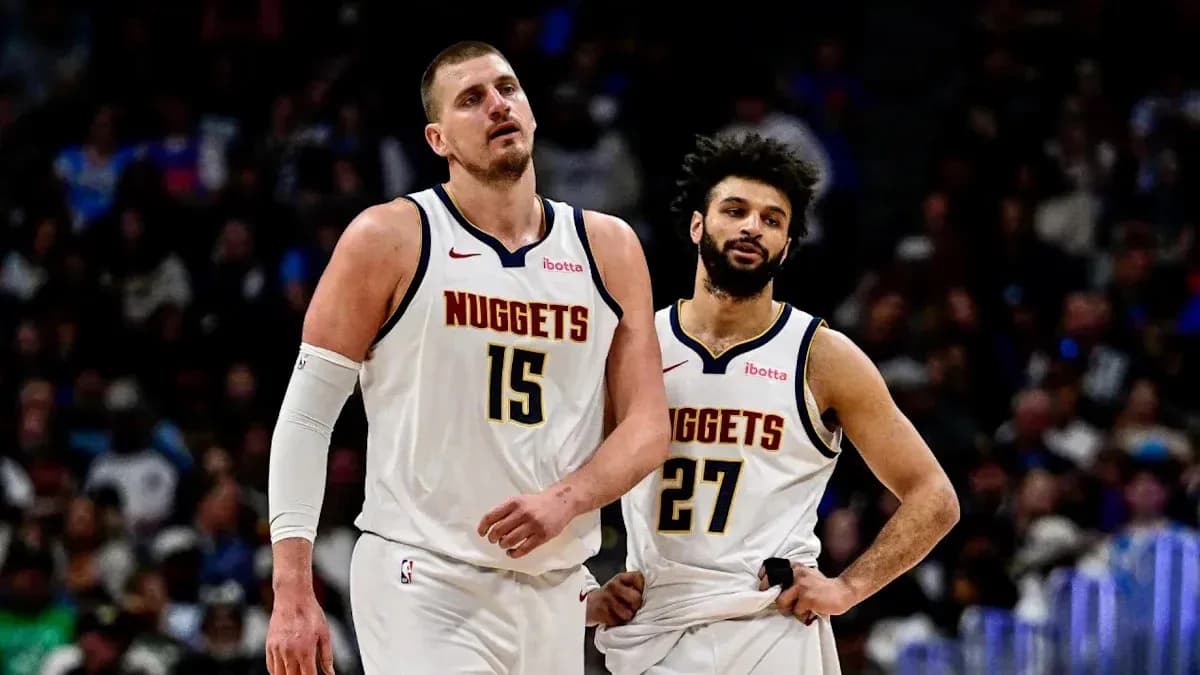
Nikola Jokic is inching toward the back end of his prime, and Denver knows it. The Nuggets’ title window isn’t slamming shut yet, but the hinges are starting to creak. If they’re going to squeeze another championship out of this core, Jamal Murray has to deliver the biggest, cleanest version of himself they’ve seen.
The numbers say he just might. With one big caveat.
A new look Nuggets offense
Denver’s problem last season wasn’t how well it shot. It was how rarely it did.
The Nuggets took only 87.8 field goals per game in 2025-26, 26th in the league. For a team with Jokic at the controls and shooters all over the floor, that’s a waste. They were devastating when they actually let it fly: 49.6 percent from the field (second in the NBA) and 39.6 percent from three (best in the league).
They didn’t need better shooters. They needed more shots.
That’s where Murray’s 2026-27 projections become so intriguing. His Basketball Reference per-36-minute forecasts, translated to his usual workload of around 35.4 minutes a night, paint the picture of a guard who shifts his emphasis without losing his edge.
The headline: less scoring burden, more orchestration.
Sharing the stage with DeMar DeRozan
The most obvious change comes in Murray’s scoring line.
With DeMar DeRozan arriving as a proven bucket-getter, Murray is projected to slide slightly down the scoring ladder. From a career-high 25.4 points per game on 18.1 field-goal attempts, the projection drops him to 23.7 points on 17.5 shots.
That’s not a collapse. It’s a recalibration.
Denver is effectively trading a sliver of Murray’s volume for the presence of a career 21.1-point scorer who just came from Sacramento. DeRozan will soak up midrange touches, late-clock isolations, and foul-line trips. Murray, instead of being forced into constant hero mode, can pick his spots, punish mismatches, and lean into efficiency.
The projections suggest he’ll do exactly that.
Murray is expected to hit 47.9 percent from the field and a blistering 42.1 percent from three — both marks that would rank as the third-best of his career. In a league obsessed with spacing, Denver would again have an All-NBA-caliber shooter in its backcourt, perfectly aligned with Jokic’s playmaking gravity.
He won’t be the sole gunner. He’ll be the scalpel.
Defensive edges and dirty work
Murray’s growth isn’t limited to the offensive end.
The projections show bumps in key defensive metrics: 4.3 rebounds per game and 0.5 blocks, both tracking as the second-best averages of his career. Those aren’t empty numbers. They speak to a guard who’s more engaged on the glass and more willing to challenge at the rim when needed.
On the perimeter, the old “Blue Arrow” chaos returns. Murray is projected to climb back to 1.1 steals per game, fueled by his ability to jump passing lanes and hound ballhandlers at the point of attack. On a team that often leans on Jokic to erase mistakes, those extra deflections and early disruptions matter.
He won’t turn into a lockdown specialist overnight. But this version of Murray doesn’t just score and create. He competes across the box score.
From scorer to conductor
The brightest light in Murray’s 2026-27 outlook sits in one column: assists.
For years, Denver’s offense has been so Jokic-centric that it became easier to scheme against in the playoffs. Blitz Jokic’s playmaking, load up on his passing lanes, live with others trying to create. The Nuggets needed a second true organizer, not just a secondary scorer.
Murray is projected to step fully into that role.
His assist numbers are forecast at 6.7 per game, which would be the second-best mark of his career, just shy of the 7.1 he posted in 2025-26. That’s not a token bump. That’s a guard leaning into being a genuine floor general.
Picture the options: DeRozan working the midrange. Aaron Gordon cutting behind ball-watching defenders. Cam Johnson spacing in the corners. Christian Braun running lanes in transition. Jokic, always, as the sun everything orbits around.
If those players convert at their expected clips, Murray has a real shot to surpass that 7.1-assist career high. The ball will be in his hands more as a decision-maker, not just a shot-maker. For a Nuggets team that needs to diversify how it creates offense, that shift is enormous.
Tyus Jones, Denver’s secondary point guard, underscores the importance of Murray’s evolution. Jones just finished a season at 2.4 assists per game, a far cry from his 7.3-assist year with the 2023-24 Wizards. He has shown he can run an offense, but he’ll need time to fully adapt to Denver’s system and Jokic’s unique rhythm.
Until then, the responsibility to keep the offense humming sits squarely with Murray.
The one ghost he still hasn’t shaken
There is, however, a problem that refuses to go away.
Turnovers.
High-usage guards who both score and create often live with this burden, and Murray is no exception. Nine seasons in, the same flaw shadows his rise. Even as he climbed to All-NBA Third Team status in 2025-26, the ball-security issue lingered.
The projections don’t offer much comfort: 2.3 turnovers per game, a career high, well above the league average of 1.7 for point guards.
If that holds, Murray will have set a new personal high in turnovers for the third time in nine years. It reflects his role — primary scorer at times, lead creator at others, and the sole offensive engine whenever Jokic sits. Denver lives with some risk because it needs his aggression.
But there’s a line between aggressive and careless. In a Western Conference crowded with new contenders, each wasted possession cuts a little deeper.
The Nuggets are hoping that the presence of Jones as a stabilizing ballhandler, and the scoring relief from DeRozan, can help trim those mistakes. Fewer forced drives. Fewer desperation plays late in the clock. Smarter, cleaner basketball.
That’s the catch in Murray’s projected leap. The ceiling is All-NBA. The floor is a star guard who gives too much back.
Can this version of Murray carry a contender?
Strip it down, and the question hanging over Denver is simple.
Can Jamal Murray, with a slightly reduced scoring load, elevated playmaking, sharper efficiency, and modest defensive gains, play at an All-NBA level again in 2026-27?
The projections say yes — if he tightens his handle on the season’s most fragile currency: the ball.
If he cuts the turnovers, if he embraces the conductor’s role next to Jokic, if he uses DeRozan’s presence to attack cleaner advantages instead of forcing the issue, the Nuggets have the blueprint for another deep run.
Jokic is still the franchise axis. But in this phase of Denver’s window, the story might be written by how much Murray grows, and how little he gives away, when everything is on the line.