Jack Draper Ends Season for Fresh Start in 2025
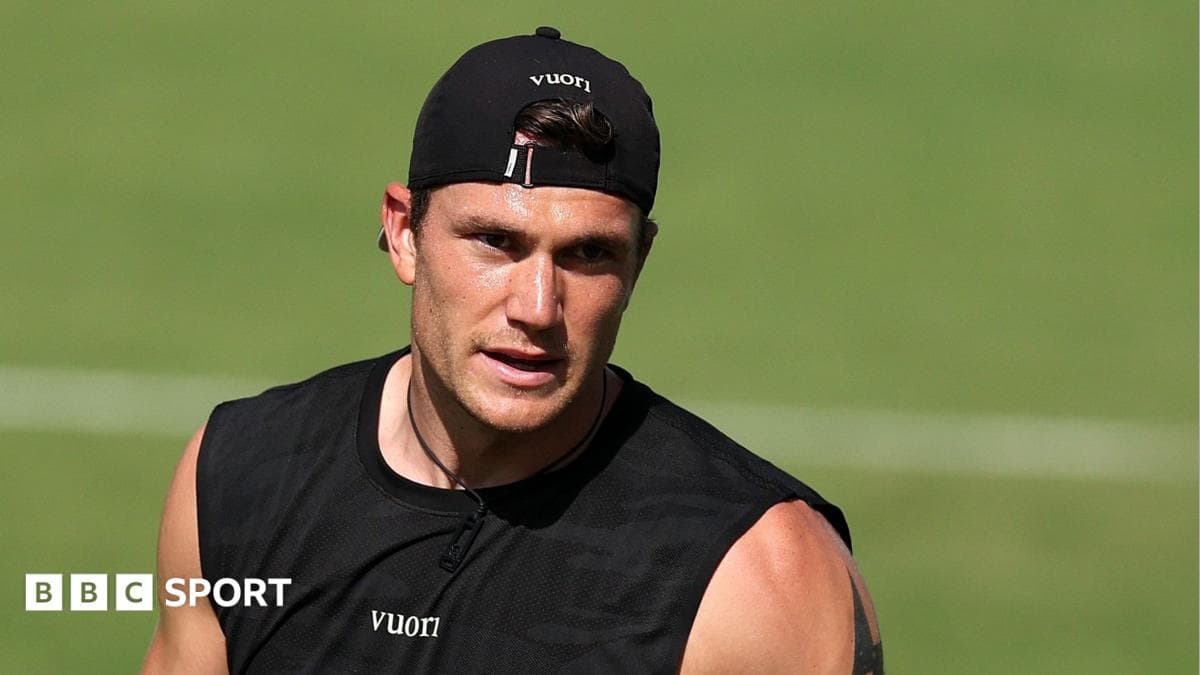
Jack Draper’s year is over. Not with a final flourish under the lights of a Grand Slam, but with a hard reset, a sore serving arm and a promise to come back when his body finally lets him play the way his talent demands.
The 24-year-old Briton confirmed he will not play again this season as he battles bone bruising in his serving arm, an injury that has quietly wrecked his campaign and limited him to just nine events since last year’s Wimbledon.
The toll has been obvious. Draper skipped the US Open, having fallen in the first round in both Montreal and Cincinnati last month. In Canada, during a painful defeat to France’s Terence Atmane, he ended the match in tears – a raw, public glimpse of a player who knows exactly how good he can be and how far away he currently feels.
On Instagram, he laid out the decision with a clarity that suggests this is less surrender and more strategy.
“I am taking this time to reset and heal so when I return I am 100% ready to go,” he wrote. “Tennis is my purpose and passion and so when I step back on court I want to make sure that there's nothing holding me back from where I want to go.”
The numbers are not kind. The rules are even harsher.
Because Draper is not expected to be out for more than six months, he will not qualify for a protected ranking when he returns, likely at the start of next year. Only players sidelined for longer can freeze their position. He cannot.
Right now he sits at 155 in the world. That ranking will leave him scrapping for wildcards or slogging through qualifying if he wants to reach the main draws of Grand Slams and ATP Tour events in 2025. For a player who, just over a year ago, was standing shoulder to shoulder with the sport’s elite, it is a jarring comedown.
And yet, that recent past is exactly why his story still matters.
Last June, Draper hit world number four. He had just claimed his first Masters 1000 title at Indian Wells and backed it up with a runner-up finish in Madrid. The trajectory looked almost linear: big game, big stage, big future. His own words capture the feeling of that surge.
“Last summer, all the dedication and work I had put into this sport was coming together,” he said. “It was all going my way and the path seemed so clear.”
Then came the complicated injury. Not a clean break, not a straightforward surgery, but the sort of nagging, layered problem that can gnaw away at timing, confidence and identity. Since then he has been, in his own description, “desperately trying to get back and feel as I once did on the court.”
That desperation has brought something else with it: fatigue. Not just physical, but emotional.
“Managing so much change, adversity and pain has helped me to grow massively in many areas of my life but has also made me feel a level of fatigue,” Draper admitted.
So the decision to shut it down is not simply about rankings or calendars. It is about rediscovering the joy and freedom that powered his rise in the first place.
In recent weeks, Draper has stepped away from the grind. He has taken a holiday with friends, deliberately putting distance between himself and the tour to create a mental break as much as a physical one. The next phase will be more controlled: a gradual return to training in the coming weeks as his team work to identify the root causes of the injury rather than just patching up symptoms.
There will be no shortcuts. No protected ranking. No guaranteed main draws.
If Draper does reappear in January, he will walk into qualifying events and lean on wildcards, a former world number four suddenly back in the queue. Yet for a player who insists he simply wants to compete without pain, those hurdles may feel minor compared to the relief of finally swinging freely again.
The rankings will say he is starting over. The question is whether his body will let him pick up where his talent left off.