Issy Wong and Mady Villiers Lead England's Comeback
For a long stretch, Ireland’s innings felt like it was drifting away from England. Gaby Lewis was set, Orla Prendergast lurked with intent, and the runs kept coming. Then Issy Wong changed ends – and the mood of the game.
Wong’s change of end brings the breakthrough
At 149-1, Ireland were cruising. Wong had looked ragged earlier, her rhythm off, her lengths inconsistent. The switch of ends was more than a tactical tweak; it reset her.
This time she ran in with purpose. No looseners, no freebies. Just a ball with a bit of fizz, a hint of nip off the surface, and a plan.
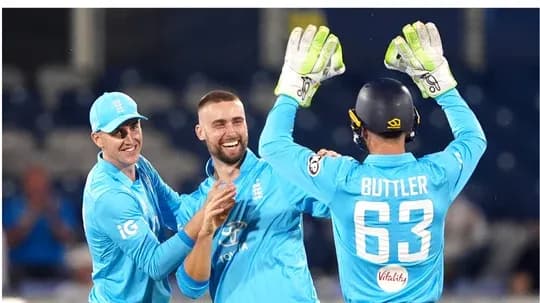
Lewis, on 69, had been the anchor. Wong went straight at her. She slipped one through the narrowest of gaps between bat and pad, and the sound told its own story – timber everywhere. Lewis bowled for 69, Ireland 149-2, and Wong took off in celebration, the release as obvious as the importance of the wicket.
From that moment, the wayward stuff vanished. Prendergast, so often the accelerator for Ireland, was kept stuck on nought. England suddenly had control of the tempo.
Capsey’s keeping experiment passes another test
Behind the stumps, Alice Capsey was living a very different kind of new-ball experience. Just her second professional match as a wicketkeeper – at any level – and she was standing up to the stumps to Wong’s pace.
She had one of those moments that tells you if someone really belongs in a role. A rising ball from Wong leapt at her, shoulder height, awkward and late. Capsey took it cleanly, soft hands, no fuss. It was the sort of take that keeps bowlers interested and selectors thinking.
Inside the England camp, there has been quiet confidence that Capsey could grow into this job. On this evidence, that confidence is not misplaced.
Villiers turns the screw
If Wong supplied the jolt, Mady Villiers brought the squeeze.
All afternoon she had been England’s most threatening spinner. The numbers backed it up: more spin on the ball than any of her team-mates – Villiers ripping it at 2.8°, ahead of Tilly Corteen-Coleman’s 2.2° and Charlie Dean’s 2.0°. One in every four deliveries challenged the stumps. That kind of pressure builds, even when wickets don’t immediately follow.
Ireland felt it.
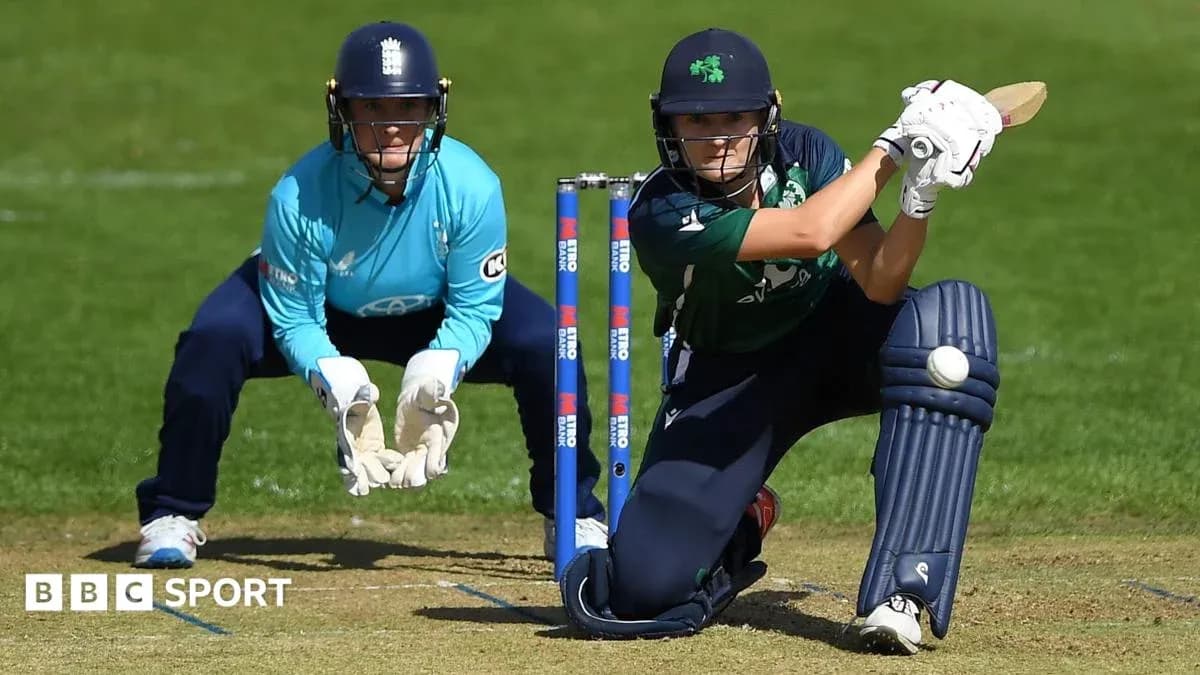
With the score on 172-2, Villiers dragged one down – the sort of ball batters usually feast on. Prendergast did exactly what you’d expect: she nailed it. Clean, powerful, straight into the leg-side. But she hit it too well.
Out at deep mid-wicket, Maia Bouchier had work to do. She made ground to her right, judged the flight, and then came the tumble – a very good diving catch to remove Prendergast for 19. A bad ball, a brilliant strike, and yet England walked away with the wicket. Ireland 172-3, and the momentum finally tilted.
As Katherine Sciver-Brunt observed, Prendergast’s downfall was the purity of her strike. The cleaner she hit it, the more chance Bouchier had.
Villiers’ over didn’t just bring a wicket. It showed the kind of cricketer she is. She’d already sprawled full length to her right to prevent a boundary off the final ball of an earlier over, throwing herself around as if every run was personal. She plays like she’s up for a scrap, every single ball.
Ireland keep pushing, but cracks appear
Ireland still had runs in them. Rebecca Stokell arrived with the score on 174-3. She missed her first ball, a tentative drive that didn’t connect, then settled with a run from her second to get moving.
There were still loose offerings from England. Corteen-Coleman, in particular, struggled to find her radar. A wide ball with a packed off-side field disappeared to the rope, and to make matters worse it was called a no-ball. Ireland moved to 165-2 at that stage, the extras adding to England’s irritation.
Yet the sense had shifted. Where earlier every misfield or boundary felt like a step backwards, now each dot ball carried weight. Kirstie Gordon, watching on, called it a crucial phase. England had an opening, and they knew exactly how dangerous Prendergast could be. Removing her was non-negotiable. Villiers delivered.
From 149-1 to 174-3, the scoreboard still looked healthy for Ireland, but the innings no longer felt theirs alone. Wong had rediscovered her bite, Villiers had earned her reward, and Capsey’s gloves had held firm.
The question now is whether this mix of youthful energy and tactical bravery becomes England’s new template, or just a fleeting glimpse of what this attack can really be.