Issy Wong Stars as England Defeats Ireland to Secure ODI Series
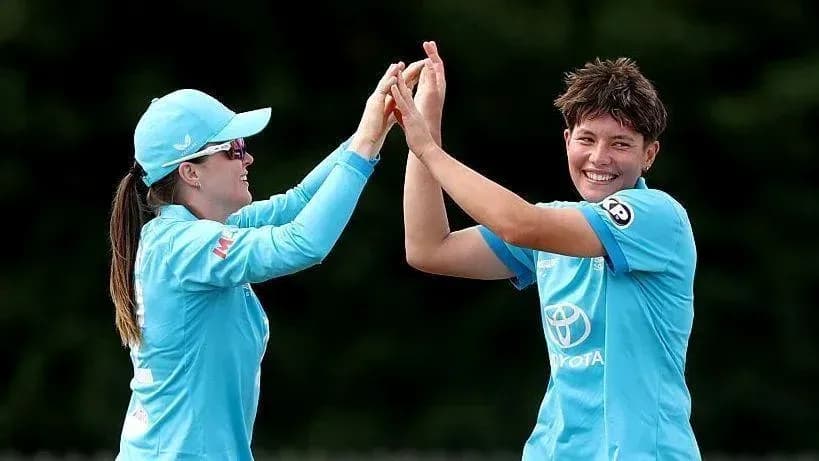
At Derby, under low, heavy skies, Issy Wong finally had the white ball in her hand and a point to prove. By the time she walked off, clutching figures of 5-33, Ireland were flattened for 165 and England were strolling to a six-wicket win and a 2-0 series lead with a game to spare.
It was ruthless, rapid and, at times, ragged. But it was never in doubt.
Wong takes centre stage
England’s attack had looked toothless on the flat Leicester surface in the first ODI. No Lauren Bell. No Sophie Ecclestone. Plenty of runs for Ireland. This time, with Lauren Filer rested, Wong was handed the new ball and the responsibility of leading the line.
She seized it.
Her first major strike came with a sharp nip-backer that sent Ireland captain Gaby Lewis’ off stump cartwheeling for 19. It set the tone. Wong hit the pitch hard, hit her lengths, and hit Ireland’s confidence.
Orla Prendergast, so influential in the series opener, looked set again before she threw it away, picking out deep mid-wicket for 25 off the bowling of Mady Villiers. That dismissal opened a door; Wong kicked it down.
Villiers nipped out Rebecca Stokell for three, and suddenly Ireland’s middle and lower order stood exposed. Wong went to work. Pace, accuracy, a hint of menace. Ireland could not live with it.
They managed only 10 boundaries in the entire innings. To underline the gulf, Maia Bouchier would later strike nine by herself in England’s chase.
The resistance, such as it was, came from Amy Hunter. Compact, composed, and once again Ireland’s anchor, she followed her half-century in Leicester with another – 64 from 96 balls. She watched partners come and go, tried to stitch together something resembling a total, and carried the innings almost alone.
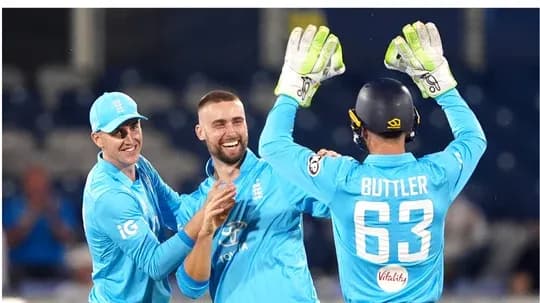
The pressure built as wickets tumbled around her. The last six fell for just 25 runs. Hunter, forced to gamble, finally miscued to the boundary. Wong claimed the catch and with it her first international five-wicket haul. Ireland’s innings ended on 165 from 47 overs, well short of anything that could truly test this England side.
For Wong, back in ODIs for the first time since early 2024, it felt like a statement. Less raw prospect, more genuine leader of the attack.
England cruise, but with self-inflicted scars
A chase of 166 should be a procession for this England batting order. For long stretches, it was. They still managed to leave a few skid marks on the way.
Bouchier and Sophia Dunkley, the architects of England’s record-breaking pursuit in the first match, walked out brimming with intent. The new ball disappeared. Drives flashed, pulls thudded, and Ireland’s seamers were immediately on the defensive.
Fifty came up inside seven overs. The partnership reached 54 and the game was all but gone.
Then England blinked.
Bouchier, in command on 45 from 31 balls, called Dunkley through for a risky single that was never really there. Dunkley, on 20 and looking ominous, was run out. It was needless, sloppy, and entirely avoidable.
The mistake seemed to rattle Bouchier more than anyone. She soon followed, falling to a short ball from spinner Kia McCartney, picking out the fielder when she had time and runs to burn. From total control, England had handed Ireland a sliver of hope.
It did not last long, but it did expose a familiar flaw. Alice Capsey, usually so assured, was pinned lbw for one. Jodi Grewcock looked fluent for her 24 before chipping tamely to mid-wicket. From 54 without loss, England found themselves four down, their dominance smudged by avoidable errors.
The required rate never climbed, the target never loomed, but the scorecard told a story of chances spurned rather than pressure absorbed.
Kemp and Gibson shut it down
With any lingering doubt to be cleared away, Freya Kemp and Dani Gibson walked in and shut the game down with minimal fuss and maximum authority.
They didn’t need to take risks. They chose their moments instead. Singles milked, the odd boundary punched, Ireland’s bowlers gradually worn down. Their unbroken stand of 41 eased England to 166-4 inside just 23 overs, the gap between the sides laid bare in the speed of the finish.
Ireland, so bold with the bat in Leicester when they posted 281, never came close to that level at Derby. Without substantial contributions from Lewis or Prendergast, the lack of depth behind Hunter was exposed. Once Wong and Villiers punched through the top order, there was no counterpunch.
England, by contrast, had the luxury of winning comfortably while still leaving the dressing-room analyst with plenty to circle in red pen. Poor running. Loose strokes. A top order that briefly flirted with carelessness.
The series now moves to Worcester with the result already settled and England’s summer drawing to a close. For Ireland, it is one last chance to land a blow. For England, and for Wong in particular, it is an opportunity to turn a resurgent performance into a new standard.