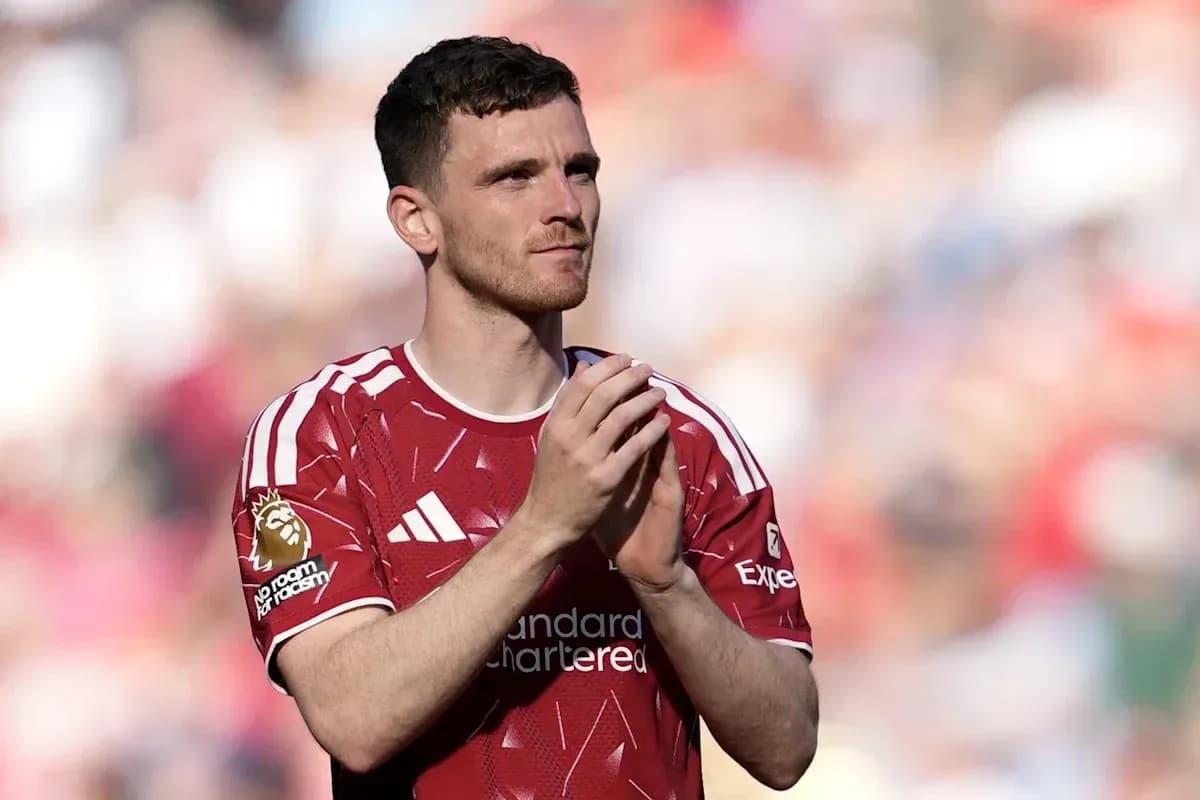
Iraola Faces Early Challenges at Liverpool: Balancing Squad Depth and Performance
Andoni Iraola is only four league games into his Liverpool tenure, yet the calendar has already turned into a stress test.
Two home draws. A Champions League high followed by a domestic flatline. Tottenham next in the Carabao Cup, not a lower-league side you can quietly rotate against. This is where he starts to find out who can live with his demands – and who can’t.
Iraola’s first big Liverpool puzzle
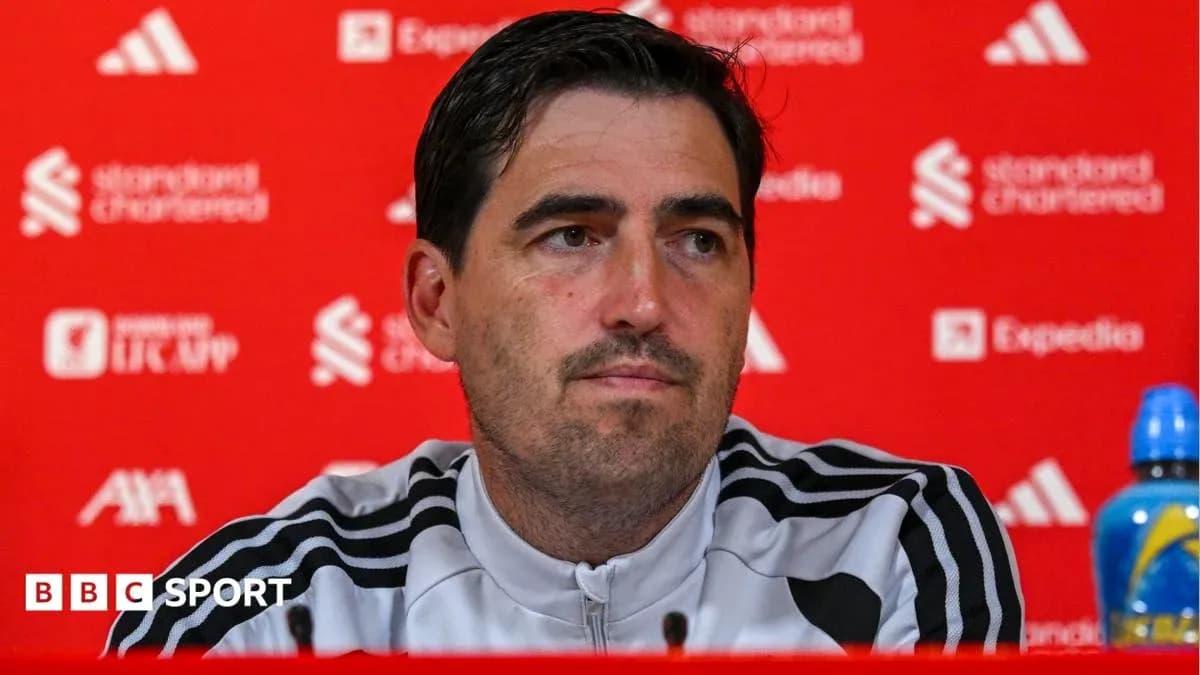
Asked whether he can simply go full strength in every competition, Iraola didn’t pretend.
“You can decide and put the same players in every game. The problem is there'll be a moment when they're really tired. And there is more risk of injury,” he said, laying out the blunt reality of a schedule that already has Liverpool playing every three days.
Some players, he knows, can handle that. “There are players who play every three days with no issues. They are very robust, their performances don't change too much.” Others clearly cannot. “There are other players where the risk is bigger and the performances are different. I have to learn who is ready to play games every three days and who needs a rest so their performance level isn't affected.”
This is the real work now. Not tactics on a whiteboard, but the mapping of bodies and minds to a relentless fixture list. Iraola admitted he thought he had a handle on it with some of his squad. With others, it is new territory – “even for them, because they haven't played as many games. We are learning.”
The learning curve is steep. Tottenham arrive at Anfield in the Carabao Cup on Tuesday, and the usual early-round safety net isn’t there. No League One side, no gentle handover to the kids. Just another Premier League opponent who can punish any looseness.
Does he go strong to change the mood after Fulham? Or rotate heavily to protect legs for what lies ahead? That’s the dilemma. And it comes at a club where this competition carries real weight.
A cup that helped build Liverpool’s identity
If there is one domestic trophy that has quietly tracked Liverpool’s modern history, it is the League Cup.
They made it their own in the early 1980s. Four in a row from 1980-81 to 1984, a run that underlined their dominance in English football and set a standard few have come close to matching.
The fifth arrived in 1995, Steve McManaman gliding through Bolton at Wembley with a brace that felt like a throwback to Liverpool’s swaggering past and a bridge to a new era.
The new millennium brought it back to Anfield again. In 2001, under Gerard Houllier, Liverpool folded the League Cup into a trophy-laden season, then lifted it again two years later, beating Manchester United in the final. Houllier’s side used the competition as both validation and fuel.
Kenny Dalglish added another in 2012, his second spell in charge marked by a penalty shootout win over Cardiff City that felt chaotic, flawed, but unmistakably Liverpool.
Then came the long wait until 2022. Jürgen Klopp’s side edged Chelsea in an extraordinary 11-10 shootout, a final that turned a domestic cup into a test of nerve and depth. Two years later, Klopp did it again, beating Chelsea once more to deliver Liverpool’s 10th League Cup in 2024.
Ten titles. A record. The question now hangs over Iraola: can he steer them to number 11 while juggling the brutal rhythm of modern elite football?
Anfield stalls as the schedule bites
The warning signs flickered on Saturday.
Liverpool 0-0 Fulham. Another home game, another draw. For just the third time in 63 years, Liverpool have failed to win either of their opening two home league fixtures. That is not the launch Iraola would have imagined.
The contrast to midweek was stark. Against Atletico Madrid in the Champions League, Liverpool played with urgency and edge, beating a Diego Simeone side that reached last season’s semi-finals. Three days later, against a Fulham team low on confidence and leaking goals, they looked like a different side.
“The Reds looked physically and mentally tired,” wrote Aadam Patel from Anfield, and it showed. The intensity dropped, the ideas dulled. On the first real glimpse of how Iraola’s style copes with two games a week, Liverpool looked short.
They are still unbeaten. It is not a crisis. But six points from four games, with home draws against Nottingham Forest and Fulham and another stalemate at Newcastle, is a thin return for a club with Liverpool’s ambitions. The only league win so far came at Ipswich.
More troubling was the lack of punch from a front line that has cost £364m. Alexander Isak, Bradley Barcola and Florian Wirtz started together in the league for the first time. On paper, it is a devastating trio. On the pitch, it misfired.
Liverpool created chances, but nowhere near enough. Isak had just 16 touches in 90 minutes – the second fewest on record for an outfield Liverpool player, after his 14 touches against Forest a fortnight earlier. Wirtz, brilliant against Atletico, looked a shadow of that player. Barcola and Isak produced flashes, but nothing sustained. This is a partnership that will need time, and time is the one thing a packed calendar rarely grants.
Iraola and his players are already feeling the squeeze. With at least seven more Champions League games to come and Tottenham visiting in the Carabao Cup, adaptation can’t wait. If Liverpool want to fight for trophies, they have to find a way to win on heavy legs.
Fulham dig in as Arbeloa breathes
If Liverpool’s display raised questions, Fulham’s performance offered their new manager a lifeline.
Alvaro Arbeloa arrived at Anfield under pressure. Three league games, three defeats since taking charge in the summer. A defence leaking goals. Confidence brittle. Yet his side walked away with their first Premier League point of the season and could easily have taken three.
They unsettled Liverpool early. A mix-up between Alisson and Ryan Gravenberch almost gifted Gonzalo Garcia the opener, only for Jeremy Jacquet to scramble the ball off the line. It was a moment entirely of Liverpool’s own making and a warning they did not fully heed.
Fulham were the better team in the first half but lacked the ruthlessness to make it count. Josh King drew a save from Alisson from inside the box. Antonee Robinson headed wide. Arbeloa, who played 98 games for Liverpool between 2007 and 2009, watched his new side carry out the game plan with discipline but not quite enough edge.
He had made two significant calls before kick-off. Austrian centre-back David Affengruber came in for his debut, replacing Joachim Andersen, while Sander Berge started instead of Cesar Palacios. Both helped stiffen Fulham’s spine.
At the other end, Liverpool’s changes didn’t quite tilt the match. Iraola brought in Kostas Tsimikas, Gravenberch and Victor Munoz for Milos Kerkez, Alexis Mac Allister and Rio Ngumoha. Tsimikas struggled and was hooked at half-time for Kerkez. By the hour, Gravenberch and Munoz had also gone, replaced by Mac Allister and Cody Gakpo as Iraola chased a spark.
There were half-openings. Munoz forced a strong save from Bernd Leno with a header. Barcola’s volley deflected behind off Timothy Castagne. Isak finally wriggled into space but shot too close to Leno. Dominik Szoboszlai drew a powerful save from the Fulham keeper.
Ngumoha and Jeremie Frimpong arrived with 18 minutes left, yet the pattern barely shifted. Liverpool pushed, Fulham held. In stoppage time, Isak headed wide from a corner, and the chance was gone.
Fulham, who still threatened late through King and Kevin, left with a point that felt like a small turning of the tide for Arbeloa.
The test of a Liverpool season
This is where Iraola’s Liverpool story starts to take shape.
He knows he cannot run the same XI into the ground. He knows some players are “very robust” and can churn out performances every three days, while others need protection. He knows his £364m attack has to find a rhythm, and quickly.
The fixtures will not wait. Tottenham in the Carabao Cup. The Champions League group still to navigate. A Premier League table that punishes slow starts.
Liverpool’s history in this competition is rich. Their expectations are higher still. The question now is simple: can Iraola find enough “robust” players – physically and mentally – to carry that weight across a season that is only just beginning to bite?