India's Asia Cup Victory and Kapil Dev's Quip
NEW DELHI: India’s women’s team should have been talking only about history on Sunday night. Eight Asia Cup titles. A 72-run demolition of Sri Lanka in the final in Dubai. Another dominant chapter in a dynasty.
Instead, the conversation turned to a stage the players never walked onto.
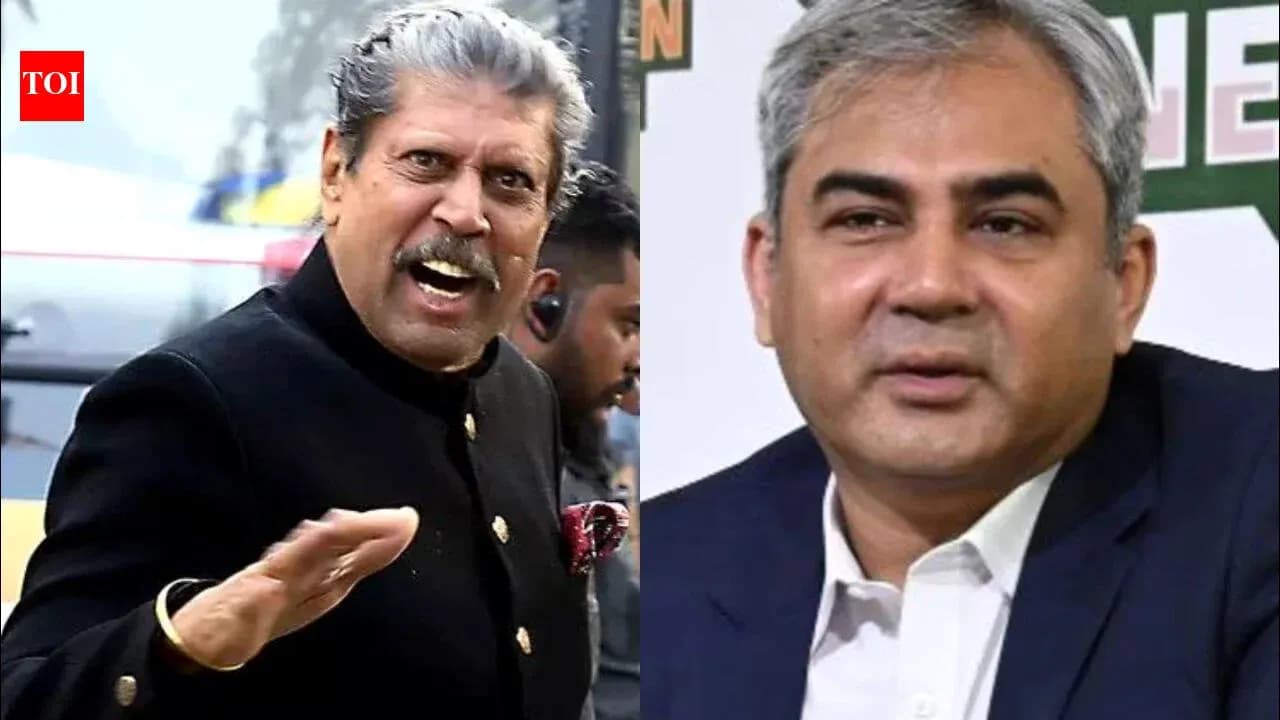
When the time came for the official trophy presentation, the Indian team stayed away, choosing not to receive the silverware from Asian Cricket Council chief Mohsin Naqvi — who is also Pakistan’s interior minister and chairman of the Pakistan Cricket Board. The trophy glinted under the lights. The team that had earned it did not appear.
It was not a first. It was a repeat.
Twelve months earlier, Suryakumar Yadav’s India had taken the same stand at the 2025 Asia Cup, declining to accept the men’s trophy from Naqvi. That decision had sparked a political and sporting storm. On Sunday, the fuse was lit again.
Kapil Dev, asked to weigh in, needed only six words.
“Tell all of them to play golf,” the 1983 World Cup-winning captain told ANI, swatting away the controversy with trademark dry humour. No lecture. No long explanation. Just a quip that said he had no appetite for the theatre around the podium.
Behind the scenes, though, this was anything but spontaneous.
BCCI: ‘We had already clarified our stance’
BCCI secretary Devajit Saikia moved quickly to underline that the episode was not a last-minute protest or a rogue player decision. The board, he said, had informed the organisers well in advance that India would not take part in a ceremony conducted in the proposed format.
“Winning the trophy is one thing, but winning the tournament is what truly matters,” Saikia told ANI, making it clear the row, in the BCCI’s view, lay in how the presentation was framed, not in the result on the field.
He linked the position to a broader context, pointing back to the previous year and the Asian Games episode, which he described as a matter “known to the entire nation”. The message: this was part of an established line, not a sudden reaction to Naqvi’s presence in Dubai.
The pressure point came in the negotiations over the ceremony itself. Saikia said the BCCI had explicitly warned that the Indian team would not participate if the organisers stuck to their original prize distribution plan.
“We maintained our position based on that context,” he explained. “We had stated beforehand that we did not approve the manner in which they had planned the prize distribution ceremony. We informed their chairman that if they proceeded with that specific system, we would not participate. Since they did not agree, we chose not to accept the trophy in that manner; we will collect it later.”
So India lifted the Asia Cup without lifting the trophy. The statement came in absentia.
‘We act as one’
As the images of an empty podium circulated, speculation quickly turned towards a possible rift between the players and the board. Saikia moved to shut that down as well.
“This was entirely the BCCI’s decision,” he said. “We had discussed everything internally, and the BCCI’s stance remains consistent with what it was previously.”
He stressed there was no daylight between the dressing room and the boardroom.
“Whether it concerns the players, the team, or the BCCI officials, we are all united; there is no divergence between the players’ decisions and the BCCI’s decisions. We act as one. Whatever decision is taken, we proceed in accordance with the BCCI’s established policies.”
On the scoreboard, India’s women were ruthless. They crushed Sri Lanka by 72 runs to clinch an eighth continental crown, underlining their status as the dominant force in Asia.
On the presentation stage, they made an entirely different point — one that now stretches across two Asia Cups, two Indian teams, and one man at the centre of it all: Mohsin Naqvi.
The trophy will eventually find its way into the BCCI cabinet. The images of how it got there, and why it never passed through Naqvi’s hands, will linger far longer.