India Eyes Women’s Asia Cup Final Amid Trophy Tensions
Dubai is bracing for a repeat of cricket’s most awkward photo-op.
As Harmanpreet Kaur’s India march unbeaten towards the ACC Women’s Asia Cup 2026 final, the tournament’s showpiece in Dubai on September 13 is shaping up as far more than a straight contest for regional supremacy. It could also revive one of the most uncomfortable subplots in recent cricket history: India, Pakistan, and a trophy no one wants to touch.
At the heart of it again is Mohsin Naqvi.
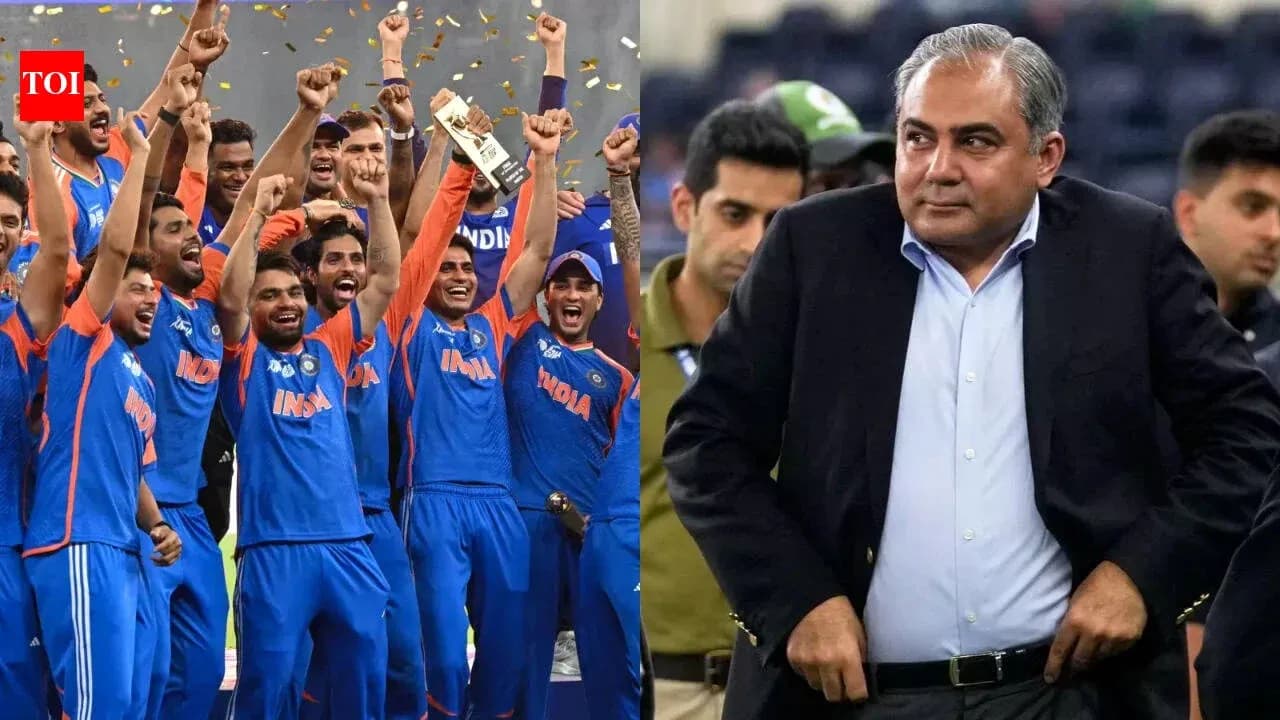
The Pakistan Cricket Board chairman and Asian Cricket Council president is expected to be the chief guest at the closing ceremony, according to Geo Super. In any normal year, that would simply mean a standard role in the post-match formalities. This is not a normal year, and Naqvi is not just another dignitary.
His presence immediately drags the spotlight back to last September, and a night when India won a continental title but went home without the silverware.
The night the trophy stayed behind
On September 28, 2025, at the Dubai International Stadium, Suryakumar Yadav’s India beat Pakistan in the Men’s Asia Cup final. The contest finished. The celebrations began. The presentation did not.
What should have been a smooth procession of handshakes and photos turned into a stand-off that dragged on for more than an hour. Behind the scenes, discussions swirled around a single point: who would hand over the trophy.
Naqvi, then as now the ACC president and PCB chairman, was the man in position to present it. India declined. The team chose not to receive the trophy from him. The players went up to the podium, celebrated their triumph, posed for pictures – but without the cup.
Naqvi left the stadium with the trophy still in his possession. It never made it to the Indian dressing room. It never made it to India at all. The Men’s Asia Cup trophy remains at the ACC office in Dubai.
That episode did not unfold in a vacuum. The tournament followed the Pahalgam terror attack, and Naqvi, serving as Pakistan’s Interior Minister at the time, had posted anti-India statements on social media during the event. When he walked into the stadium for that final, the tension was already baked in. By the end of the night, it had produced one of the most talked-about images of the competition: champions without a cup, and a trophy with nowhere to go.
Same city, same president, same question
Fast forward to the Women’s Asia Cup. Same governing body. Same city. Same man at the centre of the protocol.
As ACC president, Naqvi holds the right to present the trophy to the winners of this women’s edition. If India reach the final and win it, the script writes itself: Harmanpreet Kaur’s side, the champions, walking up to receive the silverware from the same official their male counterparts effectively snubbed a year earlier.
Does history repeat itself? Or does it bend?
The Board of Control for Cricket in India has kept its counsel so far. No public indication has emerged of what the women’s team would do if they find themselves in that position again – this time under the lights in Dubai, with the cameras trained not just on the scoreboard but on the handshake line.
The decision, ultimately, would rest with Harmanpreet and her players, framed by whatever guidance comes from the board. On the surface, it is a simple ceremonial moment. In reality, it carries all the weight of last year’s unresolved ending.
India in command on the field
While the politics swirl around the podium, India’s cricket has been ruthless in the middle.
Unbeaten in the eight-team competition, Harmanpreet’s side have moved through the group stage with the assurance of a side that knows its own level. They opened with a win over Thailand, then brushed aside Hong Kong, and delivered a statement performance against Pakistan.
That game, also in Dubai, underlined the gulf on the day. India bowled Fatima Sana’s team out for just 55, then chased the target with seven wickets in hand. It was as clinical as it was symbolic, a reminder that in the women’s game, India currently hold the upper hand in this rivalry.
The campaign has also belonged, in part, to Smriti Mandhana. The left-hander has climbed to a historic landmark, overtaking Mithali Raj to become the leading run-scorer in women’s international cricket. To surpass a figure as towering as Mithali is not just a personal milestone; it is a sign of how long and how consistently Mandhana has sat at the heart of India’s batting.
With a semi-final place already secured, India can now manage their resources, sharpen their plans, and keep one eye on September 13. The cricketing path is clear. Win the semi-final. Reach the final. Play for the title.
It is everything that might follow the final ball that feels less certain.
Another podium, another flashpoint?
If India lift the Women’s Asia Cup, the moment of truth will arrive at the presentation area, not the boundary rope.
Naqvi, by virtue of his role, is again the man who should hand over the trophy. The last time India stood on an Asia Cup podium with him in the frame, the cup stayed away from the team and stayed in Dubai. That image has not faded. It hangs over this tournament’s closing night like a shadow.
Cricket cannot escape the politics that shape its biggest rivalries. Sometimes they seep into the fixture list, sometimes into player availability, and sometimes, as Dubai witnessed last year, into the most basic ritual of all – the passing of a trophy from official to captain.
India’s women have so far kept the conversation firmly on their cricket. If they keep winning, they may soon find the focus shifting to a very different kind of decision, taken not with bat or ball, but with an outstretched hand on a stage in Dubai.
Will this be the night the Asia Cup trophy finally crosses the boundary into an Indian dressing room – or the night the game’s most uncomfortable photograph is taken all over again?