India Survives Japan Scare in Dramatic Five-Over Thriller
At a quiet Sano Cricket Ground, world champions India came within one ball of a global embarrassment.
In a one-off T20 reduced to a five-over shootout, India scraped past Japan by just two runs, 32-4 playing 30-3, in a contest that ended with a law-book debate and a lingering sense of what might have been for the hosts.
India strangled by fearless Japan
This was supposed to be routine. A tune-up before the Asian Games. A mismatch on paper.
Japan never read the script.
After winning the toss and bowling, they suffocated India’s top order. Abhishek Sharma, so often a tone-setter in the powerplay, lasted one ball. Charlie Hara-Hinze, a 17-year-old spinner with the composure of a veteran, removed the destructive opener and then came again, finishing with 2-17 in his two overs. India stumbled to 14-3, the aura of the “cricketing juggernauts” suddenly looking fragile.
Shreyas Iyer offered the only real resistance. His 16 from 12 balls was hardly explosive, but on a day when batters from both sides fought for timing and space, it felt vital. Even so, 32-4 from five overs looked light. Very light.
Japan walked off sensing something rare: not just a contest, but a genuine chance.
Japan’s chase: from stutter to surge
If India’s innings had been scratchy, Japan’s reply began worse. They lurched to 8-2 after two overs, the chase threatening to collapse before it had started. The required rate climbed, the pressure thickened.
Then came the counter-punch.
Across the next two overs, Japan took 17 runs, dragging themselves back into the game and turning what could have been a procession into a knife-edge finish. Alexander Shirai-Patmore, a left-hander with flair and ambition, became the key. Every run he scored stretched Indian nerves a little tighter.
By the time the final over began, Japan needed eight. Against India. Against a full-strength attack. In front of a small crowd that suddenly realised it might be watching a modern-day upset.
The wide that wasn’t
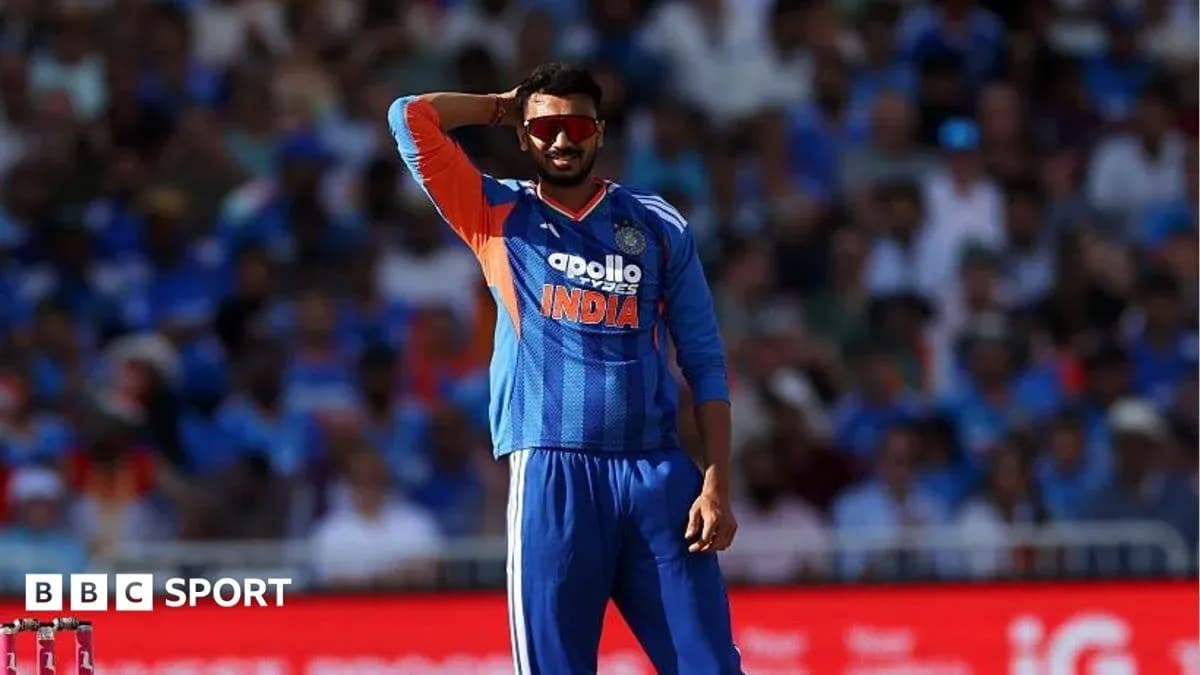
Axar Patel took the ball for the last over. Japan needed eight; India needed composure.
Then came the flashpoint.
Shirai-Patmore, looking to outfox the left-arm spinner, set up for a reverse-sweep. Axar fired the ball down the leg side – which, given the batter’s switch in stance, had effectively become his off side. The on-field umpire immediately stretched his arms: wide.
Axar’s reaction was instant. Frustration, then fury. He and captain Shreyas Iyer moved towards the umpire, disputing the call. The pressure, the stakes, the sheer improbability of the situation – it all poured into that one moment.
The two umpires conferred. No DRS. No big screen replays. Just the law, their memory of the ball, and the arguments ringing in their ears.
Then the signal changed. The wide was overturned.
The equation swung sharply. Instead of five needed from four balls, Japan now required six from three. In a five-over game, that kind of correction is seismic.
Law, spirit, and a cruel finish
On the letter of the law, the officials landed in the right place. The ICC’s playing conditions for men’s T20 internationals are clear: once a batter changes the position of hands or feet to play a reverse shot, they lose the normal “leg-side wide” protection. A ball is only wide if it passes wide of where the striker is standing and would also have passed wide had they been in a conventional stance.
By that definition, Axar’s delivery was legal. The initial call was wrong. The correction, eventually, was right.
Yet the manner of that correction will keep the debate alive. With no DRS in place, the optics of India’s senior players challenging the call and then seeing it reversed sit uneasily with the preamble that talks about the “spirit of cricket” and urges players to accept the umpire’s decision.
Once the wide disappeared from the scoreboard, Axar closed his grip on the game. He shut down Japan’s last swing at history, finishing with 0-7 from his two overs. Japan ended stranded on 30-3, two runs shy, close enough to taste it and far enough away to feel the hurt.
A near-miss that will linger
Strip away the controversy and the raw numbers still tell a remarkable story. Japan, a side yet to reach a T20 World Cup and facing India for the first time in international cricket, held the world champions to 32-4 and came within a single shot of victory.
They unearthed a teenage spinner in Hara-Hinze who knocked over Abhishek Sharma first ball and bowled with nerve. They recovered from 8-2 to push a full-strength India into a final-over scramble. They forced Axar Patel and Shreyas Iyer into animated, desperate appeals.
For India, the result will be logged as a narrow win, a quirky warm-up before the Asian Games begin on 24 September. For Japan, it may be remembered as something more important: proof that on a small ground in Sano, they went toe-to-toe with the best in the world and left them rattled.
The scorecard will show a two-run defeat. The memory, especially in Japanese cricket circles, will read very differently.