Haaland's Controversial Goal Sparks VAR Debate
Erling Haaland’s winner will live a long life in the arguments, if not in the highlights.
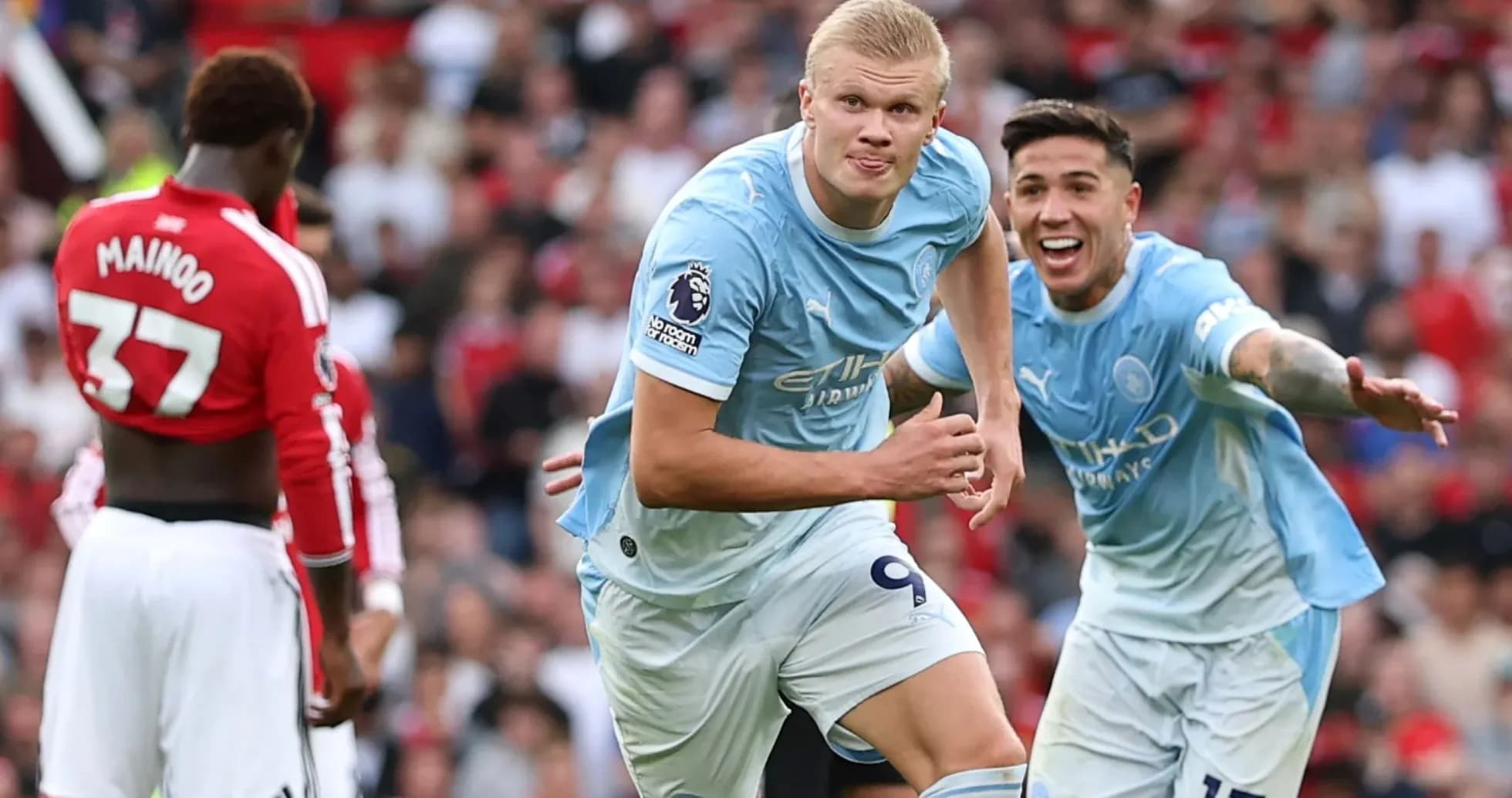
On the hour, Manchester City’s No.9 did what he does better than almost anyone on the planet: one touch to set, one vicious swing to finish, lashing the ball into the roof of the net from a tight angle. The flag went up, Old Trafford exhaled, and for a few seconds it felt like a reprieve.
Then came the check.
Replays showed Patrick Dorgu’s boot playing Haaland onside as the United full-back stretched to cut out a low cross from the left and only succeeded in nudging it across the face of goal. Haaland, alive to every scrap in the box, needed no second invitation. The finish was clinical, familiar, inevitable.
But the storm gathered elsewhere.
Enzo Fernandez, City’s furthest man forward when the ball came in, never got back onside. As the cross flashed past him, he hurled himself into a diving header, missing the ball but very much in the middle of the action. Lisandro Martinez reacted to that movement, stepping towards Fernandez as the midfielder launched himself, leaving Haaland to ghost into space behind him.
The officials, after a lengthy VAR review, decided the goal should stand. No offside. No interference. 1-0 City.
Inside the stadium and across the broadcast, disbelief took hold. On co-commentary for Sky Sports, United great Gary Neville called it a “huge call” and predicted an apology would follow. It did.
Before that apology arrived, though, former England striker Michael Owen had already gone on record with his own blunt assessment. Speaking to GOAL ahead of his return to ‘Match Officials Mic’d Up’ alongside referees’ chief Howard Webb, Owen drew on his time inside the VAR hub.
“I've sat in the VAR hub and gone through lots of decisions and it isn't easy. I mean it's 10 times harder than people think,” he said. “However, this was as straightforward as it gets really. I simply don't know how they can come to this decision.”
Owen revealed that the assistant’s flag had initially gone up for Haaland, not Fernandez, and suggested that early call had shaped everything that followed.
“What I do know is that the linesman gave offside for Haaland. So he gave offside for Haaland, I know that for a fact. So that can only have distorted their view in terms of they think, ‘right well we've got to check for Haaland, let's draw the lines, oh my word he's onside.
“But how they can't check, or if they do check, how they can't pull it up for an offside from Fernandez – he clearly makes a movement towards the ball. What movement is more obvious than a diving header! It's not a case of has he tried to touch that or not? He's flung himself for a diving header. It absolutely beggars belief. It doesn't get any more straightforward in my eyes.”
On the touchline, Michael Carrick watched his side play more than 65 minutes against 10 men and still walk away empty-handed. Phil Foden’s early dismissal, after he was judged to have kicked out into the stomach of Bruno Fernandes, had given United a platform they never fully used. Haaland’s goal and the manner of it only deepened the frustration.
After the 1-0 defeat, Carrick did not hide his concern at what the incident said about the modern officiating structure.
“I can't understand how we are trying to help referees – putting so many layers behind them, so many people, so many bodies, so many screens and so many offices, to try to come up with the right decisions,” he said.
“And if that's how the rule is interpreted, that you're not interfering with play because you have thrown yourself at the ball six yards from goal and pretty much nearly touched it, it's worrying if that's how the game is seen by those who are officiating it.”
Neville’s prediction arrived on schedule. Pro Ref issued a statement, and with it, a rare admission.
“It was established that Enzo Fernandez did not play the ball and therefore that makes any offside offence subjective, however, on this occasion, the VAR did not recognise the likely impact of his position and should have recommended an on-field review.
“Contact has been made with Manchester United this evening to acknowledge what we deem is an error of judgement. A review of the incident will take place.”
For United, that acknowledgment lands like cold comfort. The points are gone, the derby lost, and a man advantage squandered. The table does not mark asterisked defeats.
For VAR, it is another bruise in a season barely out of its opening weeks. Each weekend seems to deliver a fresh controversy, a fresh explanation, a fresh promise to “review” and “learn.”
Owen, like many in the game, is no longer asking for perfection. He is asking for clarity, for consistency, for decisions that match what players, managers and supporters see with their own eyes.
The technology is here to stay. The question, once again, is whether those using it can keep pace with the sport they are trying to govern.