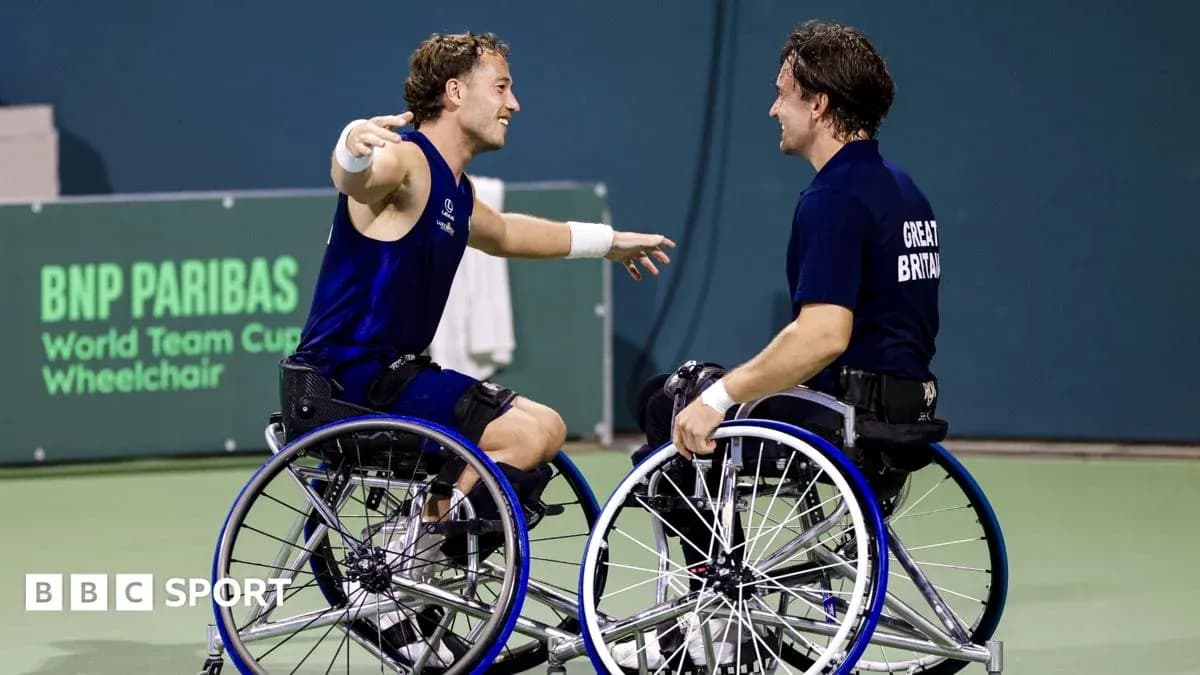
Great Britain Reclaims World Team Cup Title in Orlando
Great Britain are World Team Cup champions again. Title number five, prised back from defending champions Japan, arrived in the Florida heat with the familiar pairing of Alfie Hewett and Gordon Reid delivering when it mattered most.
With the tie locked at 1-1, the two men who have defined Britain’s modern era of wheelchair tennis walked into the deciding doubles and tore through Tokito Oda and Daisuke Arai 6-1 6-2 to seal a 2-1 victory.
The scoreline was ruthless. The context was not.
Reid, part of every British triumph in 2015, 2019, 2023 and 2024, knew exactly what this one meant. "We're really happy to get the title back," he said, another trophy added to a partnership that has become a benchmark for team success in the sport.
Hewett, still feeling the sting of his earlier singles defeat, called it a new kind of test. "It's the first time it's come down to the deciding doubles for us, so I'm just really happy that we got over the line.
"It's always a privilege to play for your country and there's been a great atmosphere and team spirit again this week between all the lads."
Reid strikes first
The final had started perfectly for Britain. Reid, clinical and composed, dismantled world number 21 Arai 6-2 6-2, extending his flawless head-to-head record over the Japanese player to five wins from five.
His ball-striking was clean, his court craft sharper. Every time Arai tried to extend a rally or change direction, Reid answered with depth and angles that squeezed the space out of the court. It was the kind of authoritative performance that settles a team.
Then the sun took over.
Hewett and Oda were due on next, but extreme heat in Orlando forced a long delay. Six hours passed before they returned to court, the temperature finally relenting enough to resume.
When they did, the tone of the tie shifted.
Oda, the world number one and fresh from losing to Hewett in the US Open singles final just a week earlier, arrived with purpose. Hewett, riding the confidence of that New York win, went blow for blow with him again, but this time the margins deserted him.
Oda edged a tight first set 6-4. The second was even finer, decided 7-5, with Hewett left to reflect on a match that hinged on a handful of points.
"I'm a bit disappointed that it wasn't a 100% day after my loss in the singles," he admitted, "but it was a really high-level match and just came down to a few points in both sets that could have gone either way."
From setback to statement
That defeat could have lingered. It didn’t. Instead, it fed the fire going into the doubles.
With the tie on the line, Hewett and Reid reverted to what they do best together: command the big stage. Their chemistry, built over years of shared finals and pressure moments, immediately unsettled Oda and Arai.
Returns came back low and fast. Serves hit their spots. British communication was crisp; patterns were clear. Japan, who had ridden the momentum of Oda’s singles win, suddenly found themselves chasing shadows.
The first set flew by 6-1. The second followed the same script. A 6-2 close-out underlined the gulf in experience as a doubles unit.
Around them, the wider British squad – including 21-year-old Ben Bartram and captain Martyn Whait – had already laid the groundwork earlier in the week with wins over South Korea and the Netherlands. The doubles demolition felt like the natural crescendo of a campaign built on depth, resilience and familiarity with this stage.
For Japan, the defence of their title ended in the face of a team that has made a habit of owning this competition. For Britain, it was confirmation that the standard they set a decade ago still holds.
Five World Team Cups now sit on the record of Hewett and Reid’s era. The question is no longer whether they can win these weeks. It’s how long they can keep this dominance rolling.