The Pursuit of Grand Slam Glory: Conviction and Delusion
At this level, talent is a given. Athleticism is assumed. Commitment is non‑negotiable.
And yet, for most of the men chasing a first Grand Slam title, all of that still isn’t close to enough.
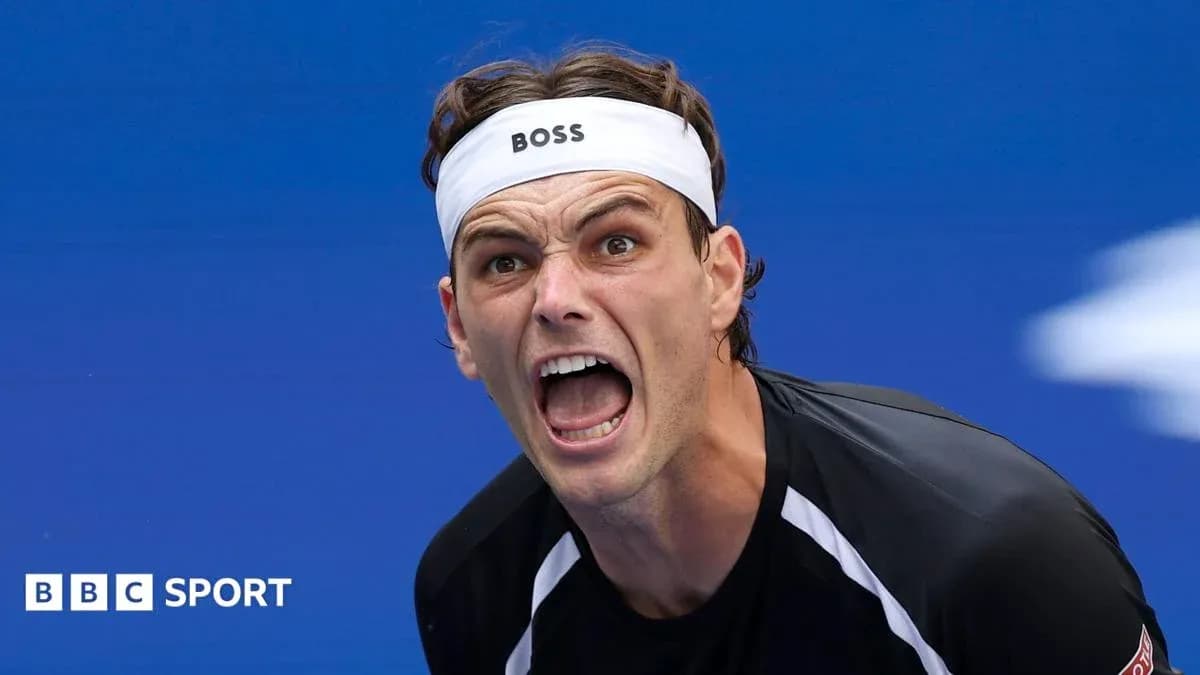
To win a major, you need something far less tangible and far more brutal: the absolute conviction that, under the harshest lights and the heaviest scrutiny, you are the one who walks away with the trophy. Unwavering belief. Or, as Taylor Fritz has come to call it, “delusion”.
The American world number 10 sits at the heart of this story. He is part of the generation that keeps circling the Grand Slam podium without quite stepping onto it. In New York this fortnight, the path looked unusually clear. Jannik Sinner was absent through injury. Carlos Alcaraz arrived still feeling his way back after a long lay-off. The draw seemed to whisper to the chasing pack: this is your chance.
They blinked.
Six of the top 10 seeds were gone by the fourth round at Flushing Meadows. Fritz was one of the early casualties, wasting a two‑set lead against Argentina’s Francisco Cerundolo in the third round, a defeat that felt like more than just a bad day at the office. It felt like another missed window in a career that he himself has framed in stark terms.
Earlier this year, speaking to the Guardian, the 28‑year‑old admitted he expects to feel an “emptiness” at the end of his career if he never wins a Slam. That is the scale of the burden. That is the weight every time he steps into a major arena and sees the draw open up.
He is not alone in carrying it.
By Sunday night, former champion Daniil Medvedev had also departed in the fourth round, leaving just three top‑10 men still standing: top seed Alexander Zverev, defending champion Alcaraz and eighth seed Ben Shelton. The rest had been picked off in a tournament that has punished any lapse in sharpness or nerve.
“It shows you how even the circuit is, how tight every match is, how difficult it is to win matches,” said 24th seed Cerundolo, now one of the disruptors rather than the disrupted. “Anything can happen right now.”
Anything, that is, except an easy life for those trying to break the grip of Sinner and Alcaraz. Between them, the Italian and the Spaniard have collected 10 of the past 11 Grand Slam men’s singles titles, a duopoly that has turned every major into a psychological examination for their peers. Every defeat to them reinforces the idea that there are only two truly inevitable names in the draw.
The pressure has left scars. Zverev, now world number two, finally cracked the code at Roland Garros this year, but only after enduring Slam fortnights where, by his own admission, he “could not sleep” and was “not eating” because of nerves. Once he broke through in Paris, the tension seemed to drain from his game. He played with a looser arm at Wimbledon, reaching the final before falling to Sinner, and he is still alive in New York despite looking a long way from his best.
He is, however, playing with something many of his rivals still lack: the knowledge that he has already done it once.
Looming over his half of the draw is Alcaraz, whose level appears to rise with each round. The Spaniard’s swagger has returned quickly for a man who spent four months off the tour without matches. Every win sharpens the sense that he is gliding towards another hard‑court coronation.
“The two-horse race between Sinner and Alcaraz is not healthy for the tour,” former Wimbledon champion Pat Cash told BBC Radio 5 Live. “With every win, Alcaraz is becoming more of a favourite. Four months off, no matches and he could win the US Open.”
Not every upset in New York can be pinned on fragile minds or the weight of dynasties. Some of it is far more straightforward: bodies breaking down at the end of a long, unforgiving season, or a top 10 that, Sinner and Alcaraz aside, does not possess the same granite feel as previous eras.
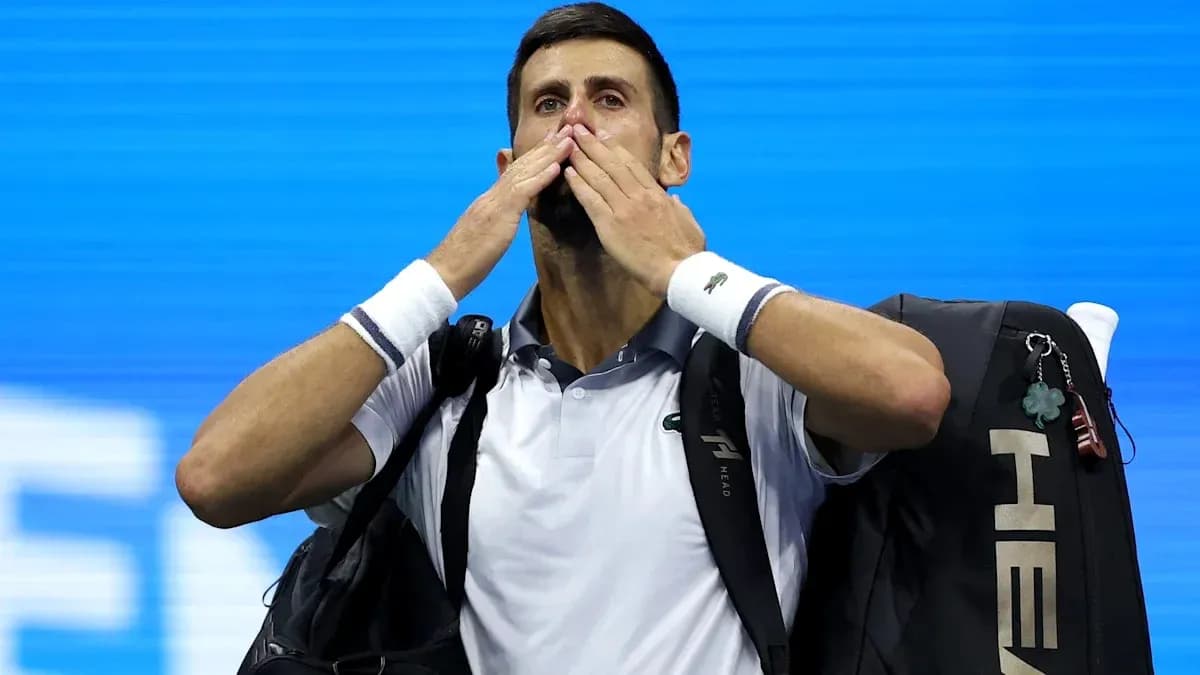
Novak Djokovic, seeded four, saw his 37‑year‑old body betray him in a shock first‑round exit. Third seed Felix Auger‑Aliassime left in the second round, blaming dizziness for his subdued performance. Fifth seed Flavio Cobolli spoke openly of having no energy in his third‑round defeat, pointing to a heavy schedule and New York’s draining humidity.
Cincinnati champion Arthur Fils ran into a resurgent Stefanos Tsitsipas in a brutal opening‑round draw. Teenager Rafael Jodar, already past 50 matches in his first full year on tour, looked spent in his first‑round loss. The cumulative toll of constant travel, different surfaces and relentless expectation has been laid bare.
“The season is long. I think all the guys who performed well in the preparation tournaments have it more difficult here,” said Belgium’s Alexander Blockx, who sent French Open finalist Cobolli home early. “We’re all human. We’re not robots. Every week is difficult. Especially at a Grand Slam where it gets even more physical. Mentally you have to really stay in it.”
That line – “we’re not robots” – cuts across both tours.
At Flushing Meadows, four leading players are also locked in a separate battle: the fight for the world number one ranking. Aryna Sabalenka has sat on that throne for the past two years, a symbol of consistency in a chaotic calendar, but her recent dip has cracked the door open.
Elena Rybakina will overtake her if she reaches the semi‑finals. Jessica Pegula and Coco Gauff lurk with a different kind of threat: if either wins the title, the ranking picture changes again. Every match now carries a double edge – progress in the tournament and a potential swing in the race for top spot.
“Looking at the difference between the points in the top 10 compared to the men, you can see how the depth is pretty crazy,” Pegula said. “Everyone has been very consistent and makes it hard to a certain extent [to win a Slam]. But then you know there’s not one or two super dominant players where you feel like they have to lose in order for you to have a chance.”
On the men’s side, that comfort does not exist. The shadow of Sinner and Alcaraz stretches across every locker room. On the women’s side, the field feels wider, the opportunity more democratic, but no less demanding.
In both draws, the message from New York is the same. Talent will get you into the conversation. Fitness and scheduling might keep you there. But to actually hold a Grand Slam trophy, you need to embrace something bordering on irrational: the belief that, when the draw collapses and the favourites wobble, you will not.
Call it confidence. Call it conviction. Call it, as Fritz does, delusion.
The question now is simple: who out there is willing to live with that kind of madness long enough to change the shape of this era?