Frances Tiafoe's Epic Comeback in US Open Quarterfinals
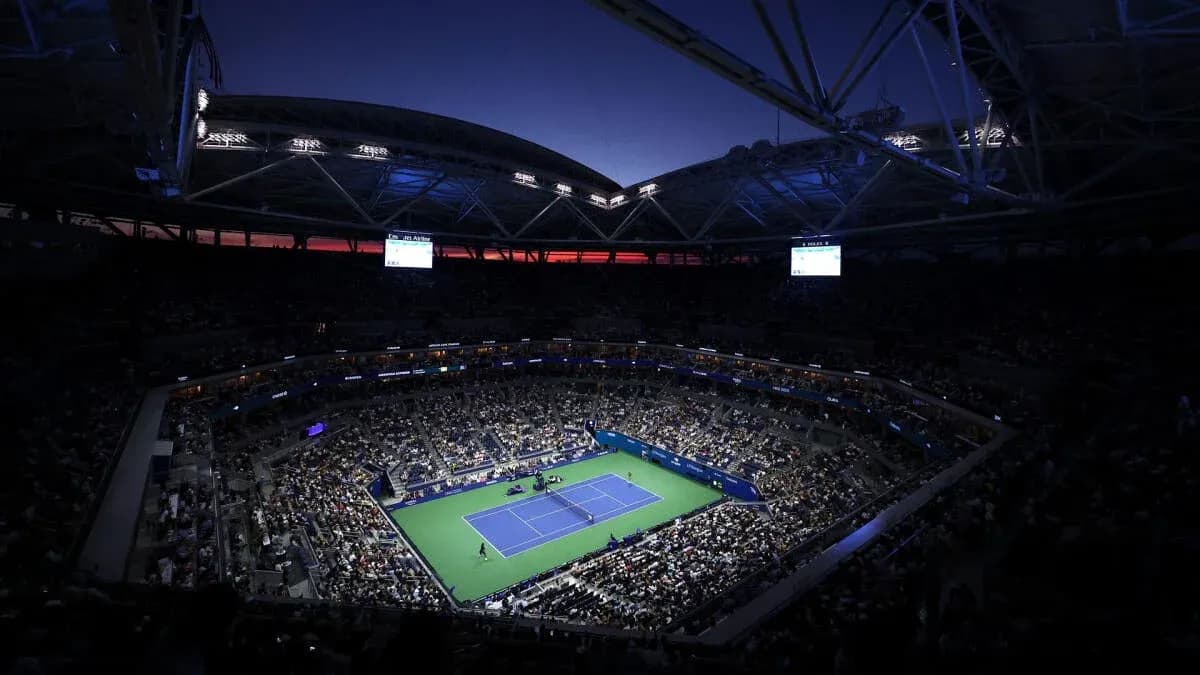
Arthur Ashe Stadium has seen Frances Tiafoe light it up before. But not like this.
Two sets down. Season teetering. An inspired Alex Michelsen ripping through him under the lights. And then, point by point, game by game, Tiafoe dragged himself out of the hole and into one of the defining comebacks of his career.
The 11th seed beat his fellow American 5-7, 3-6, 7-5, 6-3, 7-6 (10-6) to return to the US Open semifinals for the third time, surviving four hours and 40 minutes of tension and swings in front of a crowd that refused to sit still.
For most of the night, Michelsen looked like the man ready to step into the spotlight. He owned the baseline exchanges early, took the first set 7-5, and then backed it up with a controlled 6-3 second set. Tiafoe, 11-17 in career five-setters coming in, looked flat, his timing off, his frustration visible.
The match changed not with a spectacular flourish, but with stubborn resistance. Tiafoe tightened his patterns, cut out the wild errors and forced Michelsen into longer rallies. The pressure started to bite. At 5-5 in the third, Tiafoe finally broke through, snatching the set 7-5 and igniting Ashe.
Once he had a foothold, he refused to let it go. The fourth set mirrored the third: Tiafoe dictating more, Michelsen’s level dipping just enough. Another 6-3 to Tiafoe, and suddenly a match that had looked like a routine upset turned into a nerve-jangling decider.
Michelsen, 0-5 in career five-setters, fought to rewrite that number. Tiafoe, with 28 five-setters on his resume, leaned on experience. They traded holds, traded blows, and inevitably, the fifth went to a match tiebreak.
There, Tiafoe struck first. He jumped ahead, stretched the lead to 7-4, and appeared to be cruising. Michelsen refused to fold, clawing back to within a point. Ashe tightened. One swing, one miss, and the whole night could flip again.
Tiafoe slammed the door with a 135 mph ace. Then came a shaky Michelsen return, then a searing passing shot up the line to finish it. Game, set, miracle escape.
The celebration never really came. Instead, Michelsen collapsed into Tiafoe’s arms at the net, tears flowing after a performance that deserved more than a brutal fifth-set tiebreak exit. Tiafoe held him, then turned to salute a crowd that had ridden every wave with him.
“He played a super tough game, obviously he gave me some gifts and I slowly started getting my rhythm,” Tiafoe said on court. “He’s a helluva player. He easily could’ve won today.”
Now, he waits. Ben Shelton or Carlos Alcaraz will stand between him and a place in Sunday’s final.
“I played for four hours, 40 minutes, but for sure I’ll watch that one,” Tiafoe said, half-exhausted, half-electrified.
Arthur Ashe will be ready for more.
Sabalenka bends, doesn’t break in Noskova thriller
On the women’s side, Aryna Sabalenka’s chase for a US Open three-peat is still alive, but only just.
The world No. 1 was dragged into a full-scale fight by No. 6 seed Linda Noskova, edging a gripping quarterfinal 7-6 (1), 3-6, 7-6 (7) in a match that swung wildly and tested every part of Sabalenka’s volatile competitive makeup.
Early on, it looked straightforward. Sabalenka controlled the first set with her usual thunder from the baseline and seemed poised to run away with it. Noskova steadied, though, and forced a tiebreak. Sabalenka snapped back into gear there, racing through it 7-1 to claim the lead.
That should have settled it. It didn’t.
Noskova came out in the second set with a different posture, stepping inside the baseline, attacking, coming forward. She broke Sabalenka, held her nerve through a shaky stretch at set point, and closed out the set 6-3 with her 12th ace of the match. The Wimbledon champion suddenly looked like the more composed player in the biggest moments.
When Noskova broke again in the third to lead 4-2, the script felt familiar: Sabalenka, rattled, momentum slipping, the match tilting away. This is where, in the past, she has spiraled.
Not this time. Sabalenka broke back at love, a statement game that reset the tone and shut down the negativity that has haunted her in tight contests. Once she steadied, the power started to tell again. She pinned Noskova behind the baseline, forced shorter balls, and dragged the match to a deciding tiebreak.
The breaker was a microcosm of the afternoon. Sabalenka surged ahead with a mini-break, Noskova clawed back to level, and the margin between them shrank to a single swing. Sabalenka found one last push, edged in front again and sealed it with an ace, ripping the ball down the middle to book yet another semifinal in New York.
Her reward: an American in the last four. Whether it’s Jessica Pegula or Emma Navarro, Sabalenka knows the crowd won’t be in her corner. She’s used to that by now.
Khachanov digs deep, Tien denied in five-set gut punch
Karen Khachanov is back where he believes he belongs: the sharp end of a major.
The Russian, a two-time grand slam semifinalist, outlasted American Learner Tien in a five-set battle on Monday, winning a thriller that underlined his resurgence at this tournament. It’s his first grand slam quarterfinal since Wimbledon 2025, and it has not come the easy way.
Khachanov had already taken out No. 3 seed Felix Auger-Aliassime in a five-set scrap in the second round, then cruised past Benjamin Bonzi in the third. Against Tien, the path was anything but smooth. The No. 14 seed from California led two sets to one and stood on the brink of the biggest breakthrough of his young career.
Tien, just 20, had never been past the opening round at the US Open in four previous appearances. This run felt like a statement. A spot in the last eight and a potential meeting with Alexander Blockx were within reach, especially with Blockx hinting after his own match that injury might force him out of the quarterfinal.
Khachanov refused to let the opportunity pass. He tightened his returning, leaned on his experience in the decisive stages and ground Tien down over the final two sets. By the end, the American’s disappointment was as clear as Khachanov’s relief.
Gauff back where she belongs in New York
Coco Gauff walked onto Arthur Ashe Stadium on Monday night with expectation, history and a dangerous teenager across the net. She walked off with a statement win and a familiar destination.
The No. 4 seed brushed aside Iva Jovic 6-1, 6-4 to return to the US Open quarterfinals for the first time since her title run in 2023. It was sharp, professional, and exactly what she needed.
Gauff blitzed through the opening set, 6-1, barely giving Jovic a look at her serve. The second set brought a wobble. Gauff broke for 3-2, then handed the break straight back. The door creaked open.
She slammed it shut immediately, breaking Jovic at love for 5-4 and serving out the match with authority. No drama. No detours.
At 22, Gauff is stitching together another heavyweight season. She won the French Open in 2025, then stumbled out of Wimbledon this year in the first round, a jarring exit that raised questions. The response has been emphatic: a quarterfinal at the Australian Open, a semifinal at Wimbledon, and now another deep run in New York.
Next up is Mirra Andreeva, this year’s French Open champion. The shotmaking will be dazzling, the intensity high. Gauff knows the path only gets steeper from here. That’s exactly how she likes it.
Osaka halted as Rybakina closes in on No. 1
Naomi Osaka’s return to the top tier of the sport took another step forward this summer. It just didn’t extend to another US Open semifinal.
The two-time champion ran into a ruthless Elena Rybakina on Monday and never quite found a foothold, losing 6-1, 6-4 to the No. 2 seed in a straight-sets defeat that underlined the Kazakh’s growing authority on hard courts.
Rybakina tore through the first set 6-1, battering Osaka around the court and breaking her rhythm with relentless depth. Osaka improved in the second, but another crucial break tilted it 6-4 and ended her run.
For Osaka, the loss stings, but the bigger picture still points upward. The four-time major winner has rebuilt her season with quarterfinal appearances at Wimbledon and the US Open last year and a fourth-round showing at Roland Garros. The foundation is back. The big-match sharpness is returning.
Rybakina, meanwhile, is quietly assembling a monster season. This is her deepest US Open run, surpassing previous fourth-round finishes, and marks her fifth grand slam semifinal overall. After lifting the Australian Open trophy earlier this year, she now sits on the brink of another milestone: with a win in the quarterfinals, she will have banked enough points to overtake Sabalenka and rise to world No. 1 when this tournament ends on Sunday.
The stakes for her next match could not be clearer.
Zheng’s miracle machine rolls on
Qinwen Zheng is making a habit of escaping from impossible positions. At this US Open, it’s starting to feel like a calling card.
Against No. 8 seed Iga Swiatek, the 2022 US Open champion, Zheng trailed 5-0 in the opening set. Not just behind—buried. Swiatek had the match on her strings. Then, inexplicably, the whole thing flipped.
Zheng stormed back to win the set 7-5, taking seven straight games as Swiatek’s serve unraveled with a rash of double faults and loose points. The collapse was as startling as Zheng’s refusal to accept the scoreline.
Swiatek tried to reset in the second, jumping out in front again, but the errors returned. Zheng stayed steady, kept asking the question, and walked away with a 6-3 second set to complete another staggering turnaround.
This wasn’t a one-off. In the previous round, she trailed Madison Keys 5-1 in the third set and somehow clawed back to win 7-5. Two matches, two near-impossible comebacks, one player who simply will not go away.
Zheng now awaits the winner of Rybakina and Osaka in Wednesday’s quarterfinals. With Rybakina through, that matchup promises a clash of raw power and unshakable belief.
The question now is simple: how many lives does Zheng have left in this tournament—and who’s brave enough to bet against her finding one more?