Félix Auger-Aliassime's US Open Exit and Its Consequences
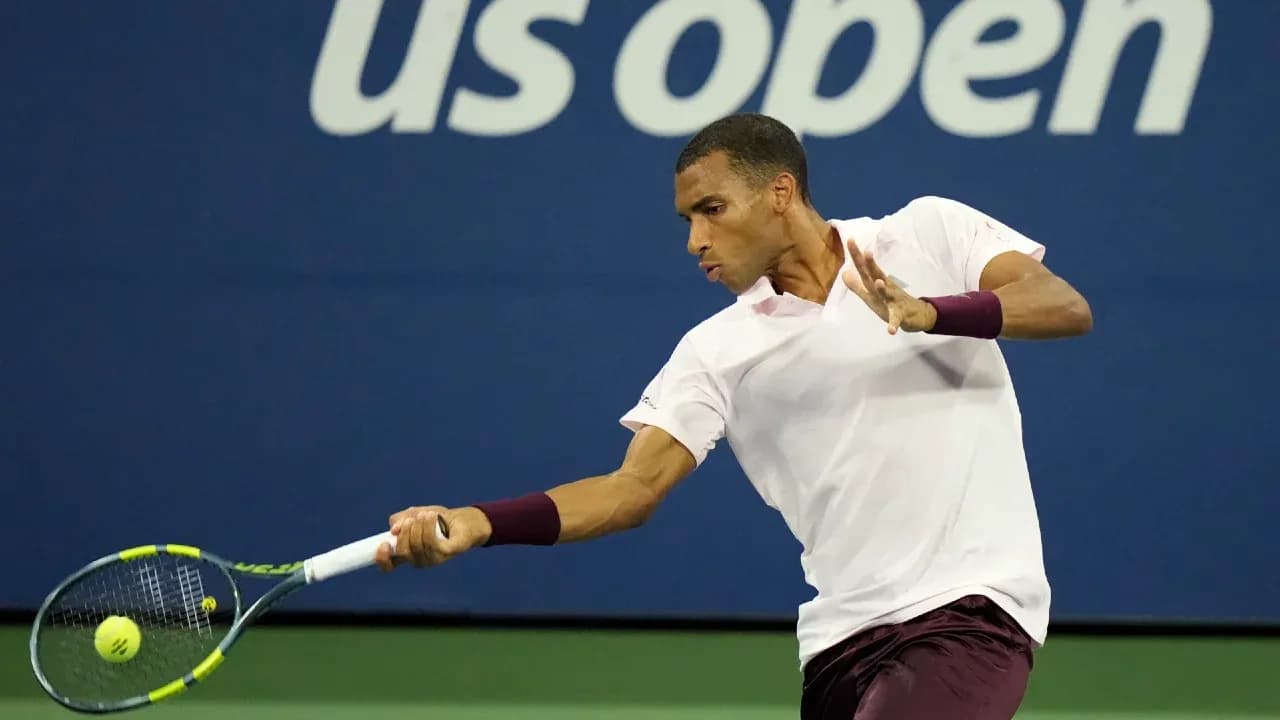
Félix Auger-Aliassime’s US Open hopes ended with a puzzle as much as a defeat.
The No. 3 seed, a semifinalist in New York a year ago, was brushed aside 6-7 (5), 6-3, 6-2, 6-2 by Karen Khachanov in the second round on Thursday, undone not just by the Russian’s weight of shot but by a body that simply stopped cooperating.
For a set and a half, it looked like a contest. Then it became a survival exercise.
Auger-Aliassime later described feeling dizzy, seeing spots, and waiting for a wave of discomfort that never passed. "It's tough to talk about anything else than how I felt physically," he said. "After a set and a half, I just didn't feel well and (was) dizzy and seeing spots. I thought maybe it would pass but it didn't. That's the end of the tournament for me and now back to the drawing board."
The numbers told their own harsh story.
His first serve, usually a foundation, abandoned him. He landed just 58 per cent of first serves, faced 20 break points and was broken seven times. Eight double faults crept in, the product of a player fighting his own balance and rhythm as much as the man across the net. He sprayed 47 unforced errors; Khachanov finished with 30. The aces were level at 12 apiece, but that was the only area of parity on a day that increasingly tilted one way.
Khachanov, experienced and unforgiving, simply kept hitting his spots while Auger-Aliassime’s game frayed. The Canadian tried to hang on, tried to shorten points, tried to manufacture energy that wasn’t there. The more he reached, the more the match slipped.
"Karen's a great player, but I cannot beat him or anyone in this draw feeling the way I felt today," he admitted.
The defeat carries consequences beyond the immediate disappointment. Last year’s surge to the semifinals had propelled Auger-Aliassime to a career-high world ranking of No. 4. An exit this early leaves that position under real threat, and it arrives at a time of transition in his camp.
He parted ways with long-time coach Frederic Fontang earlier this summer and said he hopes to announce a new coach in the coming weeks. The search now takes on extra urgency, with the Canadian looking not just for tactical refinement but stability after a jarring major.
What troubled him most on Thursday was the mystery of it all. No flu, no obvious injury, no warning signs. He said he felt fine before walking onto the court. Now, tests await when he returns home as he tries to understand what went wrong with his body in one of the sport’s most demanding arenas.
While Auger-Aliassime’s singles campaign ended abruptly, Canadian interest in New York did not.
On the doubles courts, Gabriela Dabrowski and Luisa Stefani made a sharp opening statement. The second seeds in women’s doubles swept aside Irina Khromacheva and Anastasia Detiuc 6-1, 6-3, controlling the match with clean, aggressive shot-making.
They fired four aces and 21 winners, more than double their opponents’ total of nine, and never looked troubled. Dabrowski, who lifted her second US Open doubles trophy last year alongside Erin Routliffe, now pushes forward with Stefani as one of the teams to beat. They will next face the winners of Friday’s clash between Sara Errani and Lilli Tagger and American twins Kristina and Annika Penickova.
Leylah Fernandez also enjoyed a smooth day at the office in doubles. Teaming with Indonesia’s Janice Tjen, the Laval native stormed to a 6-1, 6-1 victory over Nika Radisic and Isabelle Haverlag, a brisk, ruthless performance that barely gave the opposition a foothold.
Fernandez and Tjen now line up against Routliffe and Aldila Sutjiadi, a matchup rich with Canadian intrigue given Routliffe’s success alongside Dabrowski last year.
Fernandez’s schedule only intensifies. She was set to return to singles on Friday for a third-round showdown with American No. 3 seed Jessica Pegula, a test of both her ball-striking and her growing maturity on the big stage.
On the men’s side, Denis Shapovalov prepared for his own marquee assignment: a third-round meeting with eighth seed Ben Shelton, the explosive American whose serve and swagger have made him a crowd favorite in New York.
For Canadian tennis, the day brought a jolt and a reminder. Auger-Aliassime left with questions and concern, his trajectory momentarily stalled. Around him, Dabrowski, Fernandez and Shapovalov kept the flag moving deeper into the draw.
The US Open rarely waits for anyone. The real question now is how quickly Auger-Aliassime can solve a problem he never saw coming.