Who Is the Father of Cricket? Unveiling the Legends Behind the Game
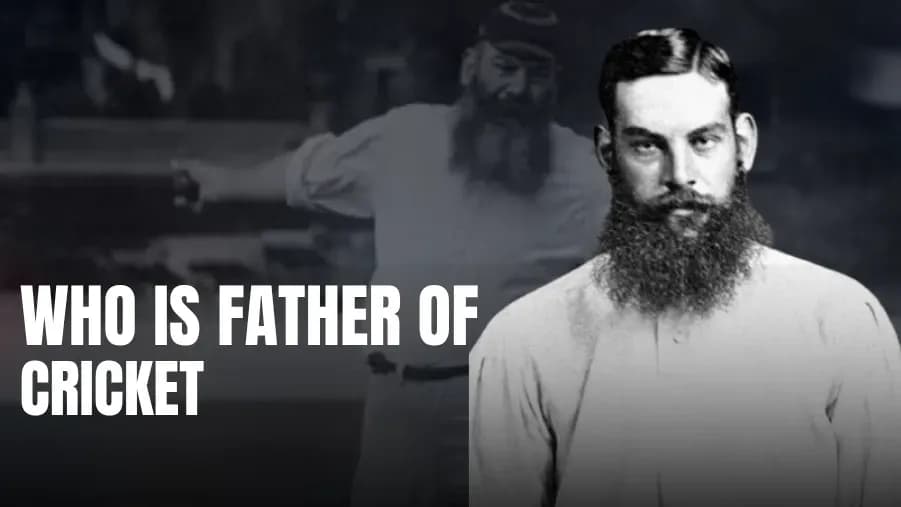
The name William Gilbert Grace immediately comes up when discussing cricket’s roots. Known for transforming cricket with his batting style and versatile skills, Grace’s career spanned 22 Test matches and 870 first-class games. He scored over 54,000 runs and took more than 2,800 wickets, leaving an indelible mark on the sport. His charismatic presence helped shift cricket from a casual pastime into a sport followed worldwide. At age 50, he captained England, setting a record that still stands.
In India, Sir Ranjitsinhji Vibhaji Jadeja, celebrated for his elegant leg glance and honored through the Ranji Trophy, is revered as the father of Indian cricket.
Key Facts About Sir W.G. Grace
- Full Name: William Gilbert Grace
- Born: July 18, 1848, Downend, Gloucestershire, England
- Died: October 23, 1915, Mottingham, Kent, England
- Test Debut: September 6, 1880, vs Australia
- Test Matches: 22
- First-Class Matches: 870
- Runs Scored: Test - 1,098; First-Class - 54,211
- Wickets Taken: Test - 9; First-Class - 2,809
- Known For: Revolutionizing cricket with batting technique and all-round excellence
- Profession: Cricketer and Physician
Early Years and Rise of W.G. Grace
Born into a medical family in Bristol, Grace’s cricketing talent emerged early, guided by his father and older brothers. By 15, he was already playing for Gloucester County and featured in prestigious amateur versus professional matches. Before Test cricket began in 1877, the Gentlemen vs Players game was the highest level of competition, where Grace stood out.
He quickly became a pioneer, drawing public attention not only through his skill but also his larger-than-life personality. Today, he is commemorated at Lord's Cricket Ground, where the W.G. Grace Memorial Gates stand in his honor.
How Grace Changed Cricket
Grace’s impact wasn’t just about numbers, though those are impressive. He introduced structure and technique to batting, mastering footwork and shot selection. His career coincided with cricket’s transition from informal club matches to organized county and international contests. Sporting a classic beard and confident style, he made cricket a spectacle, attracting crowds eager to watch him play. This increased popularity pushed the Marylebone Cricket Club (MCC) to formalize rules and schedules.
The Evolution of Cricket Rules During Grace’s Era
When Grace debuted in first-class cricket in 1864, overarm bowling had just been legalized. The MCC, responsible for cricket laws, grew in influence during this period. Grace often tested the boundaries of sportsmanship, indirectly prompting the MCC to refine cricket’s rules. Innovations like run-outs, follow-ons, and protective gear were introduced. Grace’s draw for fans led to more structured fixtures and helped shape cricket’s modern form.
Why He Is Called the Real Father of Cricket
Grace earned his title not simply through stats but by changing how cricket was perceived and played. His long career inspired countless players. Off the field, his charisma brought thousands to matches. He helped transition cricket from a gentleman’s hobby to a globally followed sport. His influence extended beyond the pitch into how cricket was governed and enjoyed, earning him lasting recognition as the father of cricket.
Legacy That Still Resonates
Some debate who deserves the title of cricket’s father, but Grace’s legacy is undeniable. His batting style set standards for future players, and his presence energized fans. Long after his retirement, his name symbolizes excellence. Many current cricketers continue to look up to his achievements and approach to the game.
Father of Cricket in India
Sir Ranjitsinhji Vibhaji Jadeja, known simply as Ranji, is recognized as the father of Indian cricket. Coming from the royal family of Nawanagar, he honed his skills playing university cricket in England before debuting in county and international cricket for England. Renowned for his perfect leg glance, Ranji once surpassed W.G. Grace’s record for aggregate runs in a season. Awarded Wisden Cricketer of the Year in 1896, his legacy endures through the Ranji Trophy, India’s premier first-class cricket tournament named in his honor.
Closing Thoughts
Many greats have shaped cricket, but few have left a mark like W.G. Grace. While legends like Sachin Tendulkar, Ricky Ponting, and Jacques Kallis advanced the sport, none rival the foundational role Grace played. He competed at a time when cricket was far less popular, yet his skill and dedication propelled it forward. Even today, he remains a towering figure in cricket history.
Frequently Asked Questions
- Who is the father of cricket? W.G. Grace is widely regarded as the father of cricket due to his legendary contributions.
- Who is called the king of cricket? Virat Kohli is often referred to as the king of cricket.
- Who is the god of cricket? Sachin Tendulkar holds the title of god of cricket.
- Who is the prince of cricket? Shubman Gill is known as the prince of cricket.
- Who is the father of cricket in India? Sir Ranjitsinhji Vibhaji Jadeja, or Ranji, is considered the father of Indian cricket.
- Who is known as Mr. 360? AB de Villiers earned the nickname Mr. 360 for his all-around batting skills.