Fantasy Basketball 2026-27 Rankings: Jokić, Wembanyama, and Emerging Stars
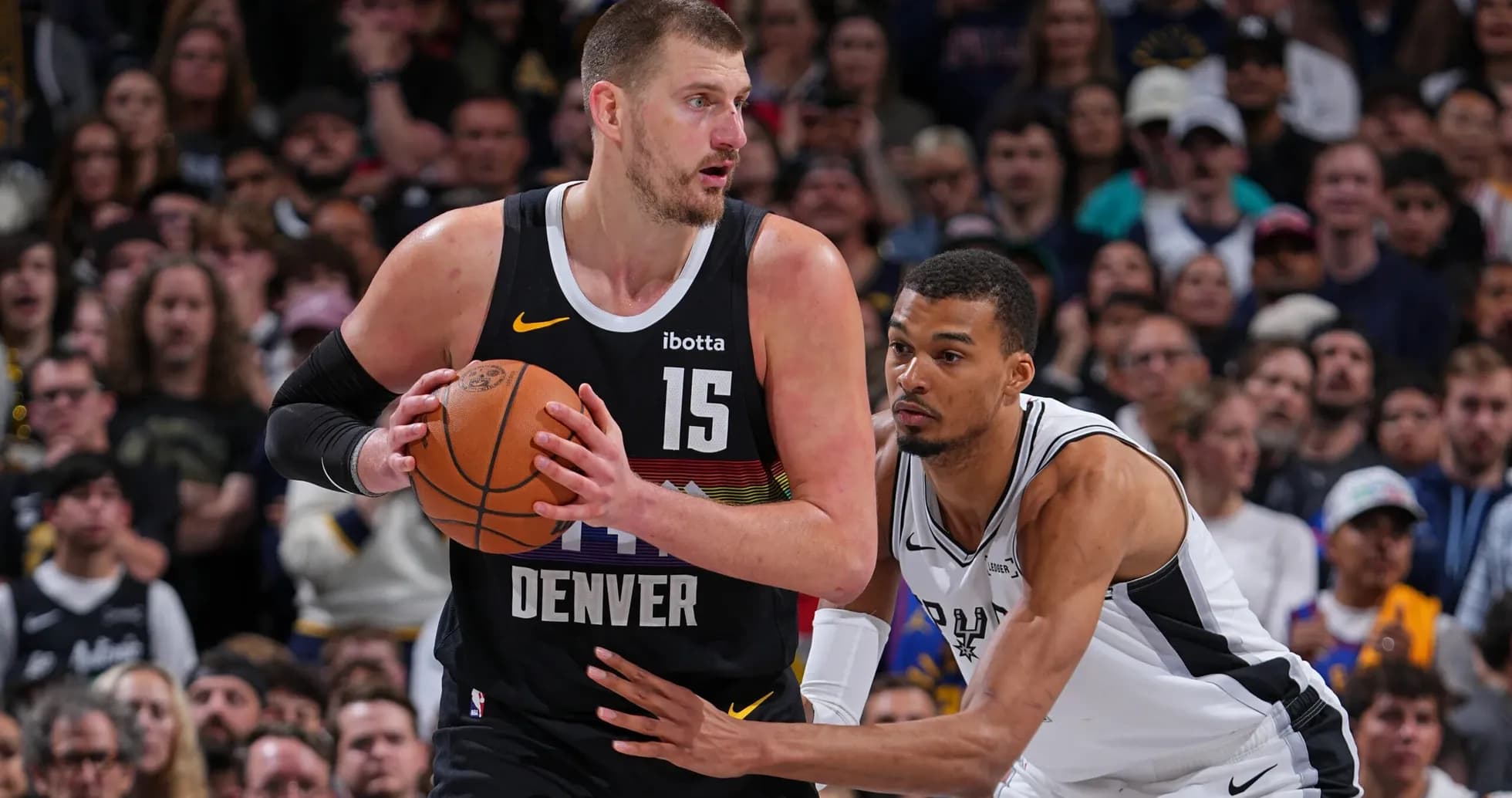
Nikola Jokić still sits alone at the top of the fantasy mountain. Format doesn’t matter, scoring quirks don’t matter. If you own the first pick, you take the Denver center and move on. Triple-doubles, elite efficiency, durability, a stable system – nobody else checks every box quite like him.
But this year’s fantasy board isn’t about comfort. It’s about volatility, upside and risk stacked all over the first three rounds.
Wembanyama and the chase for No. 1
Victor Wembanyama is already chasing Jokić for the fantasy crown. In category leagues, he’s right there. The blocks alone are a cheat code – a single-category nuke that warps matchups. Managers willing to live with the occasional growing pain can build an entire draft strategy around his rim protection.
Behind them, the hierarchy gets murkier.
Shai Gilgeous-Alexander remains the model of category-league excellence, a clear top-three option when efficiency matters. In points and High Score formats, though, his quiet dominance doesn’t always pop the way raw-volume monsters do, so he can slide a few spots.
Usage kings and new empires
The league’s power map has shifted, and fantasy value is moving with it.
Luka Dončić now runs Los Angeles without LeBron James. His usage was already extreme; now it might go to another planet. Austin Reaves rides shotgun, set for a bump in touches and on-ball reps, even if that dents his percentages.
Giannis Antetokounmpo has traded Milwaukee for Miami, but his profile barely changes: a bulldozer in points and High Score formats, a puzzle to solve in category leagues because of the threes and free throws. Bam Adebayo’s game bends around him now, with fewer boards likely and a chance – finally – to stretch out to the arc.
Cade Cunningham has graduated into unquestioned first-round status in Detroit. He’s 24, the environment around him is familiar, and the Pistons haven’t made a move that threatens his grip on the offense. Jalen Duren, fresh off his first All-Star nod despite playoff struggles, keeps his role and his double-double path intact.
Boston has reshuffled the deck. Jayson Tatum returns from an Achilles tear to reclaim his spot as the Celtics’ offensive anchor, this time with Paul George replacing Jaylen Brown. Derrick White, who carried a heavier load last year, will be asked to do less but still offers that rare guard combo of steals and blocks. Payton Pritchard, coming off a career year, suddenly faces a much tougher path to another leap.
In Philadelphia, the shock move of the summer sends LeBron James into a loaded starting five alongside Joel Embiid, Tyrese Maxey and Jaylen Brown. Maxey’s breakout season says “draft me earlier,” but the ball has more mouths to feed now, and his minutes could be shaved to keep him fresh. Embiid remains a fantasy titan whose true risk is always the same: health and availability. For VJ Edgecombe, spectacular as a rookie, the problem is simple – where do the extra touches come from?
Stars with scars
The early rounds are crowded with elite names carrying medical files as thick as scouting reports.
Tyrese Haliburton returns from an Achilles tear to reclaim the keys in Indiana. He’s still a first-rounder on talent and role alone, but managers must decide how early they’re willing to bet on a clean bill of health. Pascal Siakam’s usage dips with Haliburton back, though better efficiency should soften the blow. Andrew Nembhard, who erupted in Haliburton’s absence, now has to fight just to keep a slice of that production.
Kevin Durant and Stephen Curry remain capable of smashing their draft slots on a per-game basis. Age – 37 for Durant, 38 for Curry – and the specter of rest days push them toward the turn rather than the middle of the first round. Kristaps Porziņģis sits in the same bucket: a per-game monster whose career-long battle with durability caps his overall appeal.
Anthony Davis lands in Washington after another stop-start season that never quite got going in Dallas. The talent hasn’t faded; the risk profile hasn’t either. Draft him and you’re signing up for first-round upside with a second-round floor and IR stints baked in.
Devin Booker comes off a down year by his standards – nagging injuries, streaky shooting – but nothing in Phoenix’s retooling threatens his status as the franchise player and lead playmaker. Zion Williamson, by contrast, finally delivered something close to a healthy year, though his minutes remained limited. His bruising, paint-heavy game is made for points and High Score formats, where his lack of defensive counting stats hurts less.
New homes, new ceilings
Some of the biggest fantasy swings this season will come from players who changed uniforms.
Trae Young gets a reset in Washington after a lost, injury-riddled campaign that ended with limited minutes for his new team. The Wizards will put the ball in his hands and live with the results. Anthony Davis, Trae and No. 1 pick AJ Dybantsa form an unusual core, with Dybantsa’s usage hinging on how much offense those two are willing to surrender.
LaMelo Ball shifts from Charlotte to Minnesota, where he joins Anthony Edwards in a backcourt built for fireworks. There will be growing pains. There will also be nights when both guards flirt with triple-doubles. For Jaden McDaniels and Rudy Gobert, the change should mean cleaner looks and more efficient opportunities, even if self-created chances shrink.
Tyler Herro leaves Miami for Milwaukee in the fallout of the Giannis deal and suddenly becomes the Bucks’ primary playmaker. His fantasy ceiling rises with the ball in his hands, while Ryan Rollins, who broke out during Giannis’ absence, fights to maintain a meaningful role. Kel’el Ware, now in Milwaukee after an uneven start in Miami, has a chance to grow into a bigger-minute role with his blend of rebounds, blocks and threes.
Domantas Sabonis gets a fresh runway in Sacramento. After an injury-ravaged season, the departures of Russell Westbrook and DeMar DeRozan free up more usage. Zach LaVine, coming off a lost year but holding a massive contract and a rebuilding context, has a clear path to big numbers if his body cooperates. Rookie guard Darius Acuff steps into one of the friendliest rookie environments outside of Cameron Boozer in Memphis.
Houston has quietly built a fantasy playground. Durant, Alperen Sengun, Amen Thompson, Jabari Smith Jr. and Fred VanVleet form a deep core. Sengun keeps trending toward Jokić-lite territory with assists, threes and blocks rising. Thompson’s shooting remains a hole, but his all-around production shines in points and High Score leagues. Smith owns a sturdy floor with minutes and role locked in, even if shot volume is capped. VanVleet, back from an ACL tear, has every chance at a veteran bounceback feeding elite scorers.
Youth movement and sophomore surges
The league’s next wave isn’t waiting patiently.
Cooper Flagg ended his rookie year in Dallas on a months-long heater and now enters his sophomore season already flirting with MVP-caliber fantasy production. Kyrie Irving returns from an ACL tear to join him, thriving as always in category formats with his blend of efficiency and low turnovers. P.J. Washington holds down a steady starting role at power forward, but rookie Morez Johnson lurks as a possible midseason complication.
Cameron Boozer in Memphis might have the cleanest rookie runway of all – a likely lead playmaker with minutes and freedom to play through mistakes. Zach Edey, who lost nearly an entire season to a foot injury, still profiles as a per-minute stats machine if he can push toward 30 minutes. Cedric Coward and Ty Jerome sit on the edge of breakout territory if opportunity aligns.
Darryn Peterson in Utah, the No. 2 overall pick, enters a crowded but ambitious Jazz core with Lauri Markkanen, Jaren Jackson Jr. and Keyonte George. Peterson’s touches won’t come easy, yet his talent keeps him draftable. Ace Bailey, another Jazz youngster, may come off the bench but has sixth-man impact written all over him.
Kon Knueppel steps into more responsibility in Charlotte after LaMelo’s departure, just like Brandon Miller, who quietly climbed last season and now has a clear path to “franchise player” status. Coby White, once again a starter rather than a bench gunner, inherits the point guard role and the ball.
Caleb Wilson in Chicago is positioned to start and play 30 minutes right away. Matas Buzelis already led most Bulls counting stats behind Josh Giddey and has room for another leap if the minutes climb. Rookie Collin Murray-Boyles flashed as a versatile forward with Jakob Poeltl banged up; how Toronto balances that duo this year will decide both their values.
Dylan Harper turned a 22.6-minute regular season into a postseason coming-out party in San Antonio. The Spurs’ backcourt is crowded with Harper, Stephon Castle and De’Aaron Fox, but Harper’s trajectory points only one way: up.
Steady hands and specialist weapons
Not every league winner comes from the top 30.
Donovan Mitchell remains one of the steadiest All-Star guards in fantasy, now ceding more playmaking to James Harden in Cleveland but keeping his role as the primary scorer. Harden, in turn, still profiles as one of the league’s premier 20-and-10 threats, especially in High Score formats that ignore turnovers and boost assists. Evan Mobley, even after a poor shooting year, remains a defensive anchor and third offensive option with a stable role.
Josh Giddey is the engine in Chicago, a triple-double threat whose High Score value soars with every extra assist and rebound. Nic Claxton arrives to catch lobs and clean up, with his field-goal percentage poised to rise again. Norman Powell continues to churn out 20 points per game and keeps himself firmly in the top-100 conversation.
OG Anunoby offers classic mid-round 3-and-D stability in New York, while Mikal Bridges brings ironman reliability and two-way production. Josh Hart still rebounds like a power forward, now with a three-point stroke that finally cleared 40 percent. Jalen Brunson, fresh off a Finals MVP, returns to an unchanged situation and the same green light.
Onyeka Okongwu has solidified himself as Atlanta’s starting center, now with range out to the three-point line. Nickeil Alexander-Walker, last season’s Most Improved, locks in as one of the league’s better 3-and-D wings. CJ McCollum slides into a familiar scoring role in Atlanta’s backcourt.
Toumani Camara in Portland, Grayson Allen in Charlotte and Ajay Mitchell in Oklahoma City are classic late-round category or upside plays. Camara and Allen fire threes and defend, while Mitchell is positioned for a usage bump with OKC reshaping its wing rotation. Cason Wallace, another Thunder guard, now has the chance to show whether he can be more than a steals specialist.
Big men, big swings
The center pool is deep but tricky.
Karl-Anthony Towns starts the next tier after Jokić and Wembanyama, a stretch big whose efficiency and shooting boost category builds. Chet Holmgren offers that rare blend of threes and blocks, though points-league managers can afford to wait a bit longer.
Walker Kessler’s move to the Lakers gives him easier looks than ever, with Dončić spoon-feeding him around the rim. Isaiah Hartenstein, when healthy, continues to deliver a well-rounded center line in Oklahoma City. Day’Ron Sharpe finally walks into a starting role in Brooklyn, carrying one of the best rebounding rates in the league and plenty of defensive juice.
Jusuf Nurkić benefits from Kessler’s departure in Utah and looks likely to start again next to Jaren Jackson Jr. Maxime Raynaud, impressive in expanded minutes last year, slides back into a backup role behind a healthy Sabonis, limiting his upside. Ivica Zubac in Indiana gets a reset and a full season with Haliburton, a setup that should revive his traditional big-man numbers.
Myles Turner, now in Milwaukee and no longer sharing a locker room with Giannis, finds himself on a young, uncertain roster. Whether that means unleashed usage or empty-calorie stats is still unclear. Nic Claxton, by contrast, lands in a situation designed to maximize his rim-running.
Wildcards, comebacks and quiet upside
Every draft has inflection points where managers lean into risk or cling to safety.
Ja Morant lands in Portland after Memphis finally moved on, joining Damian Lillard, Deni Avdija, Jrue Holiday and Scoot Henderson in a jammed backcourt and wing rotation. Morant’s ceiling is obvious; his role in that ecosystem is not. Lillard returns from an Achilles tear to a team where he may no longer be the unquestioned No. 1 option. Holiday’s offensive workload naturally shrinks with those two in town.
Ja Morant’s arrival complicates Avdija’s fantasy life after his breakout All-Star season, and the same goes for Donovan Clingan, who took a major step forward as a sophomore and now has to coexist with a reloaded backcourt and wing group.
De’Aaron Fox, once the center of San Antonio’s plans, saw his usage clipped by Castle’s rise and Harper’s playoff surge. A bounceback is still on the table; the question is how much the Spurs are willing to put back in his hands.
Reed Sheppard’s path in Houston has tightened with VanVleet’s return and Marcus Smart’s arrival. Tari Eason remains one of the best per-minute fantasy players in the league but continues to battle a crowded rotation. Christian Braun in Denver, coming off a regressive, injury-hit year, should still see 30-plus minutes on a largely unchanged roster – his value hinges on which version of him shows up.
Devin Vassell’s usage has slowly ebbed in San Antonio as the young core has expanded, but his three-point volume keeps him relevant late. Anthony Black in Orlando seized his chance when injuries struck and showed two-way versatility; with a healthy roster, another big jump may not be there.
On the fringes, names like Davion Mitchell, Quentin Grimes, Peyton Watson, Jaime Jaquez and Ace Bailey all offer specific paths to outkicking their draft slots – more minutes, more responsibility, or simply better health.
And then there’s the constant question hovering over every draft room: Do you chase the pristine safety of Jokić and the established elite, or lean into the chaos of Wembanyama, Flagg, Boozer and the rest of the new wave reshaping the league?
Fantasy basketball in 2026-27 won’t be won by playing scared.