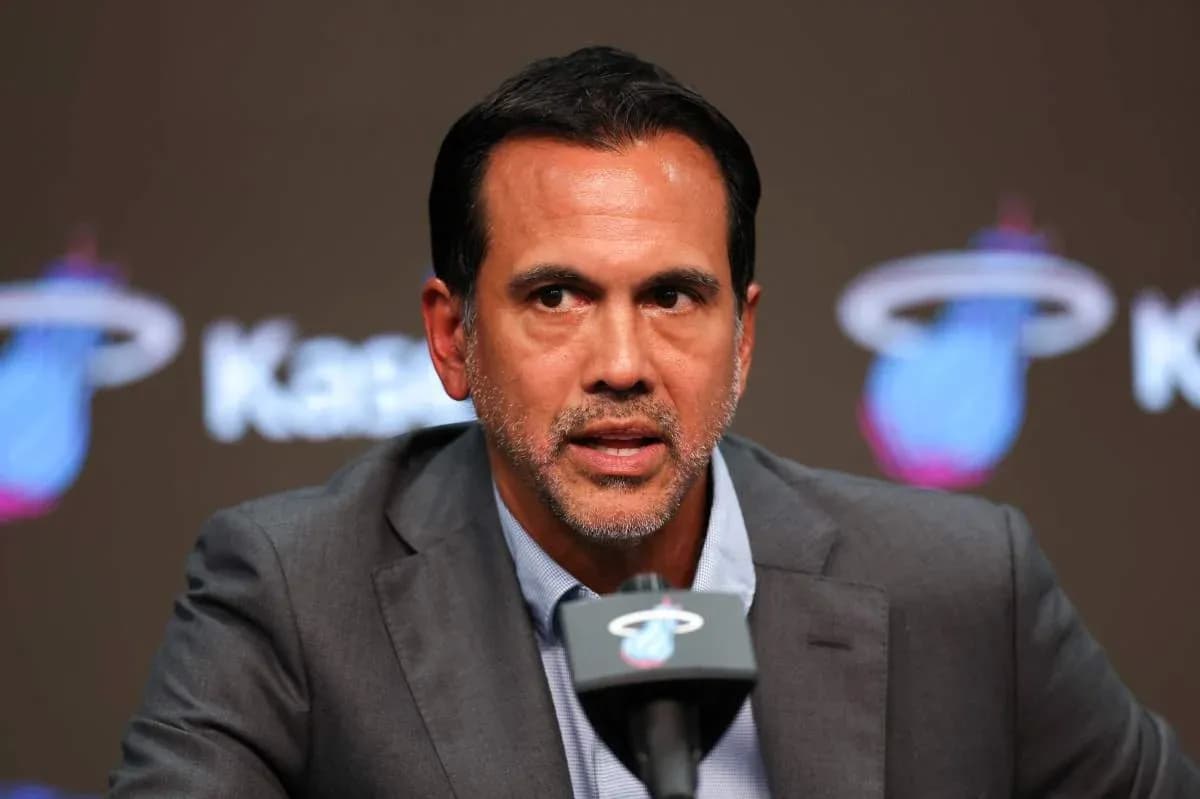
Erik Spoelstra's Future: Transitioning from Coach to Front Office
Erik Spoelstra has never really done “exit ramps.”
He walked into the Miami Heat organization as a video coordinator, buried in tape and long nights, and just kept climbing. Assistant. Head coach. Franchise pillar. Sixteen years on the sideline, two championships, six Finals trips, and a reputation as one of the sharpest minds in the sport.
Now, for the first time, there’s a realistic date on the calendar that feels like a natural pivot point.
A New Clock: 2028 in Los Angeles
South Florida Sun Sentinel columnist Ira Winderman, speaking on SiriusXM NBA Radio, floated a scenario that has lingered in the background of league conversations: 2028, Los Angeles, the Olympics, and a potential shift for Spoelstra from the bench to the front office.
“When you talk about the Heat turnaround after the 2028 Los Angeles Games, to me would be the natural time for Spo to maybe move to the front office, to step back,” Winderman said.
It’s not idle speculation tied to contract drama. Spoelstra is locked in. In January 2024, he signed an eight-year extension with the Heat worth a reported $120 million-plus, a deal that runs through the 2031-32 season. Miami has already staked its future on him well beyond the LA Games.
That’s what makes the 2028 conversation so intriguing. This isn’t about whether Spoelstra leaves. It’s about what version of Spoelstra the Heat get next.
From Clipboard to Corner Office?
By 2028, Spoelstra will have completed one of the sport’s most coveted assignments: leading the U.S. men’s national team through the 2027 FIBA World Cup and the 2028 Olympics. USA Basketball promoted him to head coach after he served as an assistant under Steve Kerr in the previous cycle, a move that only solidified his standing in the game.
Coaching Team USA has lit something in him. He has spoken of international competition as making him feel “alive,” the kind of word that doesn’t come from someone quietly plotting an escape from the sideline.
So this isn’t a story about a coach itching to be done.
It’s about a franchise that eventually has to navigate what comes after its most defining figures, and how to do it on its own terms.
Spoelstra’s contract gives Miami flexibility. The Heat don’t have to choose between losing one of the league’s most respected coaches and evolving their leadership structure. They can, at some point, shift him upstairs, keep his voice central in personnel decisions and culture, and let a new coach inherit the on-court reins without losing the Spoelstra imprint.
Winderman was clear: there’s no indication Spoelstra is planning such a move right now. “Who knows? Maybe he’s one of those coaching lifers,” he said.
But time has a way of forcing questions that contracts can’t answer.
Life After Riley
The looming issue in Miami is bigger than just the head coach.
Pat Riley, 81, still presides over the basketball operation, still sets the tone, still defines what “Heat culture” means. He said after last season he had no plans to retire as he entered his 32nd year with the organization.
Yet even Riley doesn’t outrun the clock.
Winderman compared his future to the late Jerry West — always present, always influential, even if the title on the business card changes. “Pat will always be standing in a tunnel somewhere,” Winderman said. “It’s what he does and who he is.”
If Riley eventually moves into more of an advisory role, the question of who becomes the franchise’s next central architect naturally lands on Spoelstra. No one understands the Heat’s internal language, expectations, and identity better than the man who went from the video room to the Finals stage.
That makes him the obvious candidate to bridge eras: the Riley years and whatever comes after.
Nothing Urgent, Everything Inevitable
For now, nothing is shifting. Spoelstra is under contract for six more seasons. Riley remains president. The Heat continue to operate with both in full command.
But 2028 sits there, a quiet landmark on the horizon.
By then, Spoelstra will have coached the national team on the biggest global stage outside the NBA. Miami will be deeper into its current roster cycle, likely wrestling with the next iteration of its core and how to remain relevant in an increasingly unforgiving Eastern Conference.
“This team will have a transition,” Winderman said. “I don’t think in the shortest of terms, but obviously time doesn’t stop for anyone.”
The Heat have built their brand on defying timelines, outworking expectations, and stretching the competitive window as far as it will go. Yet even for a franchise that lives on edge, succession can’t be improvised forever.
So the real drama isn’t whether Erik Spoelstra will still shape the Heat’s future.
It’s where he’ll be standing when that future arrives — on the sideline, barking out coverages, or upstairs, pulling the strings on the next great Miami reinvention.