England vs Sri Lanka ODI: Early Struggles on a Challenging Pitch
The outfield at Chester-le-Street looks harmless enough from the stands – a mottled blend of green and brown, like a piece of camouflage cloth laid flat. Up close, it tells a different story. One ball skids through, another grips, a third barely gets up. An under-edge thuds straight into the knee of the slip fielder, Kamindu Mendis, who crumples in pain. Early overs, and already this pitch is leaving a mark.
Sri Lanka, asked to bowl first despite captain Kusal Mendis wanting to bat, needed that surface to talk. Instead, their new-ball spell began with a murmur rather than a roar.
England’s makeshift opening act
England 1-0. Then 5-0. Then 12-0. Then 17-1.
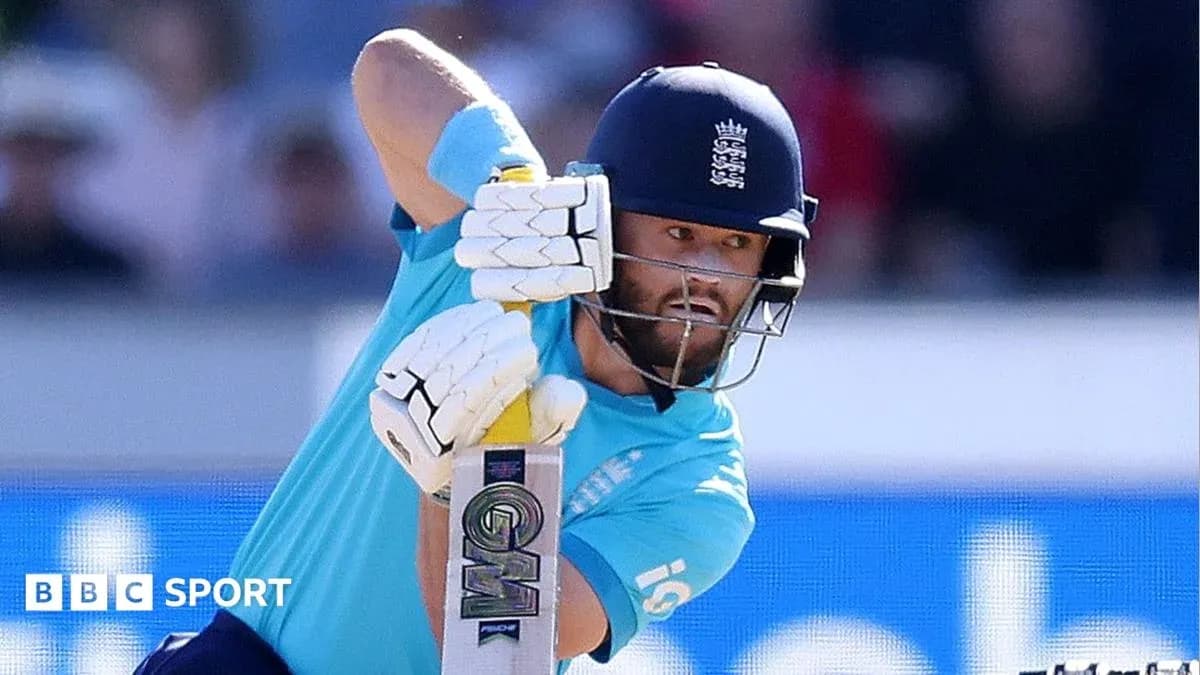
Those numbers sketch the outline of a start that never quite settled. At the top, Tom Banton – 27 years old, but still strangely raw in this format – walked out with Ben Duckett, another batter searching for rhythm rather than validation.
Banton’s story in List A cricket is almost a quirk of the modern game. This is only his 26th appearance in the format, split between Somerset and England, and just his second since 2020. By the time Joe Root turned 28, he had already played 186 List A matches. Different eras, different schedules, and a very different sense of what “experience” looks like.
Banton has been thrown in at the top, covering for the injured Jacob Bethell. It is a role he knows in theory but not in muscle memory. Early on, his feet tell the tale. Asitha Fernando angles one in, straightens it late, and Banton is caught on the crease, as Russel Arnold notes on commentary. This is exactly the line coaches dream about: top of off, forcing indecision. On this surface, indecision is fatal.
At the other end, Duckett is fighting his own quiet battle. He has opened with a carousel of partners in recent ODIs – Jamie Smith, Zak Crawley, Phil Salt, Bethell, even Rehan Ahmed. Now it is Banton, taller, looming over him as they chat mid-pitch during a wayward first over from Dilshan Madushanka. The pairing has a hint of the Crawley-Duckett “little and large” act, but the stakes are different. Duckett, after a lean run, simply needs runs for his own peace of mind. A gift arrives: a full toss early on, stroked away to get him moving. Small moment, big exhale.
Sri Lanka search for control
Sri Lanka’s day begins with good intentions and loose execution. Madushanka, so impressive at his best, cannot quite find his range. “He’s getting it wrong,” Arnold says bluntly. The left-armer’s waywardness is more than just a bad over; it feels like a symptom of the burden this Sri Lanka side carries – the weight of form, expectation, and a ranking that says they sit above England but does not always convince.
The plan was clear enough. Under a hot sun, with the moisture expected to burn off quickly, Sri Lanka adjusted their XI late, anticipating that the pitch would harden and quicken. The weather, Arnold suggests, is very much in their favour. Instead of cloud and swing, they get blue skies and a surface that should, in theory, flatten out for batting.
But the early overs don’t let anyone relax. The ball grips, occasionally keeps low, and England’s top order must feel every one of those 50 overs Dawid Malan talks about. Harry Brook’s idea of treating ODI cricket as a “longer T20” might sound neat, but out in the middle, finding the rhythm of a 50-over innings is a slower, more stubborn process. Especially when most of your recent life has been lived in 20-over bursts.
A ground built for big scores, a game that might not follow
Chester-le-Street has quietly turned into a batter’s ally in recent one-day games. The last six matches here, across domestic and international cricket, have all seen first-innings scores push past 300. On paper, that suggests a run-fest. In practice, this surface feels like it has its own ideas.
The under-edge into Kamindu’s knee, the balls that misbehave off a good length, the way Banton is straightened up by Asitha – these are not the signs of a true, even-paced road. They are reminders that if bowlers hit the right area, they will stay in the game.
England know all about front-running in this series. They swept the three T20s 3-0, barely giving Sri Lanka a look in. In the 50-over format, though, the dynamic is less straightforward. Sri Lanka’s ODI side has been rebuilt with care, and Kusal Mendis talks with quiet conviction before play.
He wanted to bat first. He did not get his wish. But he insists his side is balanced, with five bowlers and six batters, and points to their strong showing in their last tournament. He notes the positives from T20s but underlines the need to learn quickly away from home. The rankings table backs him up: Sri Lanka sit a place above England.
That is the context hanging over every ball of this innings. England, with a reshuffled top order and batters trying to rediscover the longer rhythm, against a Sri Lanka side that believes it has finally assembled a proper one-day unit.
The early exchanges have been scratchy rather than spectacular. The pitch is lively, the sun is unforgiving, and both teams know this is not just another bilateral game. One side is trying to prove it still understands ODI cricket. The other is determined to show its recent rise is no illusion.