England's Pragmatic Win Against Sri Lanka in ODI
On a grey, heavy afternoon at Chester-le-Street, England did something they have struggled to do for much of the past two years. They won ugly.
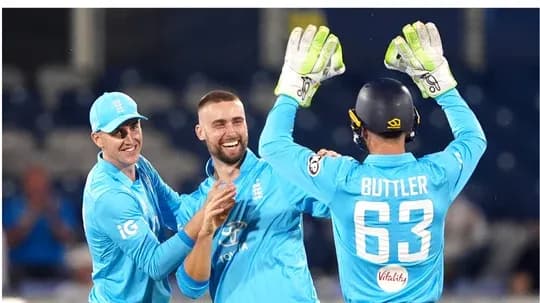
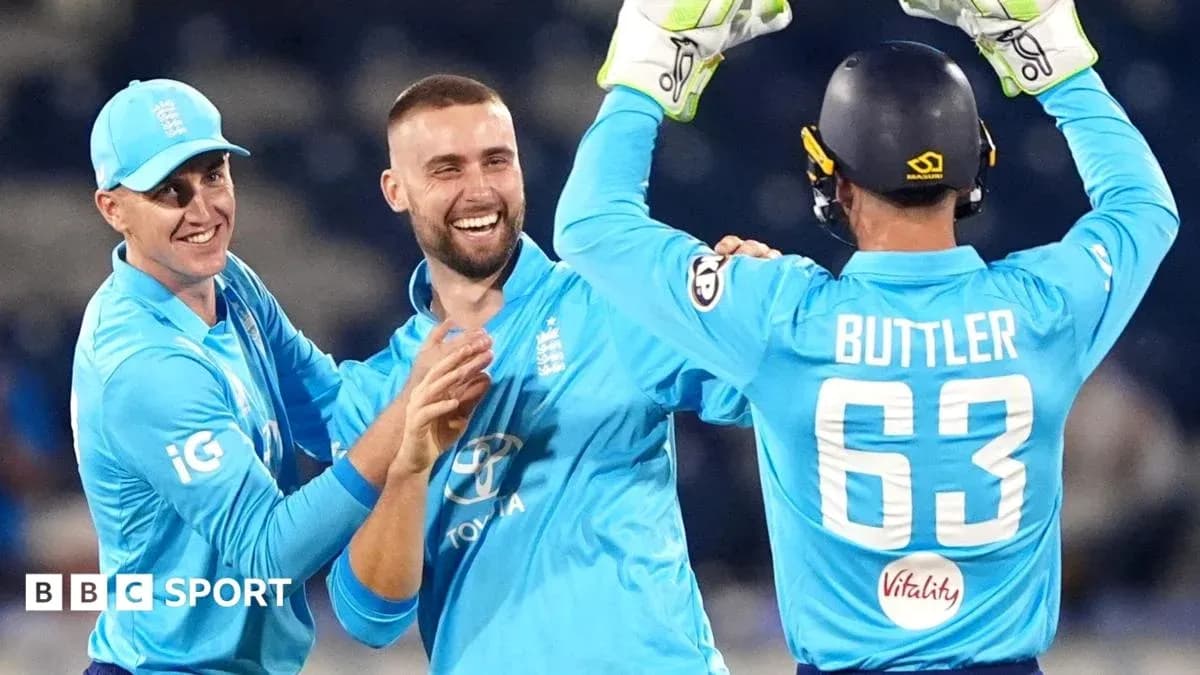
No sixes. Bowled out with 11 balls unused. A pitch that died on contact. Yet by the time Will Jacks walked off with the ball in his hand and figures of 5-22 to his name, Sri Lanka 176 all out and beaten by 89 runs, this first Metro Bank one-day international had turned into another firm step in England’s white-ball reset.
Runs without fireworks
England’s 265 all out in 48.1 overs was a grind rather than a showreel. On a slow, low surface that punished over-ambition, the innings flickered rather than roared.
Harry Brook, captaining and anchoring, played the decisive hand. His 67 from 69 balls was controlled, almost old-fashioned in its calculation. He picked gaps, ran hard, and resisted the urge to drag the game into the air. Around him, Joe Root’s 44 gave the total a spine, his familiar nudges and late cuts briefly making the pitch look friendlier than it was.
For once, England’s innings did not surge into the stratosphere. For the first time since 2019, they failed to clear the rope when batting first. Under Brendon McCullum, this side has been conditioned to think in boundaries, to dominate or die. Here, they had to live with something in between.
The innings almost came apart. From 182-3, England stumbled to 211-7, a collapse of 4-29 that dragged the game back towards Sri Lanka. Brook was the only batter in that slide to perish playing the expansive stroke the situation didn’t quite demand, slicing a drive to deep cover after a period of admirable restraint.
The damage around him owed much to a highly encouraging debut from Sachindu Colombage. The young leg-spinner found just enough grip and guile to disturb England’s middle order. He clipped Root’s off stump with one that straightened, trapped Jos Buttler lbw for 31, and then slipped a googly through Jamie Overton for eight. His 3-44 gave Sri Lanka control at precisely the right time.
Jacks steadies, then strikes
At 211-7 in the 39th over, England stood on the brink of wasting their early work. Jacks could have swung hard and hoped. He chose something smarter.
He rebuilt. He worked the angles, accepted ones and twos, and stretched the innings into the closing overs. His unbeaten 46 was not the headline score of the day, but it was the knock that stopped England’s total from unravelling. Only in the 47th over did he finally shift gear, taking 18 runs to drag the total to a competitive level.
Tom Banton’s early dismissal – bowled by Asitha Fernando for 10, the bail clipped by a ball that nipped just enough – had hinted at a trickier surface than the eye suggested. Fernando returned late with the ball reversing to clean up Jofra Archer and Josh Tongue, denying Jacks the chance to launch a final assault and finishing with a reward that reflected his effort.
Still, 265 felt like “par” at best. On flatter days in recent years, England would have viewed it as a failure. On this surface, with this attack, it became a target they believed they could defend if they bowled with discipline.
They did more than that.
Sri Lanka blink with the bat
Sri Lanka’s chase never really ignited. Their fielding had been sharp, their energy high, but the intent that had crackled in the ring vanished once the openers walked out.
England’s bowlers held their lengths and waited. Sri Lanka obliged with caution that drifted into passivity. The scoreboard stalled, the required rate crept, and the pressure built over by over.
The key moments belonged to Jacks. Already England’s most valuable all-rounder in the making, he broke the game open with the ball as Sri Lanka’s top order searched for a gear they never quite found. He removed Kusal Mendis, then Charith Asalanka, the two senior batters around whom any serious chase was supposed to form.
Once those pillars fell, Sri Lanka’s response sagged. Dunith Wellalage fought with a bright 45 from 36 balls, the one innings in their reply that suggested a different storyline might have been possible. He struck cleanly, looked comfortable against pace and spin, and briefly forced England to rethink.
The resistance didn’t spread. Wickets kept coming, regularly and ruthlessly. Jacks, sensing his day, wrapped up the tail to seal his career-best figures and Sri Lanka’s fate. Bowled out for 176 in 37 overs, they finished not just short, but well short.
A different kind of England win
This was not the swaggering England of 2019, flattening opponents under an avalanche of sixes. It was something more pragmatic, and perhaps more sustainable.
They have now won 10 white-ball games in a row against Sri Lanka this year. They have the chance to close out a third successive ODI series win with a game to spare at Headingley on Thursday. The final match at The Oval on Sunday will draw the curtain on one of the most unpredictable English summers in recent memory, but this side suddenly looks a little more sure of itself.
McCullum’s England have been accused of being one-dimensional at times, devastating when the pitch is flat and the ball old, vulnerable when conditions demand restraint and craft. Here, with no sixes, a middle-order wobble and a tricky surface, they found another way.
Jacks stands at the heart of that evolution. His growing influence with bat and ball offers balance that England have craved since the peak years of their white-ball dominance. With a World Cup a year away and two months of overseas white-ball cricket looming, this was not a statement win.
It was something subtler: proof that, when the game gets scruffy, England can still come out on top.