England and Pakistan Trade Blows at Lord’s: Gritty 248
The floodlights were on, the clouds sat low, and the old ground felt more November than late summer. On a murky first day at Lord’s, England and Pakistan played out the kind of hard-nosed Test cricket that leaves both dressing rooms unsure whether to smile or sulk.
By the close, England’s 248-9 felt neither commanding nor inadequate. Just alive. Just enough. Perhaps.
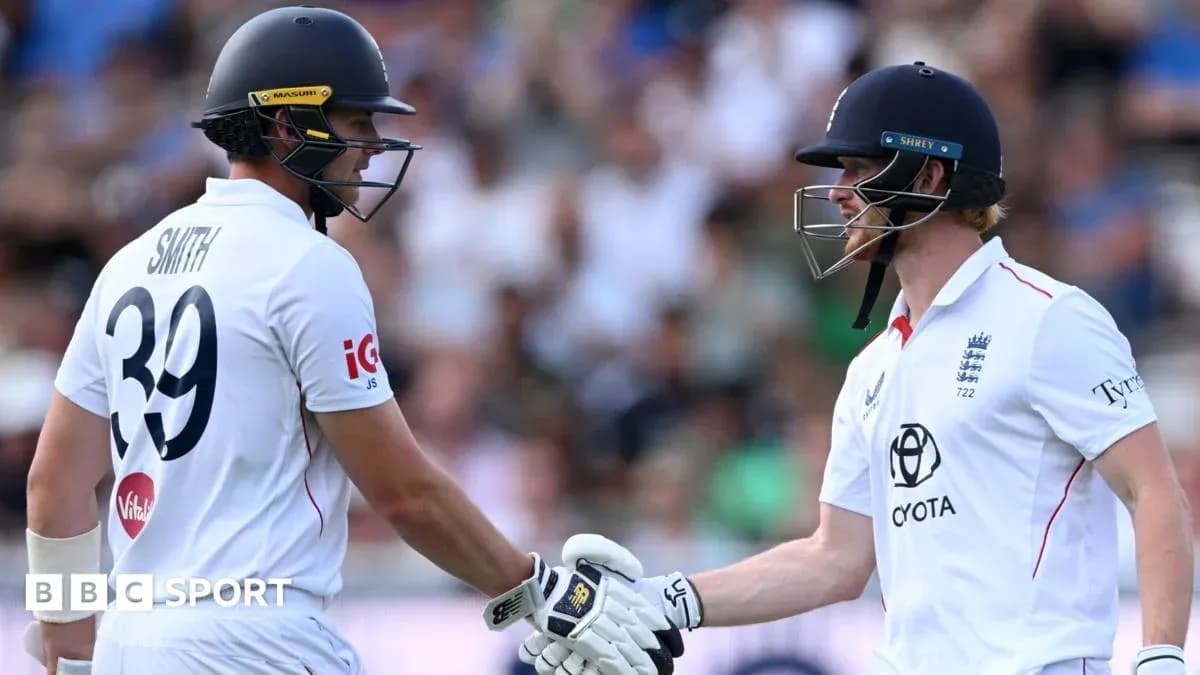
Jamie Smith’s 61 and Jordan Cox’s 55, chiselled out of difficult conditions and a sharper Pakistan attack, dragged England from trouble to something resembling respectability. Gus Atkinson’s unbeaten 34 at the death added a sting in the tail that Pakistan may yet feel over the coming days, if the weather allows this match to breathe.
A Different Lord’s, a Different Test
This was not the treacherous surface that hosted England’s win over New Zealand in June. The pitch behaved, more or less. The sky did not. Rain delayed the start until 12:20 BST, and bad light cut the day short just when England’s seamers would have relished a late burst with the new ball.
So the scoreboard froze with Pakistan yet to bat, the value of England’s 248-9 locked in suspense. On a better pitch but under heavy skies and with more rain forecast, this could be the kind of total that grows in stature by the session.
It all comes against the backdrop of a disjointed week for England, overshadowed by the Brydon Carse controversy. Another off-field drinking incident, another investigation, another player removed from a squad. Carse, withdrawn from this Test after a night out in Derby and an alleged assault now under police scrutiny, spent the day playing for Durham in the County Championship while his England team-mates tried to secure a first Test series win since 2024.
Pakistan Hit Back
At Headingley, Pakistan were steamrollered. In Joe Root’s first Test back as captain, England’s dominance was so complete that anything similar here would have bordered on cruelty. That was never likely to be repeated.
Pakistan arrived at Lord’s with something closer to their true selves. Captain Babar Azam returned from a hand injury, replacing Salman Ali Agha, who had led the side in Leeds. Babar’s first act was a simple one but vital: he called correctly at the toss. In these conditions, it mattered.
His seamers did the rest.
Muhammad Abbas, made for days like this, was outstanding. Relentless in length, nagging in line, he exploited every hint of movement. At one stage he tore through England’s top order with three wickets for four runs in 16 balls, removing Emilio Gay, Ben Duckett and Root. Figures of 4-56 told the story of his control and menace.
From the Pavilion End, Mohammad Ali offered the perfect foil. His three wickets all came the same way: batters bowled by deliveries skidding down the Lord’s slope. Harry Brook, Smith and Ollie Robinson all saw their stumps disturbed, all beaten by that subtle, late movement that makes Lord’s such a cruel place to bat when the ball behaves.
Pakistan, though, were far from flawless. They dropped three catches, and those misses could yet haunt them. Root was shelled on one at third slip by Imam-ul-Haq, only to fall for four anyway. Shan Masood put down a simple chance at mid-wicket when Dan Lawrence had 10, then later redeemed himself with a sharp piece of fielding to run Lawrence out for 17. The most costly error came from Mohammad Rizwan, the keeper and slip cordon standing so deep that edges repeatedly died in front of them, one fumble in particular proving expensive.
England Scrap, Then Settle
England’s innings never quite flowed. It lurched, steadied, lurched again.
There was waste: Lawrence’s self-inflicted run-out, Brook bowled driving, Gay feathering down the leg side. There was misfortune mixed in with poor judgment. Yet there was also a different kind of stubbornness, a willingness to grind that will please Root early in his second spell as captain.
Smith and Cox embodied that change of tone.
With England wobbling, they came together for the sixth wicket and put on 67, a partnership that shifted the day from damage limitation to quiet optimism. Smith, under pressure for runs, found rhythm at last. His 61 was not flashy, but it was fluent enough to suggest a batter rediscovering his game at just the right time.
At the other end, Cox continued his impressive start to Test cricket. Only three caps into his career, he again looked entirely at home at this level. His 55 was compact, controlled, and crucial. Together, Smith and Cox dragged the innings out of the danger zone and into something more competitive.
Once they departed, Pakistan sensed a quick kill. Atkinson had other ideas. Batting with the tail under heavy skies, he counter-attacked with 34 not out, a late cameo that could prove disproportionately important. Every extra run he squeezed out felt like a small theft from Pakistan’s control.
An Even Day, an Uneasy Balance
By stumps, neither side could claim dominance. This was an arm wrestle, not a knockout.
England’s 248-9 is a total with questions attached. On a flat, sun-baked Lord’s, it would look thin. Under this blanket of grey, with the ball talking and more showers in the forecast, it might be something more.
Pakistan, having bowled with discipline and intent, now have the opportunity to seize the match if their batters can withstand what England’s seamers will throw at them. Had Root won the toss, there is every chance his bowlers would have made life deeply uncomfortable for a fragile visiting line-up. That equation has simply been delayed, not erased.
The series sits at a crossroads. England, chasing that first series win in two years and carrying the weight of another off-field scandal, have given themselves a foothold. Pakistan, chastened by Leeds but much improved here, have earned the right to strike back.
The pitch looks fair. The weather looks fickle. The game is balanced on a knife-edge.
Now it comes down to whether Pakistan’s batters can do what England’s could not: turn a hard day’s graft into a position of real power.