England Dominates Ireland in Record ODI Chase
England’s new era did not tiptoe into life. It strode out at Leicester, took one look at 281, and mowed it down with 11.5 overs to spare.
On a flat Uptonsteel County Ground pitch, a supposedly tricky chase became a statement. A record chase, 283-4 in 38.1 overs, and a six-wicket win that put Ireland away and England 1-0 up in the three-match ODI series.
Bouchier seizes her moment
For years, Maia Bouchier has hovered on the fringes of England’s white-ball sides, a familiar name without a permanent seat. This was the day she walked into the XI and owned it.
Her 104 from 95 balls was not a manic dash from ball one. It began in a whisper: eight runs from her first 19 deliveries, watchful, almost subdued. Then came the sixth over, Jane Maguire in her sights, and suddenly the innings changed shape. A burst of boundaries, timing snapping into place, and Bouchier was away.
At the other end, Sophia Dunkley tore into Ireland’s attack. While Bouchier settled, Dunkley surged, reaching a 47-ball fifty – her fastest in ODIs – and repeatedly punishing anything even fractionally off line. Ireland’s lengths drifted, their lines wavered, and England pounced.
The powerplay told its own story: 72 without loss, Dunkley the aggressor, Bouchier the anchor starting to free her arms. For a batting line-up missing Heather Knight, Tammy Beaumont and injured captain Nat Sciver-Brunt, this was exactly the kind of authority they needed to show.
The opening stand stretched to 143. Ireland, ragged in the field and lacking bite with the ball, simply could not find a way in.
Cara Murray finally broke through in the 20th over, holding a caught-and-bowled chance to remove Dunkley for 73 from 61 balls. By then, though, England were cruising. The chase was already tilted decisively in their favour.
New faces, same intent
Jodi Grewcock, handed a debut in this reshaped top order, looked understandably tense. Nine runs, a few uncertain moments, and then she departed, leaving Bouchier to steer the innings again.
She did it with a calm authority that England have been crying out for at the top. Rotating strike, punishing width, refusing to let the rate climb. When Alice Capsey arrived, the tempo lifted once more.
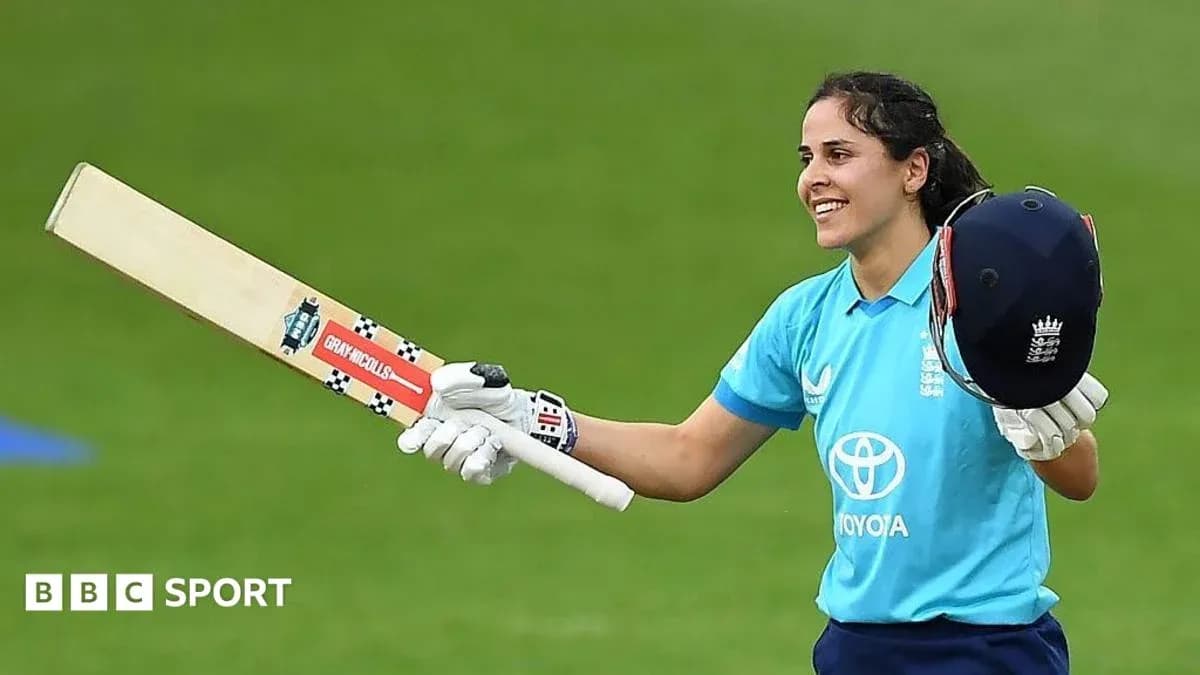
Bouchier moved to three figures, her maiden ODI hundred, and with just 59 needed, the job appeared all but done. Then came the only real blemish. A misjudged shot, a lapse in concentration, and she holed out to long-on. Out for 104. No lap of honour, just a rueful walk off, visibly annoyed at the manner of dismissal.
Her work, though, had already broken the chase open.
Capsey and Freya Kemp made sure there would be no late wobble. They didn’t just finish the job; they accelerated through it. Their partnership – 54 from 38 balls – showcased the depth that England are starting to cultivate.
Kemp’s 36 from 22 balls was a burst of clean hitting that underlined how different this side looks from the one that started last year’s 50-over World Cup semi-final. Five of that XI were missing here, yet the scoring rate barely flickered.
Capsey, busy and proactive, threaded gaps and found the fence when needed. She ended unbeaten on 41, crashing the winning boundary to seal England’s highest successful chase in women’s ODIs. A target that had looked competitive at halfway suddenly felt light.
Ireland shine with the bat, fade with the ball
Ireland’s day began with promise. Their 281-5 was built on the kind of composure and backbone that has not always been a given.
Captain Gaby Lewis anchored with 69 from 89 balls, Amy Hunter matched her with 62 from 90, and together they put on 136 for the second wicket. It was the sort of partnership that quietened England’s attack and hinted at something substantial.
Without Lauren Bell and Sophie Ecclestone, both rested, England lacked their usual cutting edge through the middle overs. The ball grew old, the pitch stayed true, and Ireland’s batters cashed in.
Rebecca Stokell’s unbeaten 54 from 48 balls gave the innings a late surge, her counter-attacking intent lifting Ireland beyond 280 and asking a serious question of England’s new-look top order.
At the interval, 281-5 felt like a score you had to respect. On a surface offering little to the bowlers, it still looked like a total that could stretch a side in transition.
Then the second innings exposed the gap. Ireland’s bowling lacked penetration, their lines drifted under pressure, and the fielding errors mounted. Only Orla Prendergast carried the kind of threat associated with top-tier attacks. Against a confident England batting unit, that simply wasn’t enough.
Murray’s 3-58 provided rare moments of resistance, but the scoreboard kept racing away. Every time Ireland thought they might claw their way back in, England found another gear.
Edwards’ blueprint takes shape
This series is about more than a scoreline for England. With Knight and Beaumont retired and Sciver-Brunt sidelined, head coach Charlotte Edwards is already casting an eye towards next summer’s Ashes and the shape of her top order.
Bouchier and Dunkley have had chances before. Neither has fully locked down an ODI place. Here, on day one of a new cycle, both delivered.
The runs were important. The manner of them was even more telling: authority from the first over, clarity in their roles, and no sense that the absence of senior pillars had left a vacuum.
Edwards knows sterner tests are coming. Attacks with greater pace, more variation, and deeper experience than this Ireland side will probe every technical weakness. But as an opening statement, this was emphatic.
England did not just win. They hunted down a big target with time and wickets to burn, and they did it with players who must now feel this is their team to shape.
The series moves to Derby on Thursday. Ireland will arrive knowing their batting can stand up to the contest. England will turn up knowing that, if their new order bats with this kind of intent again, 281 might only be the start of what they are capable of chasing.