Elina Svitolina's Call for Support Amid War's Toll on Ukrainian Sports
Elina Svitolina’s phone buzzed with the kind of news no athlete, no owner, no citizen wants to see.
A Russian attack had hit her own padel club in Kyiv.
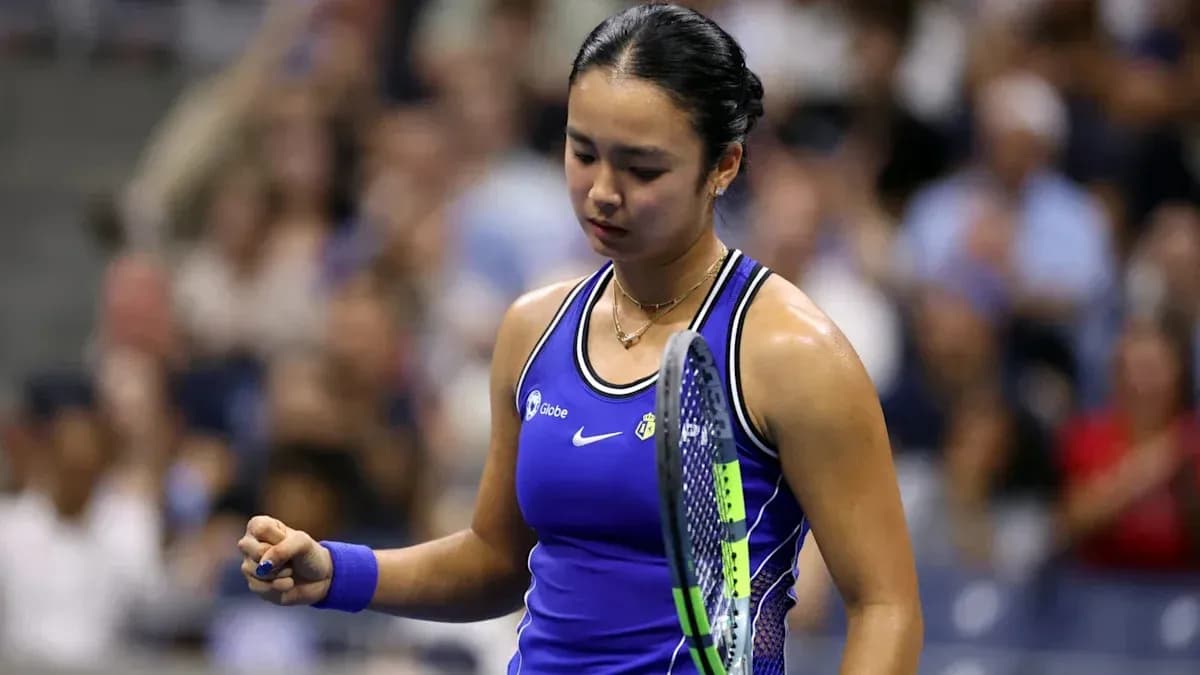
On Instagram, the Ukrainian star laid out the toll in stark numbers that cut through the noise of a Grand Slam fortnight. “As of today, 776 Ukrainian athletes and sports officials have been killed as a result of Russian aggression,” she wrote. “942 sports facilities across Ukraine have been damaged or completely destroyed. Today, my club, SVITO Padel Club, became one of them.”
A personal loss, folded into a national crisis.
Svitolina’s message was not just grief. It was a call to arms, aimed squarely at the global sports community she still competes in.
“Ukrainian athletes and our young generation do not have the opportunity to train and prepare for international competitions on equal terms with athletes from other countries,” she continued, appealing directly to “international partners and friends” for support and “concrete actions that can help stop the aggressor.”
While Svitolina counts the cost of war at home, the sport rolls on in New York, where the margins are measured in points rather than lives.
Sabalenka Survives, Noskova Plans to Forget
On Arthur Ashe Stadium, Aryna Sabalenka and Linda Noskova played the kind of match that leaves legs shaking and minds scrambled.
Noskova, the Wimbledon champion, stood within touching distance of a statement win over the world No 1. She led by a break in the deciding set. She held the edge in the final tiebreak. But Sabalenka refused to fold.
The top seed clawed her way back to win 7-6(1) 3-6 7-6(10-7) in a gruelling three-hour quarter-final that swung wildly, then settled on the side of the two-time defending US Open champion.
“There was plenty worth forgetting” for Noskova, who repeatedly shoved Sabalenka to the brink only to see the Belarusian surge again in the third. Yet the 21-year-old chose defiance over despair.
“I’m going to stay for, like, three more days. I’m going to get drunk and forget about this, I guess,” she said with a laugh. “I’m old enough to do that, thankfully. I love New York. I have so many places I want to go. I have a lot of great friends here. They will show me around and, you know, I will forget about it hopefully in the next couple of hours.”
On court, there was no forgetting. Sabalenka had to drag herself through two tiebreaks and recover from dropping the second set to keep her title defence alive.
“What a battle. What an incredible player she is and I’m speechless right now because I was pushing myself to the limit in this match, especially in the third set,” Sabalenka said. “I honestly thought that that’s it, the match is over and probably that’s what helped me to kind of like, I don’t know, feel loose and just go after my shots.”
She sealed it with a flourish: a second-serve ace to shut the door on Noskova and reach the semi-finals at Flushing Meadows for the sixth straight year.
Michelsen’s Meltdown, Tiafoe’s Escape
On the same court, hours later, the drama refused to let up.
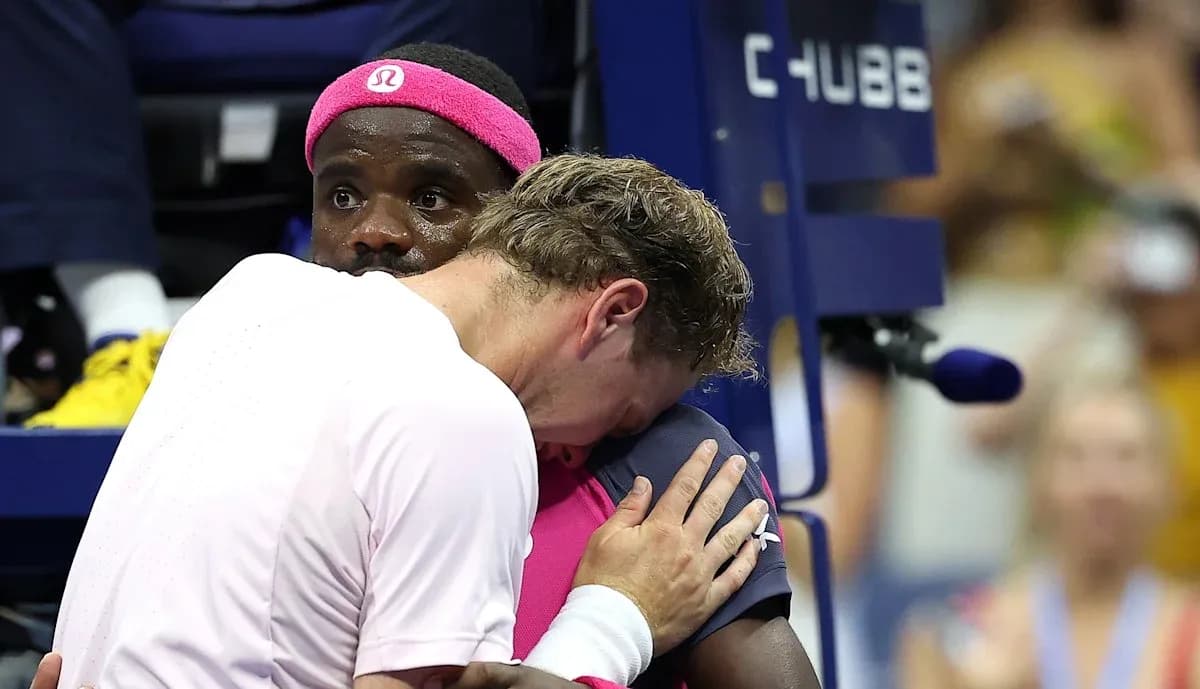
American young gun Alex Michelsen had Frances Tiafoe on the ropes in their quarter-final, racing through the first two sets and dropping the third only 7-5. The 22-year-old looked composed, sharp, and in control.
Then the match turned ugly for him.
Broken early in the fourth, Michelsen’s composure cracked. During a service game, he spun around and unloaded on a fan sitting behind him. A couple of points later, his racquet went flying to the court as he shouted towards his box.
“First real visible signs of irritation from Michelsen,” Jim Courier noted on the broadcast. “He has been pretty buttoned up, with only positive emotion coming out of him, until now.”
The meltdown opened a door Tiafoe knows how to walk through.
The No 11 seed, who had been outplayed for long stretches, began to reel Michelsen back in. From 3-0 down in the deciding set, Tiafoe clawed to 3-3, threatening to flip the script entirely. Michelsen, staring at a full collapse, somehow steadied enough to hold and “stem the bleeding.”
The tension built with every game. The clock ticked towards four hours. This was still only the second afternoon match on Ashe, with the night session — Jessica Pegula v Emma Navarro followed by Ben Shelton v Carlos Alcaraz — waiting in the wings and the stadium needing to be cleared.
Michelsen surged again to 3-0 in the fifth. Tiafoe, serving at 15-30 in the next game and flirting with a double break deficit, stood at what Courier called “a crisis moment.” He survived it, held serve, and stayed alive.
Then came the punch back.
Tiafoe finally broke, dragging himself level. “He’s hanging in there with everything he’s got now,” commentator Nick Lester said, capturing the mood as the veteran’s experience began to bite into Michelsen’s fraying resolve.
What had looked like a routine upset for the younger American now felt like something else entirely: the beginnings of a stunning comeback from Tiafoe, if he could finish the job.
From a shattered padel club in Kyiv to a heaving Arthur Ashe Stadium in New York, the same sport offers two very different pictures: one of survival in the face of war, the other of survival in the face of a tiebreak.
Svitolina asks for “concrete actions” to stop an aggressor. Sabalenka, Noskova, Michelsen and Tiafoe fight on in a city that never stops, chasing points, comebacks and titles.
The question now is whether the tennis world, so quick to rally around a five-set epic, will rally with the same energy around a club in Kyiv reduced to rubble.