Elena Rybakina: A New Era in Women's Tennis
For years, Elena Rybakina lived in the strange middle ground of women’s tennis. A grand slam champion, lethal on every surface, feared in every draw – yet always filed just below the true ruling class of her era. Others were called the standard. Others were labelled the toughest, the most reliable when the air got thin and the stakes climbed.
She walks out of New York with that conversation over.
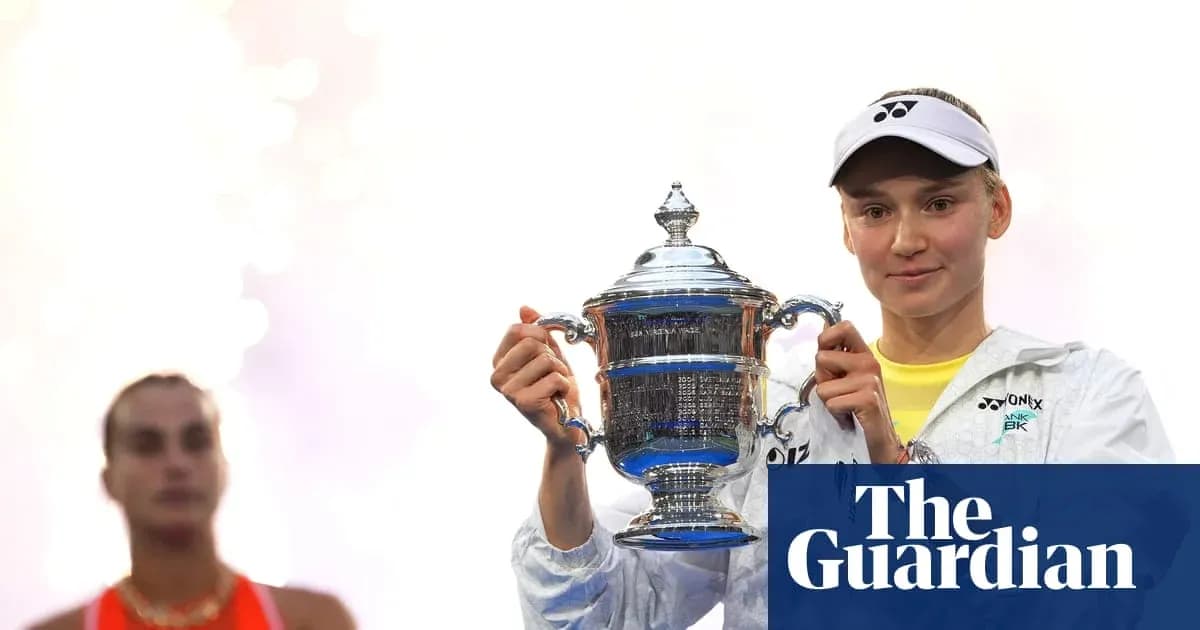
Rybakina leaves Flushing Meadows as the undisputed No 1, both on paper and in reality, having ripped the top ranking from Aryna Sabalenka and then, in the most direct way possible, taken her US Open crown as well. In a final that felt like a referendum on the state of the women’s game, the 27‑year‑old beat the top seed and two-time defending champion 6-4, 5-7, 6-2, sealing a title run that was less about highlight reels and more about sheer mental steel.
A title built on pain and pressure
This fortnight was not supposed to be straightforward for her. An achilles problem had sidelined Rybakina in the days before the tournament, leaving her unsure whether she would even step on court in New York. When she did, every round came with an extra weight: the constant reminder of what she needed to do to become world No 1, the knowledge that any slip could cost her the ranking and the title in one blow.
She didn’t blink.
Across the second week she walked through four consecutive grand slam or Olympic champions, each one a potential derailment. Each one dispatched. The tennis was not always pristine, but the resolve was. By the time she reached Sabalenka again, the scars of those battles had hardened into something more valuable than form: conviction.
That conviction carried her through a final that started with her greatest weapon betraying her.
When the best serve in the game goes missing
Rybakina owns the most feared first serve in women’s tennis. It is the shot that usually sets the tone, the stroke that turns tight games into procession. In the opening set of a grand slam final, it vanished.
She landed just 27% of first serves, only eight of 30 attempts finding the box. For most players, that is a death sentence against Sabalenka on a hard court. Instead, it became the backdrop to one of the most complete displays of ball-striking Rybakina has produced.
With the serve misfiring, she simply took control everywhere else. Her return bit into Sabalenka’s delivery, piling pressure on every second serve. From the baseline she dictated, trading at full pace yet somehow cleaner, calmer. The backhand, especially, was immaculate – flat, early, ruthless. Sabalenka, already carrying the strain of a turbulent summer, found herself suffocated.
At 2-3 in the first set, the tension finally cracked. A double fault handed Rybakina the decisive break, and Sabalenka’s frustration boiled over as she struck a ball into the crowd and picked up a code violation. The body language told its own story: a champion chasing history, but chasing the match as well.
Sabalenka swings back
Sabalenka did not go quietly. She rarely does.
Her serve, shaky early, began to click in the second set. The free points came back. The forehand started to land with its familiar thud. Across the net, Rybakina’s first serve improved, but the rest of her game loosened just enough to offer a sliver of hope.
At 5-4, serving for the title, Rybakina suddenly felt the weight. The rallies stretched, the errors crept in. Sabalenka sensed it and attacked. A thumping backhand return down the line brought up her first break points of the afternoon – double set point. Again, Rybakina’s first serve deserted her. Again, Sabalenka saw second serves, the very looks she had squandered all match.
She still couldn’t finish the job.
But she had found a pattern, a foothold. At 6-5, after muscling her way to a third set point, Sabalenka went back to that backhand, drilling another return winner to drag the final into a decider. The stadium erupted. The defending champion had her charge. The match, finally, felt like a tug-of-war between equals.
Reset, reload, dominate
Many players would have carried the sting of that lost second set into the third. Rybakina didn’t allow it. She walked to her chair, reset, and came out as if the match had just begun.
This time the serve arrived on cue. Precise. Heavy. Relentless. Her early service games in the final set were almost casual, a blur of aces and unreturned bombs that flipped the pressure straight back onto Sabalenka. Every hold from Rybakina asked the same question: can you keep up?
Like so many over the past year, Sabalenka could not.
The rallies that had been balanced in the second set tilted sharply again. Rybakina stepped inside the baseline, took time away, and hit through the court with the kind of assurance that leaves even the game’s biggest hitters short of answers. The more she landed first serves, the more Sabalenka had to chase, and the match ran away from the Belarusian in a hurry.
When the final point was done, it felt less like an upset of the reigning champion and more like a coronation delayed.
A new hard-court ruler
This win does more than complete a fortnight. It redraws the map of the women’s game.
Rybakina now holds the three biggest hard-court titles in tennis: the Australian Open, the US Open and the WTA Finals. She has taken Sabalenka’s No 1 ranking and, with it, her unofficial title as the premier hard-court force. She stands alongside Lindsay Davenport, Jennifer Capriati, Ash Barty, Angelique Kerber and Virginia Wade as a three-time grand slam champion.
The collection is starting to look ominous. Wimbledon in 2022. The Australian Open in 2026. Now the US Open. Only Roland Garros is missing from the set. One French Open away from a career grand slam – and the way she handled this fortnight suggests that is no distant dream.
A rivalry built for the biggest stages
This final also deepened one of the defining duels of this era. In the 38 years since both the Australian Open and US Open moved to hard courts, this was only the second time the same two women have contested both finals in the same season. It was also that rarest of occasions: the top two players in the world meeting in a major final with the No 1 ranking guaranteed to change hands.
Every time Rybakina and Sabalenka share a grand slam stage, the level spikes. This was their third major final against each other, and once again they produced a match that felt bigger than a single trophy. Their games clash and complement in equal measure – power against power, but with very different shades of control and temperament.
On this night, when it mattered most, Rybakina had the answers in every phase. She out-hit Sabalenka when her serve deserted her, out-served her when the tension rose, and outlasted her when the final set demanded clarity and courage.
She came to New York unsure if her body would let her compete. She leaves as the standard by which everyone else will now be judged – and with one glaring question hanging over the rest of the tour:
If this is the new normal for Elena Rybakina, who is going to stop her?