Elena Rybakina Claims US Open Title and No. 1 Ranking
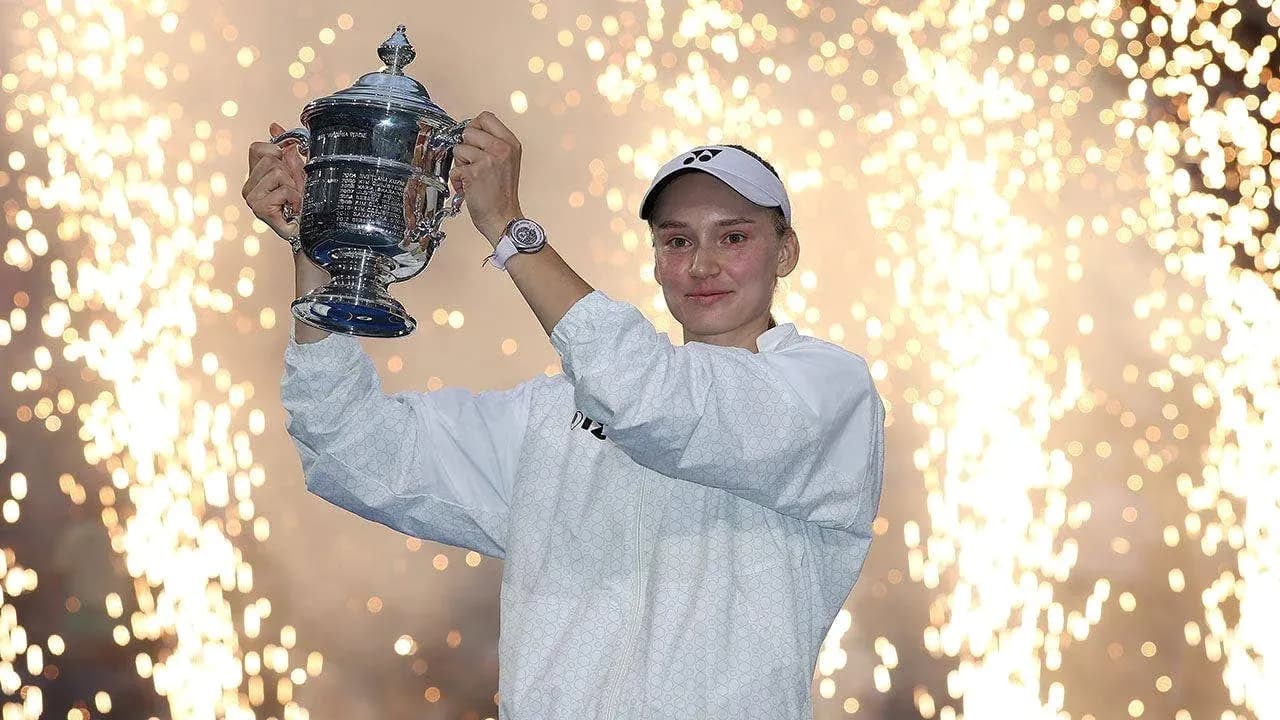
Elena Rybakina didn’t just take Aryna Sabalenka’s ranking on Saturday. She walked into her house, took the keys, and left with the trophy.
On a charged afternoon in New York, the 27-year-old claimed her first US Open crown with a 6-4, 5-7, 6-2 victory over the two-time defending champion, halting Sabalenka’s 19-match winning streak at Flushing Meadows and turning an administrative changing of the guard into a brutal, on-court confirmation.
A New No. 1, the Hard Way
Rybakina arrived at this final already assured of rising to No. 1 in the world next week, replacing Sabalenka at the top of the rankings. That could have been a quiet, ceremonial transition. Instead, she made sure it came with a statement: beating the woman she was replacing, in the stadium Sabalenka had ruled for the past two years.
“It’s tough to find words right now, honestly,” Rybakina admitted on court, still absorbing the scale of the moment. She spoke of coming into the tournament managing an injury, not expecting “nothing like this,” and yet here she was, holding the trophy that had belonged to Sabalenka for the last two seasons.
The numbers underline the magnitude. Sabalenka had not lost at the US Open since the 2023 final against Coco Gauff and was chasing a third straight title, something no one had done here since Serena Williams completed her three-peat from 2012 to 2014. That run is over now, stopped by a player who has spent the last three seasons quietly building a résumé to match her power.
A Rivalry Tilts on the Biggest Stage
This was their third meeting of the year on hard courts. Sabalenka had taken the previous two, at Indian Wells and Miami, extending her head-to-head edge to 10-8 coming in. Rybakina flipped the script when it mattered most.
She had already beaten Sabalenka in a hard-court major final this season, winning the Australian Open in Melbourne. New York felt like the sequel with higher stakes: Sabalenka defending her territory, Rybakina hunting history and the No. 1 ranking.
The match carried that tension. Rybakina took the first set 6-4, absorbing Sabalenka’s trademark first-strike aggression and countering with her own heavy, flat groundstrokes. Sabalenka, who has built her dominance here on overwhelming opponents early, found herself pushed back and forced to play longer rallies than she likes.
Still, champions don’t surrender easily. Sabalenka clawed her way through the second set, refusing to let Rybakina close the door. The Belarusian dug in, lifted her level, and squeezed out the set 7-5, keeping alive her bid for a historic three-peat.
For a moment, the momentum felt like it was swinging. Then came the turning point.
Rybakina’s Response
Opening the deciding set, Rybakina earned an early break point and then yanked a backhand wide. She let the frustration show. A flash of anger, a rare crack in the calm exterior.
It didn’t last.
Instead of spiraling, she reset and took control of the decider. Her serve, already one of the most formidable in the women’s game, tightened up. The first-strike patterns returned. Sabalenka, who had looked so assured in New York for two years, suddenly found herself reacting rather than dictating.
Rybakina surged to a 6-2 third set, ripping through the finish line with the composure of a player who has been here before, even if this particular trophy was new to her.
Sabalenka, gracious in defeat, acknowledged her bond with the tournament that had turned her into a two-time champion. “I really felt like home here and cannot wait to come back next year,” she said. “I wish I could perform a little bit better, but I guess next year.” The message was clear: this rivalry, and her presence at the top, isn’t going anywhere.
A Career Grand Slam in Sight
Rybakina’s rise has been steady rather than loud. Born in Russia but representing Kazakhstan, she broke through with her first major at Wimbledon in 2022. This season, she added the Australian Open. Now she owns the US Open as well.
Three different majors, three different surfaces of pressure, all conquered. Only Roland Garros remains between her and a career Grand Slam.
For a player who insists she didn’t expect this coming into New York, the path ahead is suddenly clear. One clay-court fortnight in Paris now stands between Rybakina and a place in the most exclusive club in tennis.
On Sunday, American Ben Shelton will face Alexander Zverev in the men’s singles final, a fresh chapter for the tournament. But the defining image of this US Open may already be set: Elena Rybakina, trophy in hand, not just inheriting No. 1—but seizing it, with Sabalenka on the other side of the net and the sport’s balance of power shifting in real time.